
How to Prepare HVAC for Spring in the Southwest
Prepare your system with spring HVAC maintenance for the Southwest to beat desert dust and heat this season.

Why Spring HVAC Maintenance for the Southwest Starts Now
Spring HVAC maintenance for the Southwest is one of the most time-sensitive things you can do as a homeowner in Albuquerque, Rio Rancho, or anywhere in New Mexico. The window between winter cold and triple-digit summer heat is shorter than most people realize — and your AC system needs to be ready before that first brutal heat wave hits.
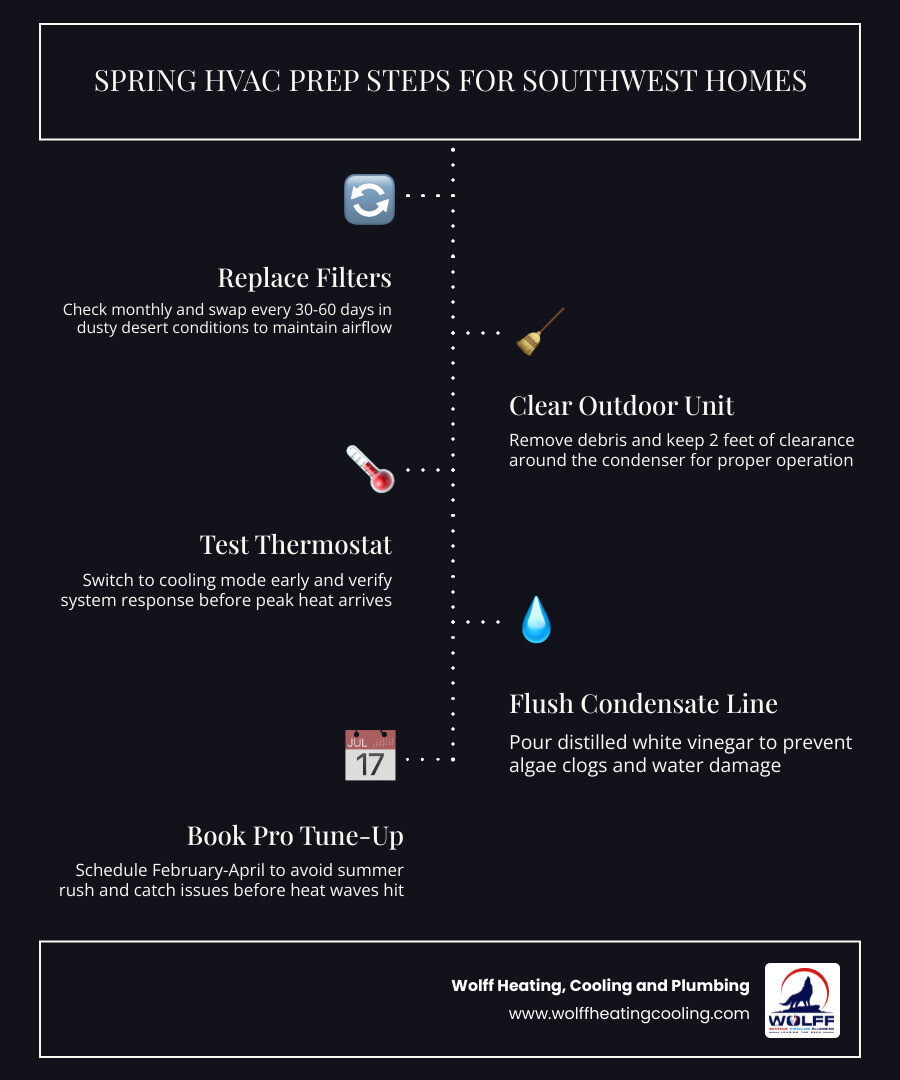
Here is a quick look at the most important spring HVAC maintenance steps for Southwest homeowners:
- Replace air filters — Check monthly; replace every 30–60 days in dusty desert conditions
- Clear the outdoor condenser — Remove debris and maintain at least 2 feet of clearance around the unit
- Test your thermostat — Switch to cooling mode and verify the system responds correctly
- Inspect and flush the condensate drain line — Pour distilled white vinegar down the line to prevent algae clogs
- Check vents and registers — Make sure none are blocked by furniture or debris
- Schedule a professional tune-up — Book between February and April before the summer rush fills technician schedules
- Watch for warning signs — Weak airflow, strange noises, short cycling, or warm air output all signal a system that needs attention now, not in July
New Mexico’s climate creates challenges that most general HVAC advice simply does not account for. Desert dust, dramatic daily temperature swings, high-pollen spring seasons, and the sudden arrival of intense heat put enormous stress on HVAC systems. In fact, roughly 80% of AC failures during the first major heat wave are entirely preventable with basic spring preparation. Heating and cooling can account for around 50% of a home’s electricity bill in hot climates like ours — so a neglected system does not just risk breaking down, it costs you money every single day it runs inefficiently.
The good news is that most of the damage is avoidable. A combination of simple DIY tasks and one professional tune-up each spring can keep your system running reliably all summer long, lower your energy bills, and add years to your equipment’s life.
Why Spring HVAC Maintenance for the Southwest is Essential
Living in the high desert of New Mexico—whether you are in the heart of Albuquerque, the growing neighborhoods of Rio Rancho, or the beautiful foothills of Cedar Crest—means your air conditioner is not just a luxury. It is a critical home survival tool.
Our unique climate subjects heating and cooling systems to extreme “heat stress.” During the peak of summer, AC units in our service areas can easily run for 10 to 14 hours a day. This marathon level of operation causes rapid wear and tear on internal components. In milder parts of the country, a central AC system might easily last 15 to 20 years. However, in our demanding environment, a neglected system can easily fail around year 10.
The primary culprit behind premature system failure in New Mexico is desert dust. Fine sand, dirt, and spring pollen act like sandpaper on moving parts, accelerating mechanical wear. When this dust settles on your outdoor condenser coils, it acts as an insulating blanket. Because dirty coils can reduce heat transfer efficiency by 10% to 30%, your system is forced to run much longer and work significantly harder to cool your home.
Furthermore, systems that skip annual maintenance run 15% to 25% less efficiently. This drop in efficiency directly translates to higher utility bills. In fact, wasted electricity from an inefficient system can easily add $100 or more to your seasonal cooling costs.
By taking action in the spring, you can avoid these costly headaches. Routine maintenance keeps your system running at peak performance, which can lower your energy consumption by 10% to 25% compared to a neglected unit. To learn more about why proactive care is always worth the investment, check out our guide on Is Annual HVAC Maintenance Worth It or Just Hot Air?.
For an in-depth look at how our local environment specifically targets your air conditioning equipment, read all about The Dirty Truth About HVAC Maintenance in Dusty Environments.
The Ultimate Spring HVAC Maintenance Checklist for Homeowners
Preparing your home for the upcoming seasonal transition does not have to be overwhelming. By breaking down your spring HVAC checklist into manageable steps, you can ensure your system is fully prepared for the heat.
A great place to start is with your indoor air quality and basic system settings. In the Southwest, our spring winds carry massive amounts of dust and pollen. If your air filtration is neglected, your indoor air will quickly become dusty and uncomfortable. For practical advice on managing your indoor environment during these dry, windy months, take a look at our helpful list of tips to Keep Your Cool with These Dry Climate Air Tips.
Additionally, understanding how to adjust your system for the high desert elevation is crucial for maintaining efficient airflow. You can read more about this in our specialized guide on Desert Survival 101 for Your High Desert HVAC.
To help you stay organized, we have divided the ultimate checklist into tasks you can safely do yourself and technical tasks that require a professional touch.
DIY Tasks for Spring HVAC Maintenance for the Southwest
You do not need to be an HVAC technician to perform basic preventative maintenance. Homeowners in Albuquerque, Corrales, and Bernalillo can easily handle several essential tasks to keep their systems running smoothly:
- Filter Replacement: This is the single most important DIY task. In New Mexico, we recommend checking your filters every 30 days. Choose a pleated filter with a MERV rating between 8 and 11. This range provides excellent filtration to capture fine desert dust and pollen without restricting the airflow your system needs to breathe.
- Maintain Outdoor Clearance: Walk outside and inspect your condenser unit. Ensure there is at least two feet of clear space all the way around it. Trim back any weeds, desert shrubs, or overhanging branches. Clear away tumbleweeds, leaves, and loose dirt that have piled up against the unit during winter windstorms.
- Clean Vents and Registers: Go room by room and inspect your supply and return vents. Vacuum away any accumulated dust on the grilles. Ensure that furniture, rugs, or drapes are not blocking any vents. Blocking vents increases static pressure in your ductwork, which can damage your blower motor and reduce efficiency by up to 15%.
- Clear the Condensate Drain: Your AC removes moisture from the air as it cools. This water exits through a small drain line. To prevent algae and mold from clogging this line and causing water damage to your home, pour one cup of distilled white vinegar down your condensate drain line once a month during the cooling season.
By taking care of these basic items, you protect your system’s airflow and improve your home’s overall air quality. For more tips on keeping your home’s air clean and healthy, explore our New Mexico Comfort Guide to Perfect Indoor Air.
Professional Tasks for Spring HVAC Maintenance for the Southwest
While DIY maintenance is incredibly helpful, there are highly technical tasks that should only be handled by a licensed professional. Modern HVAC systems are complex machines that contain high-voltage electrical components and pressurized chemical refrigerants.
During a professional spring tune-up, a qualified technician will perform several critical checks:
- Refrigerant Level Verification: Systems can naturally lose a small percentage of their refrigerant charge over time through normal vibration and microscopic permeation. Low refrigerant causes your system to work harder, run longer, and can even cause the evaporator coils to freeze over. A professional will measure your levels to ensure they match the manufacturer’s exact specifications.
- Electrical Inspection and Tightening: Loose electrical connections cause approximately 30% of all AC failures. Technicians will inspect wiring, tighten connections, and measure the voltage and current on your motors.
- Capacitor and Contactor Testing: Capacitors store electrical energy and help your system start up. They are highly sensitive to extreme heat and are a very common failure point during the first heat wave of summer. A technician can test their electrical capacity and spot a failing capacitor before it leaves you without cooling on a 100-degree afternoon.
- Deep Coil Cleaning: While you can gently rinse the outside of your condenser, a professional has the specialized tools and training to deeply clean both the indoor evaporator coil and the outdoor condenser coil, removing stubborn dirt and restoring optimal heat transfer.
Scheduling these professional tasks early in the spring ensures your system is safe and fully operational before peak demand begins. To learn more about proper scheduling intervals, read our guide on Don’t Wait for a Breakdown: How Often to Schedule Tune-Ups. If you are ready to book your service in the Rio Rancho area, you can easily schedule your HVAC Tune-Up Rio Rancho today.
When to Switch from Heating to Cooling in New Mexico
Knowing exactly when to make the seasonal transition from heating to cooling can be tricky in New Mexico. Because of our high-desert geography, spring weather is incredibly unpredictable. It is not uncommon to experience daily temperature swings of 40 degrees or more. You might find yourself needing the heater at 5:00 AM when it is a chilly 40 degrees outside, and then needing the AC by 2:00 PM when the afternoon sun pushes temperatures into the 80s.
To manage this transition smoothly, we recommend following the 70/60 Rule:
- When daytime highs consistently reach the upper 70s to low 80s, and nighttime lows remain above 60 degrees, it is generally time to make the official switch to cooling mode.
If you live in higher elevation communities like Cedar Crest, Tijeras, or Placitas, your transition window may occur slightly later than in the valley areas of Albuquerque. For specialized advice on managing these high-altitude temperature shifts, check out our High Elevation HVAC Tips for Mountain Living.
When you do make the switch, always practice proper thermostat safety. If you need to switch between heating and cooling modes on the same day, always wait at least five minutes between switching modes. This delay allows the refrigerant pressures in your system to fully equalize, protecting your compressor from severe mechanical strain. If you have a modern smart thermostat, it likely has a built-in delay or “deadband” range to handle this automatically, helping you save energy while keeping your home comfortable.
Warning Signs Your AC Needs Professional Service Before Summer
It is always better to catch a minor system issue in the spring rather than dealing with a complete system breakdown during a July heatwave. By paying attention to how your system performs during its initial spring tests, you can identify warning signs early.
Here is a quick reference table comparing normal AC operation against common warning signs that require professional attention:
| Normal AC Operation | Warning Sign (Call a Professional) | What It Usually Means |
|---|---|---|
| Strong, consistent airflow from all vents | Weak, barely noticeable airflow | Blower motor issues, severe duct leaks, or a clogged filter |
| Quiet, steady hum from the indoor and outdoor units | Grinding, screeching, or loud banging noises | Failing motor bearings, loose parts, or a failing compressor |
| Consistent cooling cycles lasting 15 to 20 minutes | Short cycling (turning on and off every few minutes) | Thermostat calibration issues, overheating, or low refrigerant |
| Cool, refreshing air (supply air is 15–20°F cooler than return air) | Warm or lukewarm air blowing from vents | Compressor failure, electrical issues, or a refrigerant leak |
| Dry, clear copper lines on the outdoor unit | Ice buildup on copper refrigerant lines or indoor coils | Restricted airflow or a critical refrigerant leak |
If you notice any of these warning signs, do not ignore them. A small problem like a weak capacitor or a minor refrigerant leak can quickly cause a “domino effect,” leading to much larger and more expensive repairs—like a burned-out compressor motor—later in the season.
If you are looking for local resources, troubleshooting guides, or seasonal tips specific to our service area, visit our comprehensive hub of HVAC Resources Albuquerque NM.
Frequently Asked Questions about Southwest HVAC Care
How often should I change my air filters in New Mexico?
In our dry, dusty desert environment, we highly recommend checking your air filters every 30 days. While a filter might last up to three months in other parts of the country, our high winds, spring pollen, and frequent dust storms quickly clog filters. If you have pets, live near active construction, or suffer from severe seasonal allergies, you may need to replace your filter every 30 days to maintain healthy indoor air quality and protect your system from airflow restrictions.
Is it safe to switch between heating and cooling on the same day?
Yes, it is perfectly safe to switch between heating and cooling on the same day, provided you follow the 5-minute delay rule. Because New Mexico spring days often start very cold and end quite warm, your system is built to handle this. Just make sure to turn your system off, wait five minutes for the system’s internal pressures to settle, and then switch to your desired mode. This simple step protects your compressor from damage.
Can I use a pressure washer to clean my outdoor AC coils?
No, you should never use a pressure washer to clean your outdoor condenser coils. The aluminum fins on your condenser unit are incredibly delicate. The intense force of a pressure washer will easily bend these fins flat, completely blocking airflow and permanently damaging your unit. Instead, turn off the power to your system and use a standard garden hose with a gentle spray nozzle to rinse the coils from the top down.
Conclusion
Taking the time to complete your spring HVAC maintenance for the Southwest is the single best way to ensure your home remains a cool, comfortable oasis all summer long. From replacing your air filters monthly to scheduling your professional spring tune-up, these proactive steps protect your comfort, lower your monthly utility bills, and extend the lifespan of your valuable equipment.
At Wolff Heating, Cooling, and Plumbing, we have spent over 25 years providing honest, reliable, and high-quality services to our neighbors in Albuquerque, Rio Rancho, Placitas, Corrales, Cedar Crest, Tijeras, and Bernalillo. We understand the unique challenges that our high-desert climate presents, and we are committed to keeping your home comfortable year-round.
To take the hassle out of seasonal maintenance, consider enrolling in a professional maintenance plan. This ensures your system receives the consistent, high-quality care it needs to handle our extreme weather. Learn more about how you can protect your home by exploring our HVAC Maintenance Plan Rio Rancho.
Don’t wait until the summer heat waves arrive and technician schedules fill up.
Talk to a real Albuquerque technician.
Tell us what's going on and our Wolff team will reach out — usually within the hour during business hours. For emergencies, call us directly anytime.
Call us(505) 269-1429- Emergency Service Available
- Licensed & Insured
- 4.9★ from 130+ Google reviews
- Albuquerque, NM & 13 nearby towns
2420 Comanche Rd NE C3, Albuquerque, NM 87107
Request your service
No obligation. We never sell your info.