
 Menu
Menu
Is Annual HVAC Maintenance Worth It? Here’s the Short Answer
Annual HVAC maintenance is it worth it — and for most homeowners in Albuquerque, NM, the answer is a clear yes. A well-maintained system runs more efficiently, lasts significantly longer, and is far less likely to leave you without heat or cooling when you need it most. Skipping tune-ups, on the other hand, is one of the most common reasons HVAC systems fail early or rack up costly repair bills.
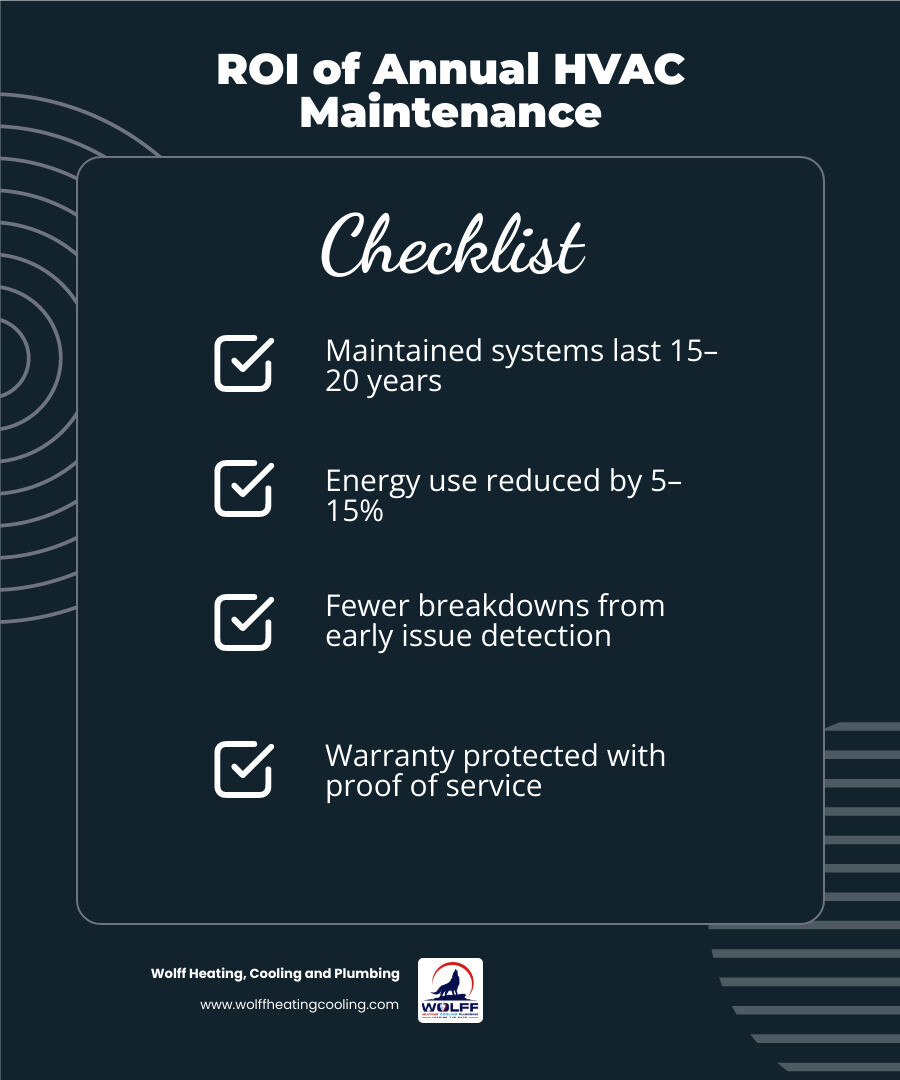
Here’s a quick summary of why annual maintenance pays off:
- Longer system life — Maintained systems can last 15–20 years; neglected ones may fail in under 10
- Lower energy bills — Regular tune-ups can reduce energy use by 5–15%
- Fewer breakdowns — Routine checks catch small problems before they become expensive failures
- Better air quality — Clean filters and coils mean cleaner air in your home
- Warranty protection — Many manufacturers require proof of annual maintenance to honor parts warranties
- Safety — Annual inspections catch gas leaks and carbon monoxide risks from furnaces
The one caveat: not every maintenance plan or service contract is created equal. What you get matters as much as whether you do it at all. The rest of this guide breaks it all down.
What Exactly Happens During Professional HVAC Maintenance?
When we talk about maintenance, many people think of a quick “once-over” or just swapping out a filter. In reality, a professional tune-up is a deep dive into the mechanical and electrical heart of your home. If you’ve ever wondered what to expect during an AC service, it’s helpful to think of it as a 20- to 40-point health check for your system.
During a standard visit, our technicians perform several essential steps for AC maintenance. This includes:
- Component Inspection: We look for signs of wear and tear on belts, motors, and bearings. Catching a frayed wire now prevents a total system shutdown in the middle of a July heatwave in Rio Rancho.
- Coil Cleaning: Dust and debris act like a thermal blanket on your evaporator and condenser coils. This buildup can reduce efficiency by 10% to 25%. We clean these so your system can “breathe” again.
- Refrigerant Levels: Too much or too little refrigerant forces the compressor to work harder, leading to premature failure. We verify levels are exactly where the manufacturer intended.
- Electrical Connections: Heat causes wires to expand and contract, which can loosen connections over time. We tighten these to prevent electrical shorts or fire hazards.
- Thermostat Calibration: We ensure your thermostat is actually reading the room temperature correctly. A miscalibrated thermostat can lead to “short cycling,” where the system turns on and off too frequently.
- Condensate Drains: In the humid-ish parts of the cooling cycle, moisture builds up. If the drain line is clogged with algae or dust, it can back up and cause water damage to your home.
- Blower Motor Lubrication: Moving parts need to stay slick. Reducing friction extends the life of the motor and keeps the system running quietly.
Why Annual HVAC Maintenance Is It Worth It for Your Home
The central question remains: annual hvac maintenance is it worth it? To answer that, we have to look at the long-term math of homeownership. Your HVAC system is likely one of the most expensive appliances you own. Treating it like a “set it and forget it” machine is a recipe for a shortened lifespan.
Research shows that a well-maintained system can easily last 15 to 20 years. In contrast, a neglected unit often starts showing major signs of failure after just 8 to 10 years. By investing in regular care, you are essentially doubling the life of your investment.
Beyond longevity, there is the issue of regular furnace maintenance importance. In places like Bernalillo and Corrales, where winter nights get crisp, a furnace isn’t just about comfort—it’s about safety. Furnaces burn fuel to create heat, and that process produces carbon monoxide. An annual checkup ensures the heat exchanger isn’t cracked and the ventilation is clear, keeping your family safe from “the silent killer.”
Furthermore, home comfort with AC maintenance services is noticeably better. When a system is tuned, it provides more consistent temperatures across different rooms. You won’t have that one “hot room” in the back of the house while the living room feels like an icebox.
Maximizing Efficiency with Annual HVAC Maintenance Is It Worth It?
Efficiency is where you see the most immediate return on your investment. According to the Department of Energy, regular maintenance can reduce your energy consumption by up to 15%. If your monthly utility bill is high, that’s a significant chunk of change staying in your pocket every single month.
When we perform AC maintenance or furnace maintenance, we are optimizing airflow and reducing the workload on the system. A dirty system is a struggling system. When the blower motor has to fight against a clogged filter or grimy coils, it draws more electricity. By calibrating the system and ensuring every part is moving freely, we ensure you get the maximum amount of cooling or heating for every penny you spend on your utility bill.
Protecting Your Warranty: Annual HVAC Maintenance Is It Worth It?
This is the “fine print” reason that makes maintenance absolutely essential. Most major HVAC manufacturers—the ones who provide those 10-year parts warranties—actually require proof of annual professional maintenance to keep that warranty valid.
If your compressor fails in year five and you haven’t had a professional AC maintenance check since it was installed, the manufacturer may deny your claim. They view neglect as a choice, not an accident. Keeping your service records is like an insurance policy for your equipment. Many homeowners find that their AC needs professional maintenance simply to stay compliant with these legal requirements.
Determining the Right Frequency: Annual vs. Bi-Annual Service
How often should you actually see a technician? The answer depends on your system type and its age.
| System Type | Recommended Frequency | Best Timing |
|---|---|---|
| Central AC | Once a year | Spring |
| Furnace (Gas/Electric) | Once a year | Fall |
| Heat Pump | Twice a year | Spring & Fall |
| Older Systems (10+ years) | Twice a year | Spring & Fall |
For standard split systems (an AC for summer and a furnace for winter), we recommend an AC tune-up in the spring and a furnace check in the fall. This ensures each system is ready for its specific “work season.”
However, if you have a heat pump, it works year-round to both heat and cool your home. Because it never gets an “off-season,” heat pump maintenance should happen twice a year. The reversing valve and defrost cycle need specific attention to ensure you aren’t left shivering in January.
In Albuquerque, our climate adds another layer of necessity. Our “dust season” can be brutal on outdoor condenser units. If you live in a particularly windy or dusty area like Placitas or Cedar Crest, you might find that your system needs a more frequent cleaning. Preparing ACs for Albuquerque summers often involves clearing out the sand and debris that has accumulated in the outdoor unit over the winter.
Professional Tune-Ups vs. DIY Maintenance Tasks
We often get asked, “Can’t I just do this myself?” While there are definitely things you should do, there are things you must leave to the pros.
The DIY Checklist:
- Filter Changes: This is the single most important thing a homeowner can do. Check your filter every month and replace it at least every 90 days (or more often if you have pets).
- Debris Removal: Keep the area around your outdoor unit clear. Trim back shrubs and remove weeds within a two-foot radius.
- Vent Clearance: Ensure your indoor return and supply vents aren’t blocked by furniture or curtains.
For more in-depth advice, check out our tips for maintaining your AC system.
The Professional Checklist:
The reason you need a pro comes down to safety and specialized tools. A homeowner shouldn’t be handling refrigerant (it’s actually illegal without EPA certification) or testing electrical capacitors that hold high-voltage charges.
Our technicians use specialized diagnostic tools to check for microscopic cracks in the heat exchanger—a common source of carbon monoxide leaks that you can’t see with the naked eye. We also check for gas leaks and ensure that the combustion process is venting properly. For a full breakdown of what needs a pro, see our guide to AC maintenance and repair.
Frequently Asked Questions about HVAC Upkeep
What are the signs my system needs immediate maintenance?
Sometimes your system will tell you it’s struggling before it actually quits. If you notice any of the following, it’s time to schedule an AC tune-up immediately:
- Strange Noises: Squealing, banging, or grinding sounds often indicate a loose belt or a failing motor bearing.
- Weak Airflow: If the air coming out of your vents feels like a light breeze instead of a steady stream, you might have a clogged filter or a failing blower motor.
- Inconsistent Temperatures: If the upstairs is 10 degrees warmer than the downstairs, your system isn’t distributing air efficiently.
- Frequent Cycling: If your unit turns on and off every few minutes, it’s working too hard and wasting energy.
- Unusual Odors: A “burning” smell could be electrical, while a musty smell often points to mold in the evaporator coils or ductwork.
Does skipping maintenance really lead to emergency repairs?
In our 25 years of experience serving the Albuquerque area, we’ve found that about 95% of emergency repairs could have been prevented with regular maintenance.
Skipping a furnace tune-up might save you a little time today, but it often leads to:
- Frozen Coils: Dirt on the coils prevents them from absorbing heat, causing them to literally ice over, even in the summer.
- Clogged Drains: As mentioned, this leads to water damage and potential mold growth.
- Component Failure: A small, $20 part like a capacitor can fail and, if not caught, can take out the $2,000 compressor along with it.
Emergency service usually happens on the hottest or coldest day of the year when every HVAC company is booked solid. Maintenance allows you to fix things on your schedule, not the system’s schedule.
Is maintenance necessary for a brand-new HVAC system?
Yes! Think of it like a brand-new car. You wouldn’t wait five years to change the oil just because the car is new.
Maintenance on a new system is about:
- Warranty Validation: As mentioned, you need those service records.
- Efficiency Baseline: We ensure the system was installed correctly and is hitting its rated SEER (Seasonal Energy Efficiency Ratio) levels.
- Early Defect Detection: Occasionally, a part has a manufacturing defect. Catching it during a routine heat pump tune-up means it gets replaced for free under warranty before it causes a breakdown.
Conclusion
At Wolff Heating, Cooling, and Plumbing, we’ve seen how a little bit of proactive care goes a long way. Whether you are in Albuquerque, Rio Rancho, or Tijeras, the local climate puts a unique strain on your heating and cooling equipment.
So, annual hvac maintenance is it worth it? When you consider the energy savings, the extended lifespan of your equipment, the protection of your manufacturer’s warranty, and—most importantly—the peace of mind that your home will stay comfortable year-round, the investment is one of the smartest moves you can make as a homeowner.
Don’t wait for your system to start making strange noises or for your utility bills to skyrocket. Be proactive and protect your home’s most vital system.
Schedule your HVAC service today and let our experienced team ensure your system is ready for whatever the New Mexico weather throws our way.