
 Menu
Menu
Why Dry Climate Homes Struggle With Indoor Air Quality
How to improve indoor air quality in dry climates is one of the most important things Albuquerque homeowners can do for their family’s health — and it’s more urgent than most people realize. Americans spend more than 90% of their time indoors, and indoor air can be two to five times more polluted than the air outside. In arid regions like New Mexico, that problem is compounded by low humidity, relentless dust, and airborne allergens that never seem to settle.
Here’s a quick breakdown of the most effective steps:
- Maintain humidity between 30–50% using a humidifier or whole-home system
- Use MERV-13 or HEPA-rated filters in your HVAC system and replace them every 1–3 months
- Run an air purifier with a HEPA filter in high-traffic rooms
- Ventilate strategically — open windows during cooler parts of the day, or install an Energy Recovery Ventilator (ERV)
- Vacuum frequently with a HEPA-filter vacuum and dust with a damp microfiber cloth
- Reduce VOC sources by choosing low-VOC cleaning products and avoiding synthetic air fresheners
- Schedule bi-annual HVAC maintenance to keep dust and pollutants from circulating through your ductwork
- Monitor humidity and air quality with a hygrometer or indoor air quality monitor
- Seal gaps around windows and doors to keep outdoor dust and pollutants from sneaking in
- Add moisture-releasing houseplants like spider plants or peace lilies for a natural humidity boost
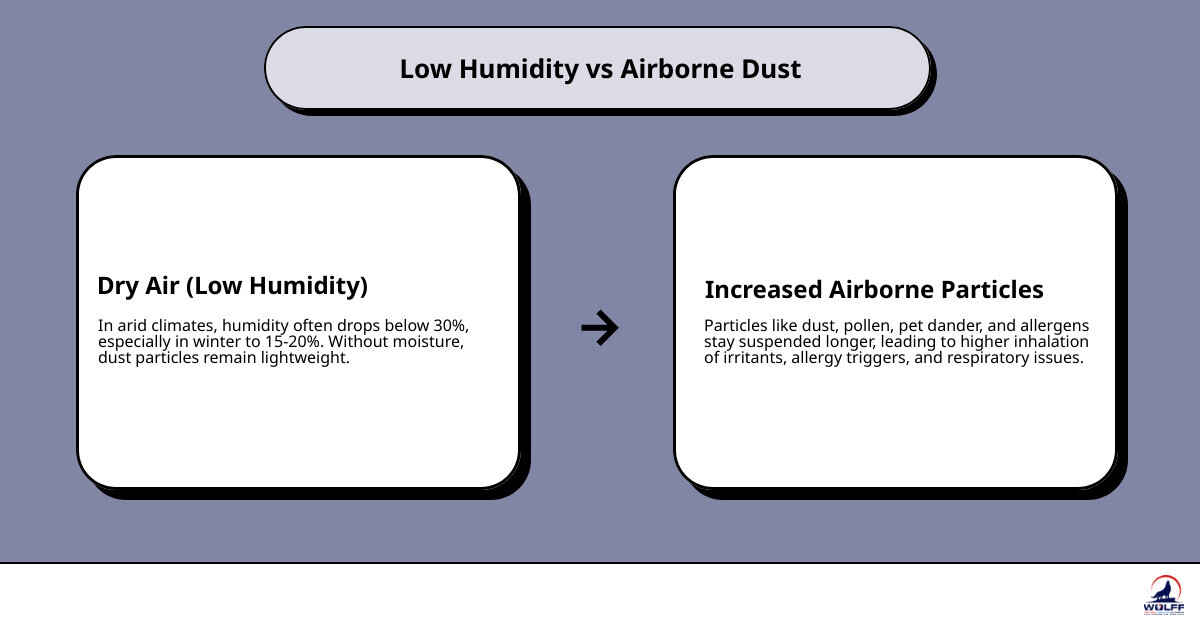
In the high desert, indoor air quality isn’t just a comfort issue — it’s a health issue. Dry air lets particles stay airborne longer, irritates nasal passages and lungs, and can even weaken your body’s natural defenses against viruses. When indoor humidity drops below 30%, you may notice dry skin, static shocks, cracking wood floors, and an uptick in allergy and asthma symptoms. In winter months, humidity in desert homes can plunge to 15–20% — conditions comparable to the driest desert air outside.
This guide covers everything you need to know to breathe easier at home in Albuquerque and the surrounding area.
Why Arid Environments Challenge Your Home’s Air
Living in a place like Albuquerque or Rio Rancho means we get to enjoy stunning sunsets and 300 days of sunshine, but our Indoor Air Quality often pays the price. Arid environments present a unique set of challenges that homeowners in humid coastal areas never have to think about.
The biggest culprit is the lack of moisture. In a humid climate, moisture in the air attaches to dust, pollen, and dander, making them heavy so they fall to the floor where they can be vacuumed up. In our dry New Mexico air, those particles stay “light.” They float indefinitely, meaning every time you take a breath, you’re likely inhaling a cocktail of desert sand, pet hair, and microscopic pollutants.
Furthermore, dry air is a master of destruction for your home’s structure. You might have noticed your wooden floors creaking more in the winter or seen small gaps appearing in your baseboards. This happens because the air is literally sucking the moisture out of the wood. When materials like drywall and wood crack, they can release legacy dust and even chemicals used in their manufacturing process back into your living space.
The Impact of Low Humidity on Health
Our bodies are roughly 60-80% water. When we live in an environment where the relative humidity (RH) drops to 15%—which is common during an Albuquerque winter—the air starts acting like a sponge, pulling moisture from our skin, eyes, and respiratory tracts.
You’ve likely felt the “desert scratch”—that itchy throat, the persistent dry cough, or the chapped lips that no amount of balm seems to fix. Beyond simple discomfort, low humidity compromises your immune system. Your nasal passages are lined with mucus that traps viruses and bacteria; when that lining dries out, the “trap” stops working, making you more susceptible to colds, the flu, and respiratory infections. For those of us with asthma or chronic allergies, this irritation can lead to frequent and severe flare-ups.
How Dry Air Exacerbates Dust and Allergens
In the high desert, dust isn’t just a nuisance; it’s a constant companion. Because the air is so dry, particulate matter stays suspended longer. This includes:
- Dust mite fragments: These microscopic pests thrive in bedding and carpets, and their remains are a leading cause of indoor allergies.
- Pet dander: If you have furry friends, their skin flakes are constantly hitching a ride on dry air currents.
- Pollen: Desert plants like juniper and sagebrush produce fine pollen that easily finds its way through tiny cracks in your window seals.
When you Improve Your Home’s Indoor Air Quality, you are essentially trying to ground these flighty particles. Without proper humidity and filtration, you’re essentially living inside a giant, slow-motion dust storm.
How to Improve Indoor Air Quality in Dry Climates
So, how do we fight back? How to improve indoor air quality in dry climates starts with a two-pronged attack: adding controlled moisture and implementing high-level filtration.
The EPA recommends keeping your home’s humidity between 30% and 50%. In April 2026, with modern monitoring technology, it is easier than ever to track these levels. We recommend every homeowner in the Bernalillo and Corrales area invest in a digital hygrometer. These are inexpensive tools that tell you exactly how dry your air is, so you know when to turn up the humidifier and when to back off.
How to Improve Indoor Air Quality in Dry Climates with HEPA Filtration
Your HVAC system is the lungs of your home. If you’re using those cheap, see-through fiberglass filters, you’re essentially asking your lungs to do the work the filter should be doing. In a dusty environment, you need a filter with a higher MERV (Minimum Efficiency Reporting Value) rating.
| Filter Type | Particle Capture Efficiency | Best For |
|---|---|---|
| MERV 8 | Captures large particles (dust, lint) | Basic protection for the HVAC unit |
| MERV 13 | Captures bacteria, smoke, and microscopic allergens | High-desert homes and allergy sufferers |
| HEPA | Captures 99.97% of particles down to 0.3 microns | Severe asthma or high-pollution areas |
For many of our customers in Placitas and Cedar Crest, we recommend Air Filters Albuquerque NM with a MERV 13 rating. These provide an excellent balance between air cleaning and maintaining proper airflow for your furnace or AC. If you want the ultimate protection, supplemental Air Purifiers Albuquerque NM with HEPA filters can be placed in bedrooms and home offices to scrub the air of over 99% of airborne pollutants.
Using Ventilation to Improve Indoor Air Quality in Dry Climates
It sounds counterintuitive—why would you want to bring in outside air when it’s so dusty out there? The truth is that indoor air is often more stagnant and polluted than the air in the Sandia foothills. Cooking fumes, cleaning chemicals (VOCs), and carbon dioxide build up over time.
Ventilation for Indoor Air Quality is critical, but in a dry climate, you have to be smart about it. Opening windows is great when the air quality index is good, but for a permanent solution, we often suggest Energy Recovery Ventilators (ERVs). These systems are the gold standard for how to improve indoor air quality in dry climates. An ERV swaps out stale indoor air for fresh outdoor air, but it uses a heat exchanger to “capture” the moisture from the outgoing air and transfer it to the incoming air. This keeps your home fresh without turning it into a parched desert. Understanding the Importance of Ventilation Systems is the first step toward a home that feels as fresh as a spring morning in the canyon.
Effective Humidity and Dust Control Strategies
Adding a Humidifiers Albuquerque NM system is the most direct way to fix dry air. While portable units are fine for a small nursery, they often struggle to keep up with an entire house and require constant refilling and cleaning to prevent mold.
Selecting the Right Humidifier for Arid Regions
If you’re looking for a whole-home solution, there are three main types to consider:
- Bypass Humidifiers: These use the blower motor of your furnace to pass air through a water-soaked pad. They are reliable and energy-efficient.
- Power Humidifiers: These have their own built-in fan, allowing them to add more moisture even when the HVAC system isn’t running at full blast.
- Steam Humidifiers: These are the heavy hitters. They boil water to create pure steam, which is then injected into your ducts. They are incredibly effective for large homes in Tijeras or homes with lots of expensive wood furniture.
One thing to watch out for in our region is mineral buildup. Albuquerque water is notoriously “hard.” If you use a portable ultrasonic humidifier with tap water, you might notice a fine “white dust” on your furniture—those are just the minerals from the water. For whole-home systems, we ensure proper drainage and filtration to keep the system running cleanly. If you find your home is actually too humid (rare, but it can happen during the summer monsoons), you might briefly need Dehumidifiers Albuquerque NM to keep levels below that 50% mold-risk threshold.
Natural and Low-Cost Moisture Boosters
You don’t always need a high-tech machine to add a little moisture to your life. Here are some of our favorite “old school” tricks:
- Houseplants: Plants like the Boston Fern or Peace Lily release moisture through a process called transpiration. Grouping them together creates a “micro-climate” of higher humidity.
- Cooking: Boiling a pot of water on the stove (maybe with some cinnamon sticks for a nice scent) is a quick way to boost humidity in the kitchen and living area.
- Air-dry your laundry: Instead of using the dryer, hang your wet clothes on a rack inside. The evaporating water goes straight into your air instead of being vented outside.
- Shower steam: Leave the bathroom door open after you shower to let that steam migrate into the rest of the house.
HVAC Maintenance and Source Reduction
You can have the best filters in the world, but if your ducts are full of twenty years of desert sand, your air quality will never be great. Bi-annual tune-ups are essential for keeping your system clean. During a maintenance visit, we don’t just check the mechanical parts; we ensure the “hygiene” of the system is intact.
Reducing Desert Pollutants at the Source
The best way to handle dust is to stop it from getting into the air in the first place.
- Damp Dusting: Never use a feather duster. All they do is flick the dust back into the air. Use a damp microfiber cloth that actually traps the particles.
- HEPA Vacuums: Ensure your vacuum cleaner has a certified HEPA filter. Otherwise, the vacuum sucks up dust from the carpet and blows the smaller, more irritating particles right out the exhaust.
- Seal the Envelope: Use weatherstripping and caulk to seal gaps around doors and windows. In places like Bernalillo, where the wind can really kick up, these small gaps act like a vacuum, sucking dust into your home.
- Low-VOC Products: When painting or cleaning, look for “Low-VOC” or “No-VOC” labels. In a tightly sealed home, these chemicals can linger for weeks.
Seasonal IAQ Considerations for 2026
As we move through 2026, we’re seeing more extreme seasonal shifts.
- Winter: This is peak “dry season.” Your focus should be on humidification and preventing static electricity.
- Spring: Wind season. This is when your filters will get the dirtiest. Check them every 30 days during the windy months.
- Summer Monsoons: While the rain is a relief, the sudden spike in humidity can trigger mold growth in swamp coolers or damp basements.
- Wildfire Season: Unfortunately, smoke from regional wildfires is a reality. During these times, keep your windows closed and run your HVAC system on “Fan Only” mode to keep the air moving through your MERV-13 filters.
Frequently Asked Questions about Dry Climate IAQ
What is the ideal indoor humidity level for a desert home?
The sweet spot is 30% to 50%. Anything lower than 30% and you’ll start feeling the physical effects (dry skin, static). Anything higher than 50% in a desert home can actually lead to condensation inside your walls or on your windows, which invites mold and dust mites.
Do houseplants really improve air quality in dry climates?
Yes, but you need a few of them to make a measurable difference. Plants like Snake Plants and Spider Plants are excellent because they are hardy enough for the desert but still release oxygen and moisture. They also help filter out common toxins like formaldehyde found in some carpets and furniture.
How often should I change my air filters in a dusty environment?
In the Albuquerque area, we recommend checking your filter every month. If it looks gray or “fuzzy,” change it. At a minimum, you should replace a high-quality MERV-13 filter every 3 months. If you live near an unpaved road or an area with new construction (like parts of Rio Rancho), you may need to change it even more frequently.
Conclusion
Breating clean air shouldn’t be a luxury, even when you live in a dusty, arid climate. By balancing your humidity, upgrading your filtration, and staying on top of your HVAC maintenance, you can turn your home into a true oasis.
At Wolff Heating, Cooling, and Plumbing, we’ve spent over 25 years helping our neighbors in Albuquerque, Rio Rancho, and the surrounding communities stay comfortable and healthy. Whether you’re looking to install a whole-home humidifier or you just need a professional tune-up to clear out the desert dust, we’re here to help with honest estimates and superior service.
Breathe easier with professional indoor air quality solutions and give your family the clean, comfortable home they deserve. Give us a call today!