
 Menu
Menu
Is Your Swamp Cooler Telling You It’s Time to Go?
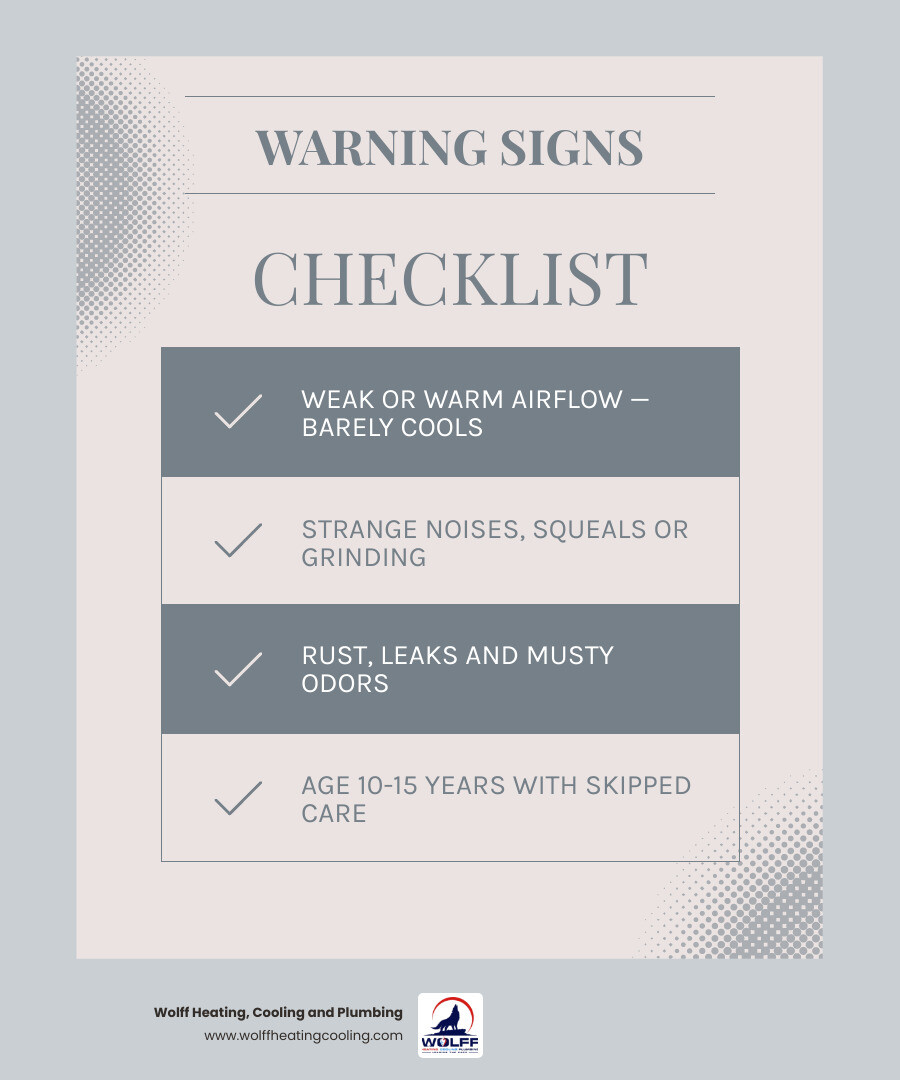
Knowing how to know if your swamp cooler needs replacing can save you from a miserable summer and a pile of repair bills. Here are the most common signs your unit may be past its prime:
- Weak or warm airflow — the unit runs but barely cools
- Strange noises — squealing, grinding, or rattling sounds
- Musty or swamp-like odors — mold or mildew in the pads or pan
- Visible rust or corrosion — especially on the water pan
- Water leaks — onto the roof, into ducts, or around the unit
- Rising energy bills — the unit is working harder for less result
- Frequent breakdowns — repairs are piling up
- Electrical issues — trouble turning on or off, tripped breakers
- Inconsistent airflow — some rooms get cool air, others don’t
- Age over 10-15 years — especially with minimal maintenance history
Swamp coolers are a practical, energy-efficient choice for dry climates like Albuquerque. They work by pulling warm outside air through water-soaked pads, dropping indoor temperatures by as much as 15-20°F on a dry day. But like any mechanical system, they don’t last forever. Most units have a lifespan of 10 to 15 years under normal conditions — and that window shrinks fast if maintenance has been skipped or your water is hard.
The tricky part? A failing swamp cooler doesn’t always quit all at once. It slows down gradually — a little less cool air here, a strange noise there — until one day it just can’t keep up with the heat. Recognizing the early warning signs is what separates a planned, budget-friendly replacement from an emergency call in the middle of July.
Below, we walk through 10 clear signs that replacement may be the smarter move, plus what you can do to extend your unit’s life if it’s not quite there yet.
Key terms for how to know if your swamp cooler needs replacing:
How to Know If Your Swamp Cooler Needs Replacing: 10 Clear Warning Signs
When you live in Albuquerque, Rio Rancho, or Bernalillo, your swamp cooler is your best friend from May through September. But even the best friendships can hit a rocky patch. If you are constantly adjusting the thermostat or find yourself sweating in your living room, it might be time for a change. Understanding A Simple Guide to How Your Swamp Cooler Actually Works can help you spot when components are failing.
How to know if your swamp cooler needs replacing when it stops cooling well
The most obvious sign of trouble is a lack of actual cooling. A properly functioning evaporative cooler should drop the temperature of the air coming into your home by 15 to 20 degrees compared to the outside air. If it is 95°F outside and your vents are blowing 85°F air, something is wrong.
This “lukewarm air” often happens because the pads aren’t getting fully saturated. While a new pump or fresh pads can sometimes fix this, an older unit might have structural issues preventing even water distribution. Furthermore, if you notice weak airflow or hot spots in certain rooms, the blower motor or the “squirrel cage” fan might be losing its efficiency.

How to know if your swamp cooler needs replacing after noises, smells, or leaks start
Your swamp cooler should be felt and seen, but ideally not smelled or heard. If your unit sounds like a jet engine taking off every time it starts, you likely have a failing motor or unbalance in the fan. A high-pitched squealing usually points to a slipping or worn fan belt, while grinding noises suggest the bearings are shot.
Odors are another major red flag. If your home smells like a literal swamp, you have a biological problem. Stagnant water and moldy pads create a breeding ground for bacteria. While a deep clean can help, if the smell persists, the unit’s pan or pads may be so compromised that replacement is the only hygienic option.
Water leaks are perhaps the most dangerous sign. Whether it’s a slow drip onto your roof or water pooling near your ductwork, leaks can cause thousands of dollars in structural damage. A rusted-out pan is almost impossible to patch permanently; once the metal is gone, the unit’s integrity is compromised.
When rust, corrosion, or electrical trouble means replacement is the smarter move
Surface rust on the exterior cabinet is often just cosmetic, but internal corrosion is a “virus” that spreads. In our New Mexico region, high mineral content in the water creates “scale.” This hard white crust acts as a physical barrier to airflow and water saturation, eventually eating through the metal.
Electrical issues, such as the unit failing to turn on, tripping breakers, or the motor smelling like burning plastic, are safety risks. If your wiring is brittle or the motor has reached the end of its lifespan after a decade of service, investing in a new, safer unit is always the smarter play.
Age, Maintenance History, and Water Damage Matter More Than Most Homeowners Think
Timing is everything. In May 2026, we are seeing many units installed in the early 2010s reaching their breaking point. While swamp coolers typically last 10 to 15 years, their actual “expiration date” depends heavily on how they were treated.
- 15-20 Years: The gold standard. This is achieved through meticulous annual maintenance, including professional spring startups and thorough winterization.
- 8-12 Years: The average for units that get their pads changed but might skip the deep cleaning or motor oiling every other year.
- 5-8 Years: The “harsh condition” lifespan. This happens when hard water scale is left to sit, or when homeowners skip winterization, leading to frozen lines and split tubing.
If you are unsure where your unit stands, The Ultimate Guide to Evaporative Cooler Troubleshooting can help you identify if your current issues are temporary or terminal.
Typical lifespan of a swamp cooler and when age becomes a red flag
When a unit hits the 12-year mark, we consider it to be in the “red zone.” At this age, the technology is likely outdated. Newer models use variable-speed motors and rigid media pads that are far more efficient than the old aspen-pad models of the past. If you find yourself calling for repairs every single summer, you are likely paying for a new unit one part at a time without getting the benefits of a modern system.
Why hard water, rusted pans, and skipped winterization shorten cooler life
Albuquerque water is notoriously hard, filled with calcium and magnesium. This mineral scale doesn’t just look bad; it creates dry spots in your pads where hot air can “whistle” through without being cooled.
Skipping winterization is the fastest way to kill a cooler. If water is left in the lines or the pan during a freeze, the expanding ice can split copper tubing or crack the plastic housing. Once the pan is rusted through, patches rarely last more than one season. If you can poke a screwdriver through the rust in your pan, it’s time to shop for a replacement.
Repair or Replace? What to Consider Before You Put More Time Into an Old Unit
At Wolff Heating, Cooling, and Plumbing, we often suggest the “50% Rule.” If the cost of a repair is approaching 50% of the value of a new unit—or if you’ve already replaced the motor twice in three years—it’s time to stop throwing good money after bad.
Problems that are usually repairable
Not every issue requires a crane and a new unit. Many common headaches can be solved with a simple service call:
- Dirty or “Ratty” Pads: These should be replaced annually (or twice a year with very hard water).
- Loose Fan Belt: If the belt sags more than half an inch, it just needs tightening or a cheap replacement.
- Stuck Float Valve: This is the most common cause of minor leaks and is an easy fix.
- Clogged Pump: Sometimes the pump just needs a good cleaning to get the water flowing again.
Problems that usually point to replacement
On the flip side, some problems are “unit killers”:
- Structural Rust: Holes in the pan or cabinet.
- Motor Cascade Effect: When a motor fails after 10+ years, it often indicates that the pump and bearings are about to go next.
- Severe Corrosion: When the scale is so thick it has fused components together.
- Outdated Design: If your unit uses old-fashioned aspen pads and you want the superior cooling of rigid media.
Why newer swamp coolers can improve efficiency and comfort
Modern swamp coolers are a massive leap forward. Units with variable-speed motors use 30-50% less electricity than older single-speed models. They are also significantly quieter, meaning you can actually hear your TV while the cooler is running. Upgrading to a unit with rigid media pads provides more surface area for evaporation, leading to more consistent temperatures throughout your home.
| Issue | Repair Worthy? | Replacement Likely? |
|---|---|---|
| Worn Fan Belt | Yes | No |
| Clogged Water Line | Yes | No |
| Rusted-Through Pan | No | Yes |
| 15+ Year Old Motor Failure | No | Yes |
| Musty Odors (New Pads) | Yes | If Pan is Moldy |
| Structural Cabinet Damage | No | Yes |
Portable vs Built-In Swamp Coolers: Which Type Gets Replaced Sooner?
Homeowners often ask us about the difference between the big unit on the roof and the portable ones they see at the hardware store. While both use evaporation, their lifespans and replacement triggers differ.
Portable swamp cooler replacement signs
Portable units are great for flexibility, but they generally have a shorter lifespan than built-in systems—often lasting only 5 to 10 years. Because they are moved around, they are more prone to physical damage. Signs you need to replace a portable unit include:
- The water reservoir develops cracks or leaks.
- The electrical cord becomes frayed or damaged.
- The internal media becomes clogged with minerals that can’t be cleaned out.
Built-in swamp cooler replacement signs
Built-in systems are “Texas Tough” (or in our case, New Mexico Tough). They are designed to handle the intense UV exposure of our high desert climate. However, because they are connected to your home’s ductwork, a failure here is more serious. If you notice dust blowing through your vents or water leaking into your ceiling, the built-in unit needs immediate attention.
When deciding between these systems or even considering an upgrade to refrigerated air, it’s helpful to look at Refrigeration vs Evaporation: Which System Wins? and ask yourself Is a Swamp Cooler Better Than AC for Your Home?.
What You Can Do to Extend the Life of Your Swamp Cooler Before Replacement
You don’t have to just sit by and watch your cooler age. Proactive care is the primary difference between a comfortable summer and an emergency replacement.
Simple maintenance habits that help your cooler last longer
- Annual Pad Replacement: Start every spring with fresh pads. This ensures maximum evaporation and prevents old mold from blowing into your home.
- The Vinegar Rinse: Adding a bit of white vinegar to the water can help inhibit mildew growth and break down minor scale.
- Oil the Bearings: Most blower assemblies and motors need a few drops of oil at the start of the season to prevent grinding.
- Install a Bleed-Off Kit: These kits slowly drain a small amount of water during operation, which prevents minerals and bacteria from concentrating in the pan.
- Maintain the “Exhaust Path”: Swamp coolers need an exit. You should have about two square yards of exhaust space (cracked windows or doors) for every 1000 cubic feet of air pumped in.
When to call for professional help instead of troubleshooting further
While DIY maintenance is great, some things require an expert. If you notice persistent odors that won’t go away after cleaning, repeat leaks that seem to move around, or any electrical symptoms like a humming motor that won’t turn, it’s time to call in the pros.
For homeowners in the Swamp Cooler Albuquerque NM area, having a licensed technician look at your unit can often extend its life by catching small problems before they become unit-killers.
Frequently Asked Questions About How to Know If Your Swamp Cooler Needs Replacing
Should I replace my swamp cooler if it still runs but barely cools?
Yes, if the unit is older than 12 years. While it might “run,” it is likely consuming more electricity and water than a modern unit while failing to provide comfort. If basic maintenance like new pads and a pump cleaning don’t restore that 15-20° drop, the unit’s internal components are likely too worn to perform.
Is rust always a reason to replace a swamp cooler?
Not always. Surface rust on the outside can be sanded and painted. However, “structural rust”—rust that goes all the way through the metal or is located on the bottom water pan—is a major red flag. Patches on a water pan are temporary band-aids that often fail during the hottest week of the year.
Can regular maintenance really add years to a swamp cooler?
Absolutely. A well-maintained unit can last up to 20 years, whereas a neglected one might fail in as little as 5 to 8 years. Regular cleaning prevents the “scale” from eating the metal, and proper winterization prevents the catastrophic damage caused by frozen water lines.
Conclusion
At Wolff Heating, Cooling, and Plumbing, we’ve spent over 25 years helping our neighbors in Albuquerque, Rio Rancho, Bernalillo, and the surrounding areas stay cool. We know that a swamp cooler isn’t just a machine; it’s what makes your home livable during a New Mexico heatwave.
If your unit is over a decade old, showing signs of heavy rust, or simply isn’t keeping you cool anymore, don’t wait for it to quit entirely. Recognizing how to know if your swamp cooler needs replacing early allows you to plan for an upgrade on your own terms. Whether you need a simple tune-up to squeeze a few more years out of your current unit or you’re ready to explore a more efficient replacement, our team is here to provide honest estimates and superior service.
Ready to ensure your home stays a sanctuary this summer? More info about air conditioning services is just a click away, or you can reach out to us directly for a professional evaluation of your cooling system.