
 Menu
Menu
When Your AC Blows Warm Air in Albuquerque’s Dry Heat
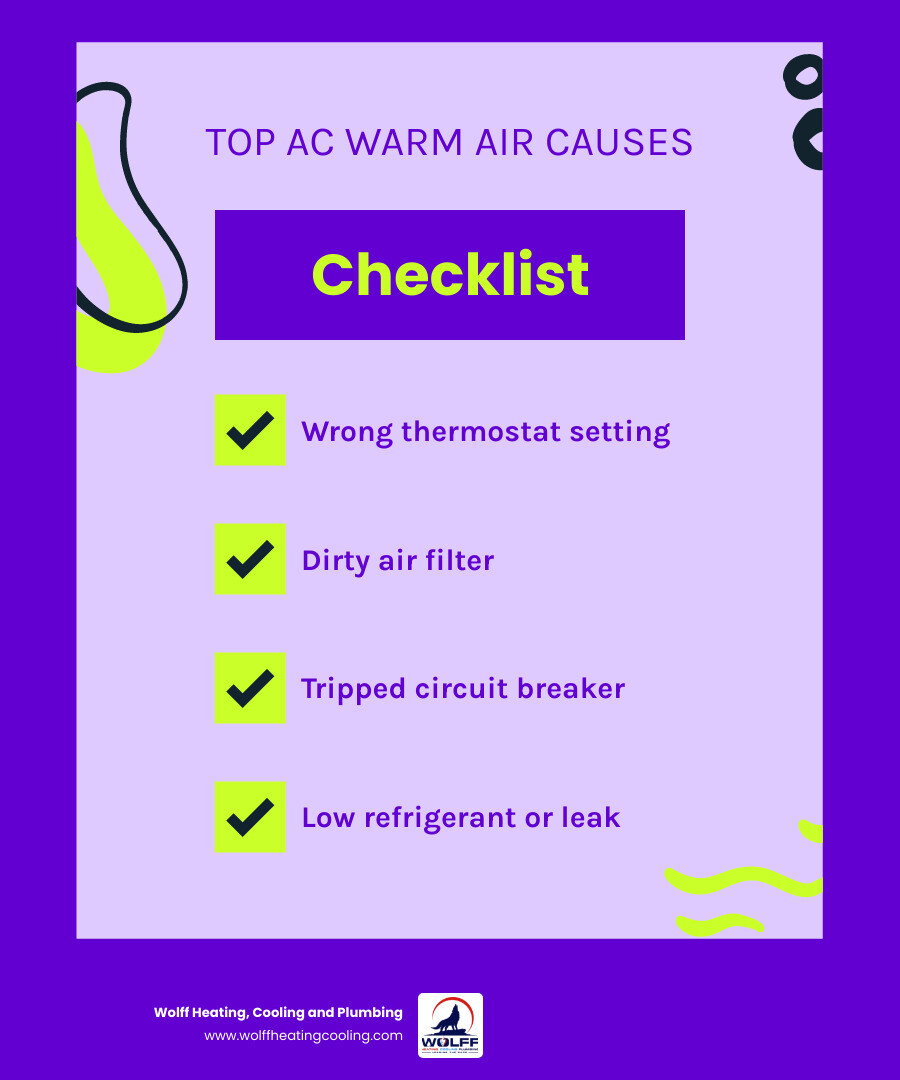
If you’re wondering why is my ac blowing warm air, you’re not alone — and the answer is usually one of a handful of fixable problems. Here are the most common causes:
- Wrong thermostat setting — fan set to “ON” instead of “AUTO,” or mode set to “heat”
- Dirty air filter — blocked airflow causes the system to overheat and stop cooling
- Tripped circuit breaker — the outdoor unit loses power while the indoor fan keeps running
- Low refrigerant or a leak — the system can’t absorb heat without enough refrigerant
- Dirty or blocked condenser coils — the outdoor unit can’t release heat properly
- Frozen evaporator coils — ice buildup blocks heat exchange, pushing warm air through vents
- Failing compressor or capacitor — the outdoor unit struggles or stops working entirely
- Ductwork leaks — hot attic air mixes with cooled air before it reaches your vents
In Albuquerque’s dry, triple-digit summers, a cooling system that starts blowing warm air goes from inconvenient to genuinely uncomfortable — fast. The desert heat puts extra stress on every component, and even a small problem can quickly snowball into a full breakdown when temperatures climb past 100°F.
The good news is that roughly 90% of warm air issues trace back to the outdoor condenser unit or simple maintenance oversights — things you can often diagnose yourself before reaching for the phone.
This guide walks you through what to check, what it means, and when it’s time to call in a professional.
Why Is My AC Blowing Warm Air?
When you feel a blast of heat coming from your vents in April 2026, it’s easy to panic. However, understanding the most common culprits can save you a lot of stress. Statistics show that about 90% of the time, the reason for warm air lies within the outdoor condenser unit. Because the indoor air handler is responsible for blowing the air, it might continue to run even if the outdoor unit—the part that actually does the cooling—has failed.
One of the most frequent reasons for this failure is airflow restriction. Your AC needs to breathe to work. If the outdoor unit is choked by debris or the indoor filter is packed with dust, the system simply cannot exchange heat. This leads to a frustrating cycle where the machine works harder and harder but produces less and less cooling. If you are experiencing this in the Duke City, you might want to explore more about Why AC Isn’t Cooling in Albuquerque to see how our local environment plays a role.
Understanding the Cooling Cycle and Why Your AC Is Blowing Warm Air
To troubleshoot effectively, it helps to know that your AC doesn’t actually “create” cold; it removes heat. The process relies on a refrigerant cycle. Refrigerant travels to the indoor evaporator coil, where it absorbs heat from your home’s air. This now-warm refrigerant travels outside to the condenser unit, where a large fan dissipates that heat into the outdoor air.
If any part of this cycle is interrupted—whether by a mechanical failure or a simple blockage—the heat stays inside. The result? You guessed it: the vents start blowing warm air. For a deeper dive into diagnosing these specific mechanical interruptions, our HVAC Troubleshooter can help you narrow down the symptoms.
Environmental Factors in New Mexico
Living in the high desert of New Mexico presents unique challenges for HVAC systems. Our intense sun and frequent dust storms mean that condenser coils get dirty much faster than in other climates. Furthermore, air conditioners are generally designed to achieve a 20-degree temperature drop. When Albuquerque temperatures soar past 100°F, an aging or poorly maintained system will struggle to keep up.
Dust accumulation is a silent killer for local units. It acts as an unwanted layer of insulation on your coils, preventing heat from escaping. This is why regular AC Service Albuquerque NM is so vital; we aren’t just checking boxes, we’re literally washing away the desert to keep your home livable.
Simple Troubleshooting for Warm Air Output
Before you assume the worst, there are several DIY steps you can take. Always prioritize safety: if you are inspecting electrical components, ensure the power is off. However, most of these checks involve simple observations that don’t require tools.
| Setting | What it Does | Effect on Air Temp |
|---|---|---|
| Fan: AUTO | Fan only runs when the system is actively cooling. | Consistently cool air when the unit is on. |
| Fan: ON | Fan runs 24/7, even when the compressor is off. | May blow warm air between cooling cycles. |
Checking Your Thermostat Settings
It sounds simple, but “user error” is a common reason why is my ac blowing warm air. Check that your thermostat is set to “COOL” and not “HEAT.” It’s surprisingly easy for a family member to bump the switch while dusting or passing by.
Additionally, check the fan setting. If it is set to “ON,” the blower will circulate air continuously. When the cooling cycle rests, the fan will simply push uncooled, room-temperature air through your house, making it feel warm. Switch it to “AUTO” so the fan only blows when the air is being actively chilled. If your screen is blank or flickering, it may simply be time for a battery replacement. Learn more about AC Thermostat Issues in Albuquerque if your device isn’t responding as it should.
The Impact of a Dirty Air Filter
A dirty air filter is perhaps the single most common reason an AC runs but fails to cool. When the filter is clogged with dust and pet dander, it restricts airflow. This lack of air causes the evaporator coil to become too cold, often leading it to freeze into a block of ice. Once the coil is frozen, air cannot pass through it effectively, and the air that does make it through isn’t cooled.
We recommend replacing your filters every 1 to 3 months, especially during the peak of summer when the wind is blowing dust across the Rio Grande valley. If you’ve noticed weak airflow along with the warmth, check out our guide on how to Fix Low AC Airflow in Your Albuquerque Home.
Inspecting the Outdoor Unit and Breakers
Take a walk outside. Your condenser unit needs at least two feet of clear space around it to “exhale” the heat it gathered from your living room. Overgrown weeds, stacked firewood, or even decorative fencing can trap heat around the unit, causing it to blow warm air back inside.
While you’re out there, listen to see if the fan is spinning. If the indoor fan is blowing but the outdoor unit is silent, check your electrical panel. Air conditioners use a lot of power, and it’s common for a circuit breaker to trip during a heatwave. If it has tripped, reset it once. If it trips again immediately, stop and call us—this indicates an electrical fault that could be dangerous. Maintaining this clearance and checking power are core parts of AC Maintenance Albuquerque Homes.
Mechanical Failures and Refrigerant Issues
If the simple fixes don’t work, you might be facing a mechanical failure. These issues typically require professional tools and EPA certification to resolve. If you notice any of these Signs You Need AC Repair, it’s best to turn the system off to prevent further damage.
Identifying Low Refrigerant and Leaks
Refrigerant is the “blood” of your AC. Unlike a car’s gas tank, an AC should never “run out” of refrigerant; it circulates in a closed loop. If the levels are low, you have a leak.
Signs of a refrigerant leak include:
- Hissing or bubbling noises coming from the lines.
- Ice buildup on the copper refrigerant lines or the indoor coil.
- A noticeable increase in your monthly energy bills.
Because refrigerant handling is strictly regulated by the EPA, homeowners should never attempt to “top off” the system themselves. If you suspect a leak, our team provides expert AC Repair Albuquerque NM to find the source and seal it properly.
Signs of a Failing Compressor or Capacitor
The compressor is the heart of your outdoor unit. If it fails, the refrigerant won’t circulate, and the air will stay warm. You might hear a loud rattling or “coins in a dryer” sound if the compressor is struggling.
Alternatively, the issue might be the capacitor—a small component that acts like a battery to give the motor the “kick” it needs to start. If the capacitor is dead, you might hear the unit hum, but the fan or compressor won’t start. These are serious electrical issues. If you hear strange sounds, read up on the Signs Your AC Compressor Is Failing before the unit gives out entirely.
Dealing with Frozen Evaporator Coils
It sounds counterintuitive, but your AC can blow warm air because it’s too cold. When airflow is restricted or refrigerant is low, the indoor evaporator coil drops below freezing. Moisture in the air hits the coil and turns to ice.
If you see ice on the indoor unit or the copper pipes outside, turn the AC off immediately. Running it with frozen coils can destroy the compressor. Switch the thermostat to “Fan Only” mode to help the ice melt naturally. This often results in water pooling, so keep an eye on your drain pan. Understanding Why Your AC Is Dripping Water Inside can help you manage the cleanup while you wait for a technician.
Preventive Maintenance for Albuquerque Homes
The best way to answer the question “why is my ac blowing warm air” is to prevent it from happening in the first place. In our dry, dusty climate, a “set it and forget it” mentality leads to mid-summer breakdowns. Regular AC Needs Professional Maintenance ensures that small issues like a weakening capacitor or a slightly dirty coil are caught before they leave you sweating in 105-degree heat.
Ductwork Integrity and Insulation
Even if your AC unit is working perfectly, your ductwork could be the problem. In many Albuquerque homes, ducts run through the attic. If your attic is 140°F and your ducts have leaks, that scorching air gets sucked into the system. This can overwhelm the AC’s ability to cool, causing the air at the vents to feel lukewarm.
Sealing duct leaks with mastic or metal tape is one of the Essential Steps for AC Maintenance that many homeowners overlook. Proper insulation ensures the cold air actually makes it to your bedroom instead of cooling your attic.
Preventive Maintenance to Avoid Why Your AC Is Blowing Warm Air
Annual tune-ups are the insurance policy for your comfort. A professional technician will:
- Clean the condenser and evaporator coils to ensure maximum heat exchange.
- Clear the condensate drain lines to prevent water damage and system shutdowns.
- Check electrical connections to prevent “hard starting” that wears out the compressor.
- Listen for Unusual AC Sounds in Albuquerque that signal impending part failure.
Frequently Asked Questions
Is it safe to keep running my AC if it’s blowing hot air?
No. If the air is warm, it means the system is not operating within its designed parameters. Continuing to run it can cause the compressor to overheat or lead to permanent mechanical failure. If you notice warm air, the safest move is to shut the system down at the thermostat or breaker and call for a professional inspection.
How do I safely thaw frozen evaporator coils?
Turn the system setting from “Cool” to “Off,” but turn the “Fan” setting to “On.” This will circulate warm indoor air over the ice without engaging the cooling cycle. It usually takes about 24 hours to thaw completely. Be sure to check your air filter during this time, as a dirty filter is the most likely cause of the freeze.
Why does my AC blow warm air only during the hottest part of the day?
This is often a sign of an undersized unit or poor insulation. When the outdoor temperature exceeds 100°F, an undersized system simply cannot remove heat fast enough to keep up with the “heat gain” of the house. It could also mean your condenser coils are dirty, reducing the unit’s efficiency just when it needs it most.
Conclusion
Dealing with an AC that has lost its cool is never fun, but most issues can be traced back to simple maintenance or common mechanical failures. Whether it’s a dusty filter, a tripped breaker, or a more serious refrigerant leak, taking quick action can prevent a small repair from turning into a full system replacement.
At Wolff Heating, Cooling, and Plumbing, we’ve spent over 25 years helping our neighbors in Albuquerque, Rio Rancho, and the surrounding communities stay comfortable. We pride ourselves on superior work, honest estimates, and the kind of local expertise that only comes from decades of working in the New Mexico desert. Don’t spend another minute in a hot house—Schedule your professional cooling service today and let us get your home back to the crisp, cool sanctuary it should be.