
 Menu
Menu
What to Do When Your Swamp Cooler Stops Cooling During Monsoon Humidity in Albuquerque
If you’re dealing with what to do when your swamp cooler stops cooling during monsoon humidity in Albuquerque, here’s a quick answer:
- Check outdoor humidity first. If it’s above 40-50%, your cooler may be hitting its physical limit — not broken.
- Switch to fan-only mode. Turn off the water pump and run the fan alone to circulate air without adding more moisture.
- Open windows strategically. Crack windows on the opposite side of the house from the cooler to create an exhaust path for warm, humid air.
- Inspect the cooling pads. Look for dry spots, mineral crusting, or sagging — clogged pads make humidity problems worse.
- Check the water pump. Listen for a hum and confirm water is flowing evenly across all pads.
- Monitor indoor humidity. If it creeps above 50%, reduce cooler use to prevent mold growth.
- Call a professional. If the unit is still blowing warm air after these checks, a pump, motor, or electrical issue may need expert diagnosis.
One Albuquerque homeowner described sitting in an 85-degree house, her swamp cooler running on high, feeling like she was “working in a jungle” — complete brain fog, no relief. It wasn’t a broken unit. It was July, the monsoon had arrived, and the air outside was already saturated with moisture. Her cooler simply couldn’t do its job.
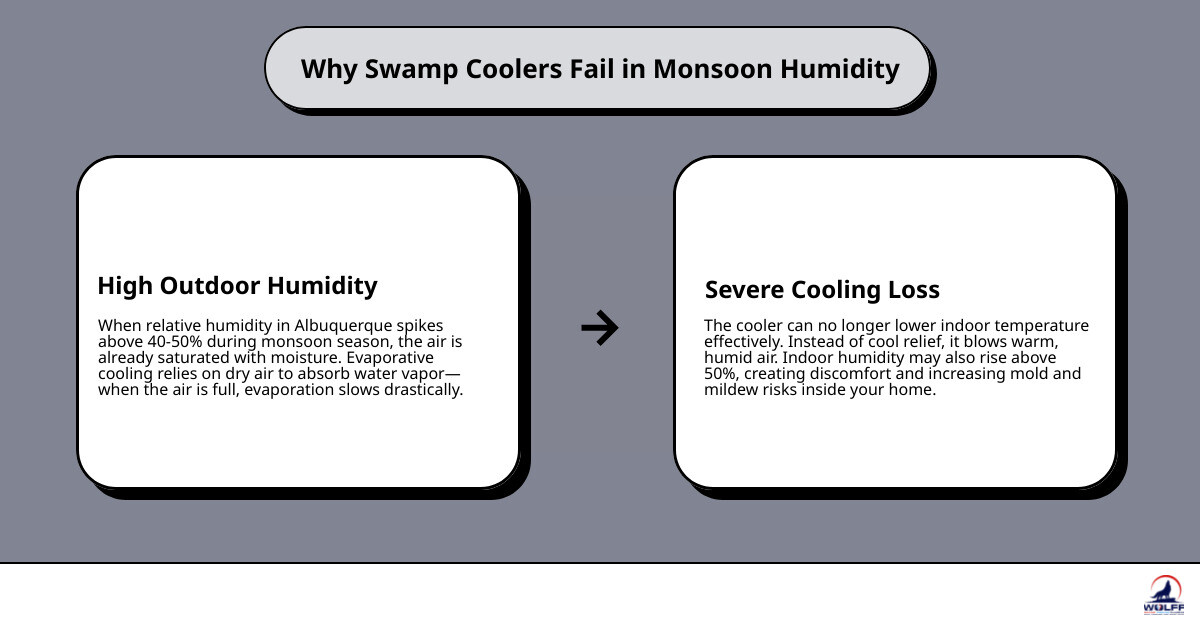
This is one of the most common and frustrating surprises for Albuquerque residents every summer. For most of the year, a swamp cooler is a genuinely excellent way to stay cool in New Mexico’s dry desert climate. But when the monsoon rolls in — typically July through August — outdoor humidity regularly spikes above 40%, and evaporative cooling starts to fail fast. The physics are unforgiving: a swamp cooler cools air by evaporating water, and when the air is already full of moisture, evaporation slows or stops entirely.
What makes Albuquerque’s situation even trickier is the combination of rising summer temperatures and hard water that accelerates wear on cooler components. In 2023, the city hit triple-digit temperatures 17 times, and 2024 ranked as the second-warmest year on record. When heat and humidity hit at the same time, a swamp cooler that’s even slightly under-maintained can go from marginal to useless in a matter of hours.
The good news is that many of the fixes are fast, practical, and something you can start on right now.
Why Evaporative Coolers Struggle in High Humidity
To understand why your system suddenly feels like a lukewarm blow-dryer, we have to look at the basic science of evaporative cooling. Unlike refrigerated air conditioning systems, which use chemical refrigerants and compressors to actively strip heat and moisture from the air, swamp coolers rely entirely on the natural thermodynamic process of water evaporation.
When dry air passes through a water-saturated cooling pad, the liquid water absorbs sensible heat from the air to convert into water vapor (latent heat). This exchange drops the temperature of the air significantly. In ideal desert conditions, where relative humidity is under 10%, a well-maintained swamp cooler can achieve an impressive 22 to 23-degree temperature drop between the outdoor intake and the indoor output.
For a deeper dive into how this process works under different atmospheric conditions, check out A Comprehensive Guide to Humidity Evaporative Cooling.
However, this thermodynamic magic trick requires “thirsty” air. If you want to know how environmental limits affect your comfort, read The Ultimate Guide to Swamp Cooler Limitations in High Humidity.
The 40% Humidity Threshold
As relative humidity rises, the air’s capacity to absorb more moisture drops. Think of the air like a sponge: when it is bone-dry, it easily soaks up water and cools your home. When the air is already damp, the sponge is mostly full.
- Under 10% Humidity: Optimal performance. Your cooler is running at peak efficiency.
- 10% to 20% Humidity: Performance is slightly degraded, but still highly effective.
- Approaching 40% Humidity: The evaporation rate slows down dramatically. The system loses its ability to lower temperatures significantly.
- Above 40% to 50% Humidity: The evaporative process essentially stops. The air coming out of your vents will feel sticky, warm, and humid.
During Albuquerque’s July and August monsoon season, relative humidity frequently spikes past this 40% threshold. As we look at climate trends in July 2026, our summer seasons are becoming increasingly hot and humid, meaning your swamp cooler faces these physical limitations more often and for longer stretches than in decades past.
Indoor Moisture and Mold Risks
When you run a swamp cooler in high humidity, you aren’t just failing to cool your home — you are actively pumping gallons of water vapor into an already saturated indoor space. A standard evaporative cooler can consume up to 10 gallons of water per hour. If that water cannot evaporate cleanly to cool the air, it simply recirculates as heavy, damp air inside your rooms.
This trapped moisture can quickly lead to severe indoor air quality issues. High indoor humidity (above 50-60%) creates the perfect breeding ground for mold spores and mildew. You might begin to notice:
- Damp carpets, rugs, and upholstery.
- Condensation pooling on interior window panes.
- A distinct, sour, musty odor venting through the house.
- Mold growing on organic materials like leather shoes, wooden cabinets, and drywall.
To protect your home from these airborne invaders during the wet season, take a look at our guide: New Mexico Monsoons Don’t Let the Rain Turn Your Home Into a Petri Dish.
What to Do When Your Swamp Cooler Stops Cooling During Monsoon Humidity in Albuquerque
If your home has suddenly turned into a tropical rainforest, don’t panic. Before assuming your equipment is completely broken and calling for an emergency replacement, there is a sequence of troubleshooting steps you can take to manage the humidity and verify your system’s mechanical health.
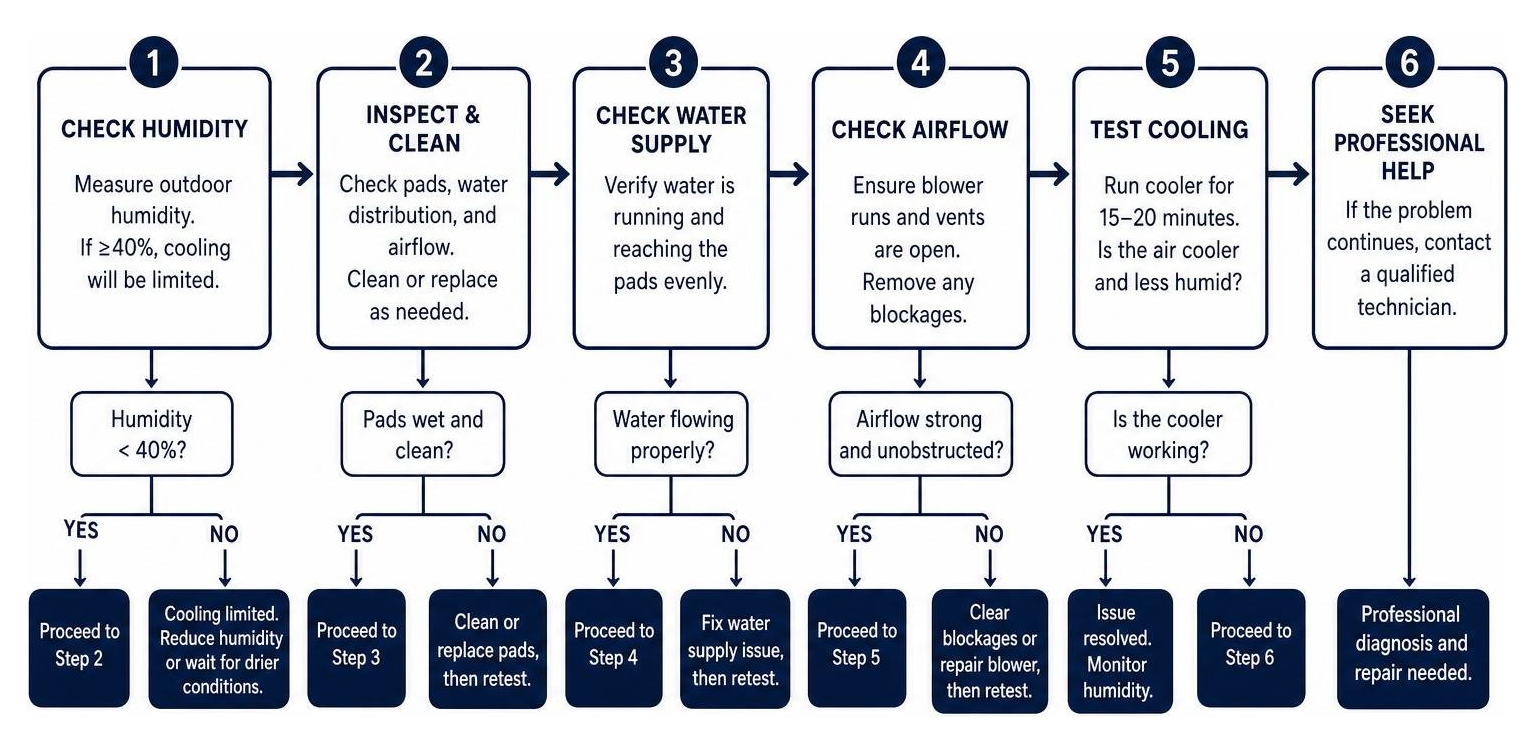
For a complete, step-by-step diagnostic breakdown of common system failures, read The Ultimate Guide to Evaporative Cooler Troubleshooting.
Immediate DIY Steps: What to Do When Your Swamp Cooler Stops Cooling During Monsoon Humidity in Albuquerque
If you are looking for what to do when your swamp cooler stops cooling during monsoon humidity in Albuquerque, start with these immediate, hands-on adjustments:
Optimize Your Cross-Ventilation (The “Crack-a-Window” Rule): Unlike refrigerated AC, which requires a completely sealed home, swamp coolers operate on a high-volume, positive-pressure air exchange system. If your windows are closed, the humid air gets trapped, static pressure builds up, and the cooler will stop moving air. You must crack windows open slightly — ideally on the opposite side of the house from where the cool air vents enter. This creates an exhaust path, drawing the warm, humid air out of your living space.
Switch to “Fan Only” Mode: When the outdoor relative humidity is extremely high (such as during an active monsoon rainstorm), turn off the water pump switch on your thermostat or wall control, but leave the fan running. This stops the system from adding more moisture to your home while still providing a breeze that helps with the body’s natural evaporative cooling (sweating).
Check and Wet Your Pads Manually: If you suspect water isn’t distributing properly, safely turn off the power to the unit, open the side panels, and check the pads. If you see dry vertical stripes, your distributor tubes (spider lines) may be clogged with minerals. You can manually wet the pads with a hose to see if that temporarily restores cooling, which indicates a water delivery issue.
Verify the Water Float Valve Level: Albuquerque’s hard water scale can cause the float valve to stick. If the float is stuck too low, the reservoir pan won’t fill, the pump will run dry, and the pads will remain hot. If it’s stuck too high, water will constantly overflow onto your roof. Ensure the water level sits about an inch below the top of the overflow pipe.
Professional Solutions: What to Do When Your Swamp Cooler Stops Cooling During Monsoon Humidity in Albuquerque
If your DIY checks reveal that the pads are bone-dry, the pump isn’t humming, or the fan motor is making grinding noises, it’s time to bring in the experts.
Mechanical failures like a burnt-out water pump, a frayed blower belt, a seized fan motor, or corroded electrical wiring require professional tools and expertise to repair safely. Operating a struggling system can burn out the main motor, turning a simple repair into a costly replacement.
When you need reliable support, you can Schedule HVAC Service with our experienced team. We proudly serve homeowners across Albuquerque, Rio Rancho, Placitas, Corrales, Cedar Crest, Tijeras, and Bernalillo.
How Albuquerque’s Hard Water Worsens Monsoon Cooling Failures
If monsoon humidity is the seasonal enemy of your swamp cooler, hard water is its year-round silent saboteur.
Albuquerque’s municipal water is sourced from groundwater aquifers in the Rio Grande Basin. As this water filters through our mineral-rich desert soils, it picks up exceptionally high concentrations of calcium and magnesium. When this hard water is pumped into your swamp cooler and evaporates, it leaves these minerals behind. The result is a heavy, white, chalky scale that acts like concrete inside your system.
Mineral Scale and Clogged Pads
As mineral scale accumulates over the summer, it creates a cascade of mechanical problems:
- Clogged Water Lines: Calcium deposits block the tiny holes in your water distributor tubes (spider lines), preventing water from reaching parts of the cooling pads.
- Stiff, Calcified Pads: The cooling pads become stiff and crusty. They lose their ability to absorb and hold water, meaning the hot outdoor air passes straight through the dry gaps without being cooled.
- Restricted Airflow: Thick scale buildup physically blocks the air passages through the pads, forcing your fan motor to work twice as hard to push air, which accelerates motor wear and increases your energy bills.
To combat this, you must choose the right pad material. Here is a quick comparison of the two primary options used in New Mexico homes:
| Pad Type | Average Lifespan in Albuquerque | Resistance to Hard Water | Cooling Efficiency | Maintenance Needs |
|---|---|---|---|---|
| Standard Aspen Wood Fiber | 1 season (needs annual replacement) | Low (clogs and sags quickly under mineral load) | Moderate | High (requires frequent cleaning and seasonal replacement) |
| Rigid Cellulose Media (e.g., Mastercool) | 3 to 5 years | High (rigid structure resists scale buildup better) | High (retains water evenly) | Low (self-cleaning design helps shed minerals) |
Preventing Hard Water Damage with Bleed-Off Valves
You can’t change Albuquerque’s geology, but you can protect your cooler from it. The most effective way to manage mineral buildup is by installing a bleed-off valve or an automatic purge pump.
As water evaporates in your cooler, the remaining water in the pan becomes increasingly concentrated with minerals. A bleed-off valve continuously drains a small percentage of this highly concentrated water, replacing it with fresh, low-mineral water. Alternatively, an automatic purge pump will periodically flush the entire reservoir every few hours of operation. This simple addition can easily double the lifespan of your cooling pads and protect your water pump from early failure.
When to Consider Converting to Refrigerated Air Conditioning
While routine maintenance can keep a swamp cooler running well for 15 to 20 years in Albuquerque, many local families are deciding they are ready for a change. The combination of hotter summers and heavier monsoon seasons is pushing evaporative technology past its comfort limits.
If you are weighing your options between sticking with evaporative cooling or upgrading your home comfort, read our comparison guide: Choosing Between Refrigerated Air and Swamp Coolers in the Desert.
Swamp Cooler Limitations in 2026 Climate Trends
Our climate is shifting. With Albuquerque experiencing more frequent triple-digit summer days and unpredictable, humid monsoon patterns, the physical limitations of swamp coolers are becoming harder to ignore.
When outdoor temperatures exceed 95 degrees, the water on your cooling pads evaporates so quickly that standard water lines struggle to keep the media wet. If you couple that extreme heat with a sudden spike in monsoon humidity, a swamp cooler can leave indoor temperatures hovering in the mid-80s.
For some homeowners, a dual-system setup is a viable transition: they use the swamp cooler during the bone-dry months of May and June to keep energy bills low, then switch to a supplemental cooling system when the humid July storms arrive. However, for most, a complete conversion is the most practical path to reliable, year-round comfort.
The Benefits of Switching to Central AC or Heat Pumps
Converting from a swamp cooler to a refrigerated air conditioning system or a high-efficiency heat pump offers several life-changing benefits:
- Predictable, All-Weather Comfort: Refrigerated air cools your home to your exact thermostat setting, regardless of whether it is 105 degrees outside or pouring rain.
- Advanced Humidity Control: Instead of adding moisture to your home, refrigerated systems actively extract humidity, keeping your indoor air crisp, dry, and comfortable.
- Superior Indoor Air Quality: Swamp coolers pull raw, unfiltered outdoor air directly into your home. This means they also pull in dust, pollen, and wildfire smoke. Refrigerated systems recirculate and filter your indoor air, protecting your family from seasonal allergies and smoke.
- Increased Property Value: Homes with modern refrigerated air systems are highly sought after on the New Mexico real estate market, often commanding higher resale values.
If you are ready to explore this upgrade for your home, review our step-by-step transition resource: A Practical Guide to Swamp Cooler to AC Conversion.
Frequently Asked Questions About Swamp Coolers and Humidity
Can I run my swamp cooler when it is raining or highly humid?
Yes, but it won’t provide much cooling. When it is raining or highly humid outside, the evaporative process slows to a crawl. The air coming out of your vents will feel damp and warm. During these humid periods, it is best to switch your unit to fan-only mode. This turns off the water pump while keeping the blower fan running, creating a comfortable indoor breeze without pumping extra moisture into your home.
How do I know if my swamp cooler pump is broken or just struggling with humidity?
The easiest way to tell is by checking the cooling pads. Turn the system on “Cool” mode and let it run for 15 minutes. Safely access the unit and inspect the pads. If they are completely dry, or if you don’t hear a low humming sound coming from the water pump in the reservoir, your pump may be broken, clogged with mineral scale, or disconnected. If the pads are completely wet and cold to the touch, but the air inside your home still feels warm and sticky, your system is working mechanically — it is simply struggling against high outdoor humidity.
How can I monitor indoor humidity levels to prevent mold?
You can monitor your home’s air easily using an inexpensive digital hygrometer, which you can find at any local hardware store. For optimal comfort and to prevent mold and mildew growth during the monsoon season, you should keep your indoor relative humidity below 50%. If your hygrometer shows indoor humidity creeping above 55% or 60%, you should turn off your swamp cooler’s water pump, increase ventilation by opening windows wider, or run a standalone dehumidifier in high-moisture rooms.
Conclusion
Dealing with what to do when your swamp cooler stops cooling during monsoon humidity in Albuquerque is a rite of passage for New Mexico residents. Fortunately, once you understand how humidity limits the evaporation process and how Albuquerque’s hard water impacts your system, you can take smart, proactive steps to keep your home comfortable and safe from mold.
For over 25 years, the team at Wolff Heating, Cooling, and Plumbing has provided honest estimates, superior workmanship, and reliable heating, cooling, and plumbing services to our neighbors in Albuquerque, Rio Rancho, Placitas, Corrales, Cedar Crest, Tijeras, and Bernalillo. Whether you need a seasonal swamp cooler tune-up, a water pump replacement, or you are ready to discuss converting your home to a high-efficiency refrigerated air system, we are here to help.
To learn more about keeping your indoor air fresh, clean, and comfortable all summer long, explore our guide: Evaporative Cooling Without the Moldy Aftertaste. Ready for professional support? Contact Wolff Heating, Cooling, and Plumbing today to schedule your service.