
 Menu
Menu
Concerned About Mold Risk During Monsoon Season in New Mexico?
Mold risk during monsoon season in New Mexico is real, rapid, and often catches homeowners completely off guard. New Mexico’s desert climate creates a false sense of security — if you’ve lived here long enough, you know the air is bone dry for most of the year. But when the North American Monsoon System arrives between mid-June and late September, that changes fast.
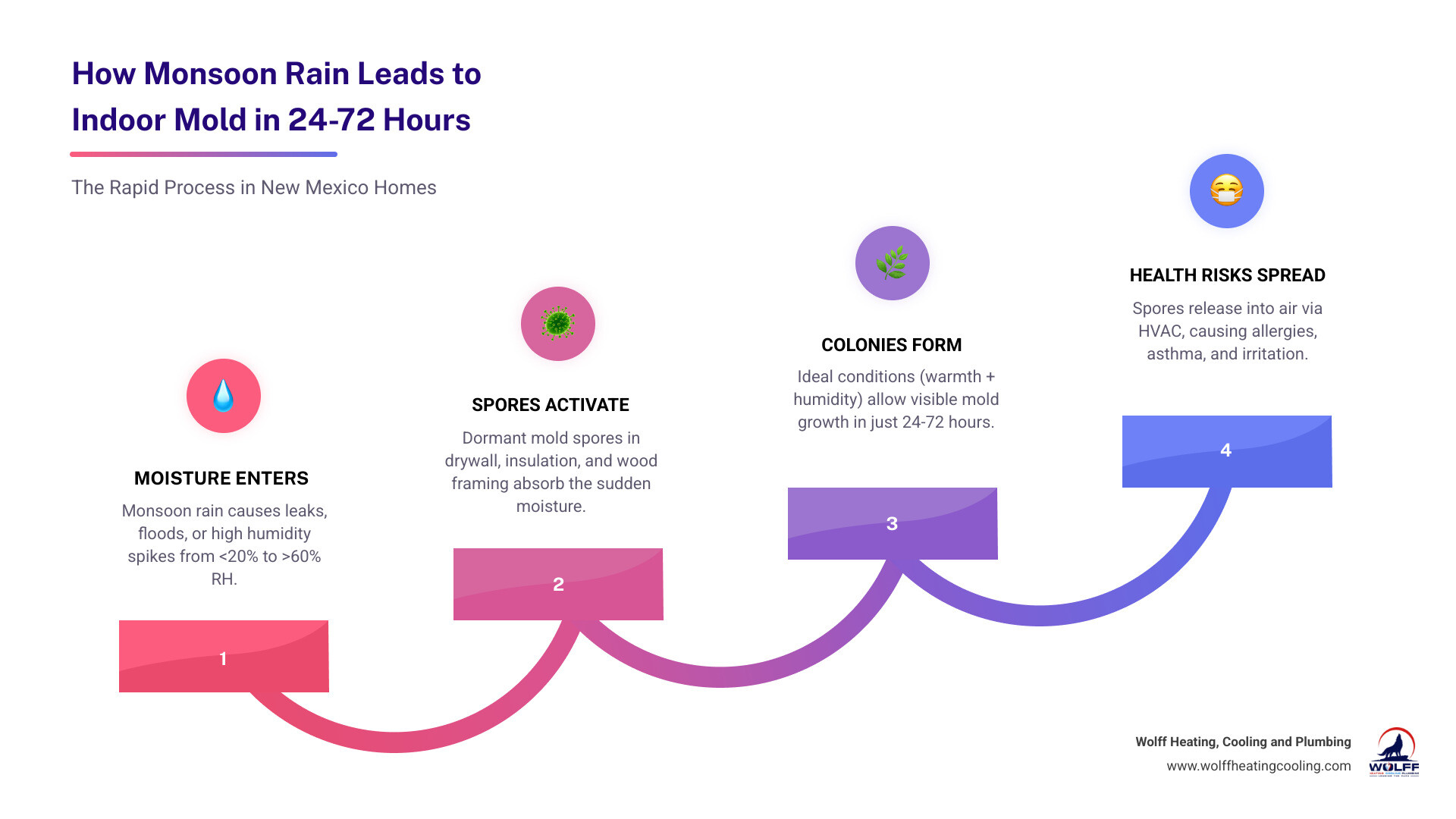
Albuquerque’s relative humidity can shoot from under 20% to above 60% in just a few days. That sudden swing gives dormant mold spores exactly what they need to activate — and visible mold colonies can form in as little as 24 to 72 hours after moisture enters your home.
Here’s a quick summary of what every New Mexico homeowner should know:
- When it happens: Monsoon season runs June 15 through September 30, with the heaviest rain and flood risk peaking in July and August
- Why it’s dangerous for homes: Albuquerque receives nearly half its annual rainfall in this short window, soaking materials that have been dry and porous all year
- How fast mold develops: Mold can activate and form visible growth within 24 to 72 hours of moisture exposure
- Where it hides first: Crawl spaces, attics, HVAC ducts, bathroom walls, and areas near roof leaks or flooded foundations
- Who’s most at risk: Children, seniors, and anyone with asthma, allergies, or a compromised immune system
- What you can do: Control indoor humidity below 50%, fix leaks immediately, maintain your HVAC system, and act fast after any storm or flooding event
Consider what happened to one Albuquerque family who noticed a minor ceiling stain during monsoon season and let it go. That small stain turned into water damage through the drywall and mold in the attic insulation. The lesson? In New Mexico, monsoon moisture is never just a cosmetic problem.
This guide walks you through everything — from understanding what the monsoon really does to your home, to preventing mold before the first storm rolls in, to knowing when to call in professional help.
What Monsoon Season Really Means for New Mexico Homes
The North American Monsoon System, or NAMS, is the seasonal weather pattern that brings summer moisture into New Mexico and the greater Southwest. For our area, monsoon season is generally recognized as June 15 through September 30, with the biggest impact usually arriving in July and August.
That matters because Albuquerque gets nearly half of its yearly rainfall during this short stretch. A city that may feel crisp and extremely dry in spring can suddenly deal with sticky air, heavy downpours, roof leaks, dust storms, and flash flooding. In the Rio Grande Valley and surrounding communities like Rio Rancho, Corrales, Placitas, Bernalillo, Cedar Crest, and Tijeras, that quick change can push homes from “dry as toast” to “why does the hallway smell like a wet cardboard box?” in a hurry.
When monsoon season starts and why timing matters
The official start date matters because mold prevention works best before the first real storm. Once late June and early July arrive, small problems like worn caulking, clogged gutters, cracked flashing, or a slow plumbing drip can become major moisture events.
Keep an eye on weather alerts, especially when forecasts call for repeated storm cycles. One rainy afternoon may dry out. Three in a row can overwhelm roofs, window seals, yards, and drainage.
Why mold risk during monsoon season in New Mexico rises so fast
The reason mold risk during monsoon season in New Mexico jumps so quickly is simple: spores are already present. Mold spores float in the air year-round. They do not need an invitation, a key, or even good manners. They just need moisture, a food source, and enough time.
Homes provide plenty of food sources:
- Drywall paper
- Wood framing
- Insulation
- Carpet backing
- Dust buildup
- Stored cardboard
When humidity rises or a storm leaks into the home, dormant spores can wake up fast. Research for New Mexico homes shows visible mold can begin forming within 24 to 72 hours after materials get wet.
Why a dry climate does not protect your house from mold
A common myth is that desert homes are naturally mold-proof. They are not.
Dry climates can actually set the stage for trouble because building materials stay thirsty and porous. When sudden humidity or wind-driven rain shows up, those materials can absorb moisture quickly. If that moisture gets trapped behind walls, under flooring, in insulation, or inside ductwork, mold gets a head start before the surface even looks damp.
Where Mold Hides First After Monsoon Rain

Mold usually shows up where moisture lingers and airflow is poor. After monsoon rain, the first places to check are not always the obvious ones.
The highest-risk rooms and building materials
The most vulnerable areas usually include:
- Bathrooms with weak exhaust
- Laundry rooms
- Kitchens, especially under sinks and behind refrigerators
- Closets on exterior walls
- Attics
- Crawl spaces
- Carpet pad and subfloor
- Drywall and insulation
Bathrooms and laundry rooms are already moisture-prone. Add monsoon humidity, and they can cross the line from damp to mold-friendly fast. Closets are sneaky because they stay dark, still, and packed with fabric. Crawl spaces and attics are even worse because problems can grow there quietly for weeks.
Roof leaks, flooding, and foundation moisture pathways
In New Mexico, monsoon storms often expose weak points that stayed hidden all spring.
Watch for:
- Roof flashing failures
- Missing or damaged shingles
- Trouble spots on flat or low-slope roofs
- Overflowing gutters
- Downspouts dumping water too close to the house
- Poor grading that sends runoff toward the foundation
- Water pooling near stucco or slab edges
Flash flooding is a major monsoon hazard here, especially in July and August. Rapid water rise can happen with very little warning. If stormwater reaches your home, moisture may move into walls, flooring, crawl spaces, and foundations even when the visible water seems minor.
The HVAC and ventilation trouble spots homeowners miss
Your HVAC system can either help control moisture or accidentally spread it.
Common trouble spots include:
- Air handler compartments
- Evaporator coils
- Condensate drain lines
- Wet or compressed duct insulation
- Return vents pulling in damp, dirty air
- Poorly ventilated mechanical closets
If condensate is not draining properly, or if ducts have hidden moisture, mold can develop inside the system and circulate spores through the house. This is one reason seasonal maintenance matters so much. Our guide on HVAC maintenance and mold prevention explains how routine service helps reduce those risks. Good airflow also matters, and ventilation for indoor air quality plays a big role during monsoon humidity.
Mold Risk During Monsoon Season in New Mexico: Health Effects, Allergens, and Red Flags
Monsoon season does not just affect buildings. It also affects breathing, allergies, and indoor comfort.
Two common molds that often spike after rainy periods are Alternaria and Cladosporium. These are well-known allergen triggers, and they can become more noticeable when outdoor spore counts rise after storms and indoor moisture problems follow right behind.
Common mold exposure symptoms that worsen during monsoon season
For many people, mold risk during monsoon season in New Mexico shows up first as symptoms, not stains.
Common signs include:
- Sneezing
- Runny or stuffy nose
- Itchy or watery eyes
- Coughing
- Wheezing
- Headaches
- Sinus pressure
- Sore throat
- Skin irritation
People with asthma, allergies, or chronic respiratory issues may notice symptoms get worse after rain events. Children, older adults, and people with weakened immune systems are generally more vulnerable too.
A musty or earthy smell is another red flag. If a room smells like wet socks and old books after a storm, do not ignore it.
The outdoor and indoor allergens that spike after rain
Monsoon weather can be a one-two punch. Outdoor rain and haboob conditions can stir up dust, spores, and other irritants, while indoor dampness can create a separate mold issue at home.
Research in the Southwest has shown respiratory complaints often rise in the 24 to 48 hours after major dust storm events. Add indoor mold exposure to that mix, and some households feel miserable fast.
When to call a doctor or allergist
It is time to contact a doctor or allergist if:
- Symptoms keep returning at home
- Asthma flares become more frequent
- You have shortness of breath
- A child is coughing or wheezing after storms
- Symptoms last even after cleaning
- You suspect mold exposure after flooding
It helps to track when symptoms happen. If everyone feels better after leaving the house for a few hours, that is useful information to share with a medical provider.
How to Prevent Mold Before and During the Monsoon
The best mold cleanup plan is the one you never need. Prevention starts in late spring and continues through monsoon season.
Your late-spring and early-summer prevention checklist
Before storms ramp up, we recommend checking:
- Roof surfaces, flashing, and penetrations
- Window and door caulking
- Plumbing under sinks and behind toilets
- Gutters and downspouts
- Yard grading around the foundation
- Exterior drainage paths
- Attic ventilation openings
- Storage areas for cardboard or fabric sitting on floors
Extra smart moves include:
- Move stored items off garage or closet floors
- Protect valuables in waterproof bins
- Know where sandbags are available locally
- Sign up for NOAA Weather Radio or local emergency alerts
- Review your flood-prone areas before July
How to monitor and control indoor humidity effectively
A small hygrometer can do a lot of good. It tells you whether indoor humidity is creeping into the danger zone.
During monsoon months, aim to keep indoor humidity below 50% if possible. Once humidity climbs past 60%, mold risk rises quickly.
Helpful strategies include:
- Run bathroom fans during and after showers
- Use kitchen exhaust while cooking
- Keep windows closed on very humid days
- Use portable or whole-home dehumidification where needed
- Dry wet bath mats, towels, and laundry promptly
- Check for condensation on windows or walls
For homeowners looking for humidity control options, our pages on dehumidifiers in Albuquerque and whole-home dehumidifier solutions are a good place to start.
HVAC maintenance that helps stop mold growth
Your HVAC system should help remove moisture, not give it a place to camp out.
Key maintenance steps include:
- Replace filters on schedule
- Inspect and clear the condensate drain
- Check coils for buildup
- Inspect ductwork for damp insulation or leaks
- Make sure airflow is balanced
- Address any signs of stale or musty air
If you want a broader look at protecting your home’s air, visit our indoor air quality page or learn more about indoor air quality testing in Albuquerque.
Ventilation and air cleaning strategies for monsoon months
Good ventilation helps remove stale, damp indoor air and replace it with healthier airflow under controlled conditions. In tightly sealed homes, poor ventilation can let humidity hang around far too long.
Useful tools may include:
- Properly working bath and kitchen exhaust
- Balanced home ventilation
- Air filtration upgrades
- Whole-home or room air purifiers
To learn more, see our guide on the importance of ventilation systems and our air purifiers in Albuquerque page.
What to Do If You Find Mold After a Storm or Flood
If you find mold after a storm, speed matters. The goal is to stop moisture, dry materials, and prevent spores from spreading.
Immediate steps in the first 24 to 48 hours
Start here:
- Make sure the area is safe.
- Shut off power if standing water is present.
- Stop the water source if possible.
- Remove wet rugs, boxes, fabrics, and soft furnishings.
- Take photos and notes for records.
- Start drying with fans and dehumidification.
- Open access panels or move furniture away from wet walls if safe.
If floodwater is involved, treat it carefully. Never wade into standing water without confirming electrical safety, and never drive through flooded roads. “Turn Around, Don’t Drown” applies here for a reason.
Safe DIY cleanup for small mold problems
Small, surface-level mold on non-porous materials may be cleaned by homeowners if the source of moisture has been fixed.
Use:
- Gloves
- Eye protection
- An N95-style mask
- Soap or detergent and water
- In some cases, vinegar or baking soda for surface cleaning
DIY cleanup is generally best for very limited areas on hard, cleanable surfaces. Do not just paint over mold or spray something on it and declare victory. Mold loves false confidence.
When professional remediation is the safer choice
Professional help is the safer path when mold:
- Covers a large area
- Keeps coming back
- Involves drywall, insulation, carpet, or other porous materials
- Follows sewage or contaminated floodwater
- May be inside HVAC components or ductwork
- Is tied to hidden leaks behind walls or above ceilings
- Causes strong ongoing odors or health symptoms
DIY cleanup vs. professional remediation
| Situation | DIY may be reasonable | Professional help is usually best |
|---|---|---|
| Small spot on tile or metal | Yes | Sometimes |
| Mold on drywall or carpet | No | Yes |
| Post-flood contamination | No | Yes |
| Suspected HVAC mold | No | Yes |
| Recurring mold after cleaning | No | Yes |
What tenants and landlords should both document and report
If you rent, report mold or water intrusion in writing right away. Include:
- Photos
- Dates
- Where the problem is located
- When the leak or flooding started
- Any symptoms or odors noticed
A written timeline helps everyone. New Mexico public health guidance also emphasizes that tenants and landlords should work together, inspect the problem, fix the moisture source, and keep records of repair requests and responses.
New Mexico Resources, Flood Safety, and Smart Next Steps
Monsoon season is part weather event, part home maintenance test, and part reminder that water always finds the weak spot.
Official safety tips for flash floods and mold cleanup
For flood safety and cleanup, keep these basics in mind:
- Know the difference between a watch and a warning
- Move to higher ground when flooding threatens
- Do not drive through flooded roadways
- Avoid standing water around electricity
- Wear gloves, protective clothing, and a mask during cleanup
- Keep children and vulnerable family members away from damaged areas
New Mexico emergency management guidance also recommends monitoring NOAA Weather Radio and local alerts during monsoon season.
Local indoor air quality support for homes after monsoon moisture
After a storm, the visible damage may only be part of the story. Damp insulation, wet duct liners, and poor ventilation can keep affecting indoor air long after surfaces look dry.
If your home still smells musty or feels humid, explore support for air quality services in Rio Rancho and learn how to improve your home’s indoor air quality.
When it is time to schedule an indoor air quality evaluation
Consider an indoor air quality evaluation if you have:
- Persistent musty odors
- Repeated allergy symptoms indoors
- Recent roof leaks or flooding
- Visible condensation around vents or windows
- Concerns about ductwork or circulation
Our New Mexico comfort guide to perfect indoor air offers more practical tips, and our indoor air quality page explains how we help homeowners protect healthier air at home.
Frequently Asked Questions about Mold Risk During Monsoon Season in New Mexico
How fast can mold grow after a monsoon leak or flood?
Very fast. In the right conditions, mold can begin developing within 24 to 72 hours after drywall, carpet, insulation, or wood gets wet. That is why the first two days after a leak or flood are so important.
Should I run a swamp cooler during monsoon humidity?
Be careful. Evaporative cooling can add moisture to indoor air, which may be helpful in dry conditions but less helpful during humid monsoon stretches. If you use a swamp cooler, monitor indoor humidity closely and watch for condensation, musty odors, or damp surfaces. If humidity stays high, you may need a different ventilation or dehumidification strategy.
Is visible mold always a health concern?
Visible mold is always a moisture warning, and it can also be a health concern, especially for people with allergies, asthma, or sensitivity to spores. Even when a small patch seems minor, it should be cleaned properly and the moisture source should be corrected. If mold keeps returning, there is usually a hidden moisture problem feeding it.
Conclusion
Monsoon season is a welcome break from the heat, but it can also turn tiny moisture issues into full-blown mold problems in a matter of days. The key is seasonal vigilance: inspect early, control humidity, keep your HVAC system maintained, and act quickly after storms.
If you want help protecting your home’s air before or after monsoon season, explore our indoor air quality services. At Wolff Heating, Cooling, and Plumbing, we help homeowners in Albuquerque and surrounding areas stay more comfortable, breathe cleaner air, and keep monsoon moisture from making itself too much at home.