
 Menu
Menu
Swamp Cooler vs. Refrigerated AC: Which Is Better for a New Mexico Home?
When it comes to swamp cooler vs refrigerated ac which is better for a new mexico home, the short answer depends on the time of year and your comfort priorities — but here’s a quick breakdown:
Quick Answer:
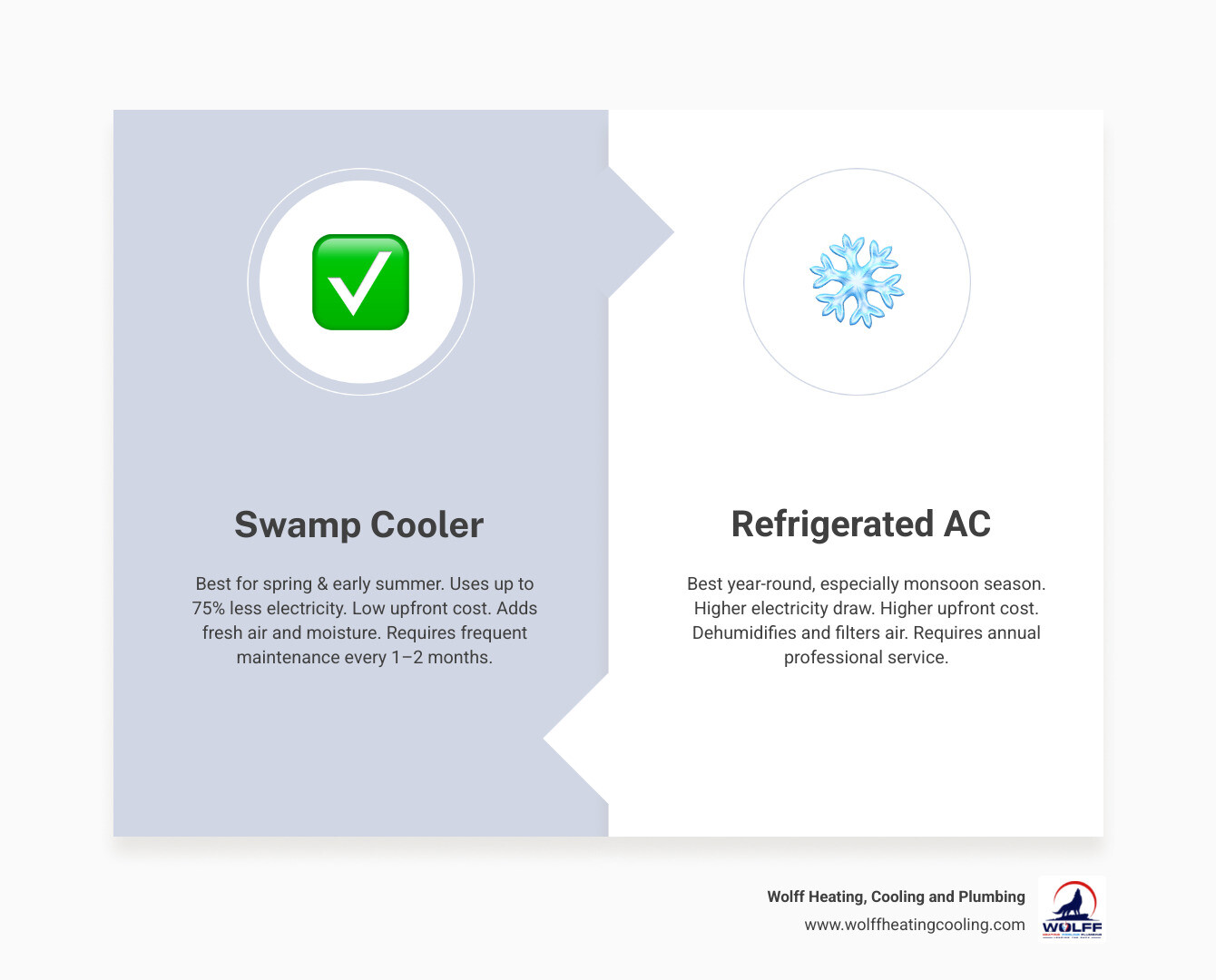
| Factor | Swamp Cooler | Refrigerated AC |
|---|---|---|
| Best season | Spring and early summer | Year-round, especially monsoon season |
| Energy use | Up to 75% less electricity | Higher electricity draw |
| Upfront cost | Lower | Higher |
| Works best when | Humidity is below 50% | Humidity is above 50% |
| Indoor air quality | Adds fresh air and moisture | Dehumidifies and filters air |
| Maintenance | Every 1–2 months during cooling season | Once a year (professional service) |
For most Albuquerque homeowners, a swamp cooler is the more affordable and efficient choice from spring through early summer, while refrigerated AC becomes the better option once monsoon humidity rolls in during July through September. Many New Mexico households use both systems — switching between them as the seasons shift.
New Mexico’s desert climate is genuinely unique. The air is dry enough for most of the year that evaporative cooling works extremely well, cutting indoor temperatures by 15–30°F without the high energy bills that come with refrigerated systems. But when summer monsoons push humidity above 50%, swamp coolers lose their effectiveness fast — and that’s when a refrigerated system earns its keep.
I’m Joe Wolff, and after more than 25 years helping Albuquerque homeowners stay comfortable through scorching summers and surprise monsoons, I’ve seen how the right cooling choice makes all the difference.
How Evaporative Cooling and Refrigerated AC Work in the Desert
To make an informed decision for your home in Albuquerque, Rio Rancho, or Placitas, it helps to understand the science behind how these systems operate. They use entirely different physical principles to cool your living space, which explains why they perform so differently when the New Mexico weather shifts.
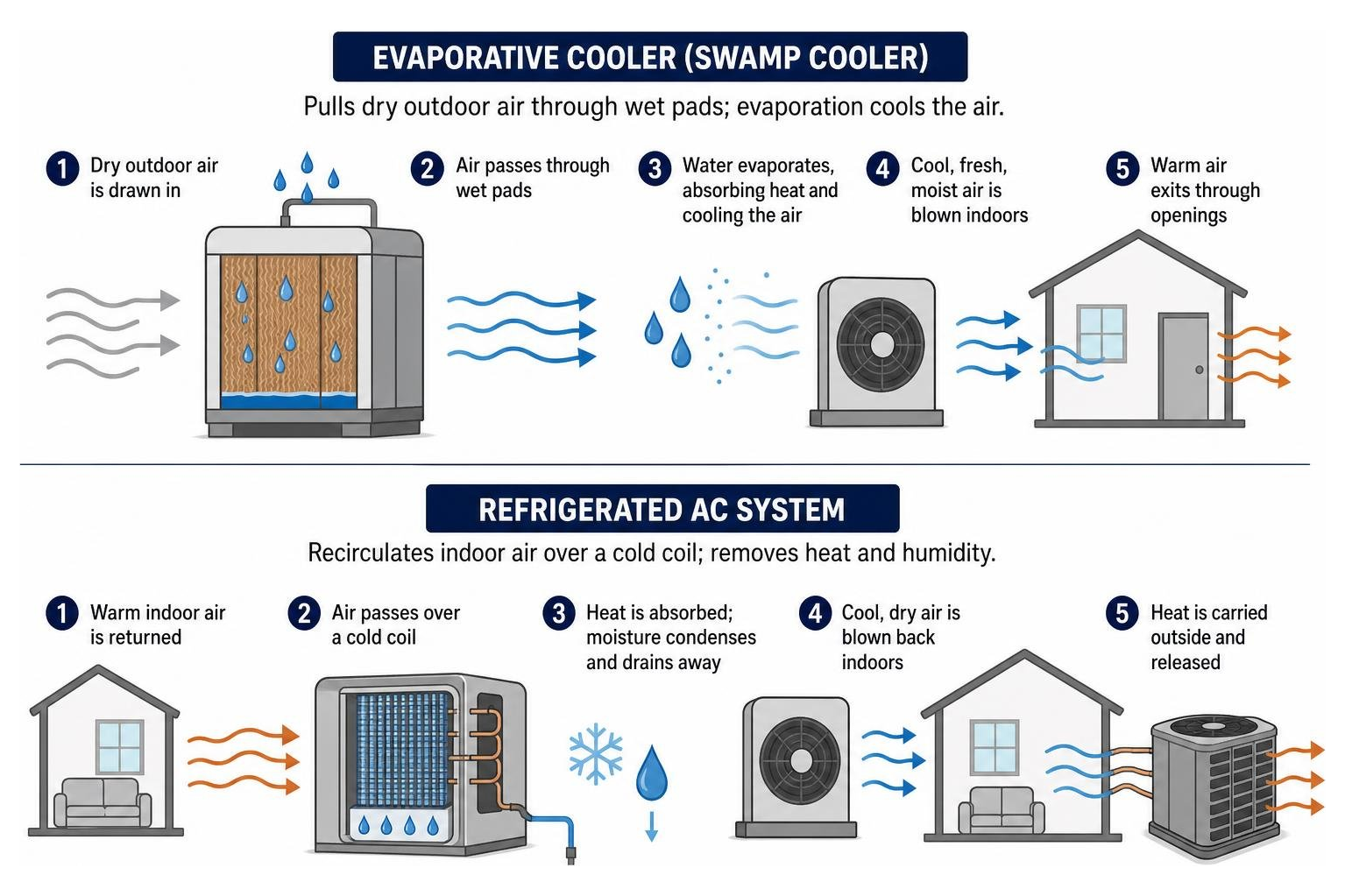
Evaporative cooling, commonly known as a “swamp cooler,” relies on the natural process of evaporation. Think of how you feel cold when you step out of a swimming pool on a windy day. The dry desert breeze evaporates the water on your skin, absorbing heat energy in the process.
A swamp cooler mimics this by using a blower motor to pull hot, dry outdoor air through thick, water-saturated pads. As the air passes through, the water evaporates, absorbing heat and lowering the air temperature before pushing that cool, moistened air into your home. Because this process requires a constant supply of fresh air, you must keep a few windows cracked open to allow the warm air to escape. To learn more about this natural process, read our breakdown on Is a Swamp Cooler Better Than AC for Your Home?.
Refrigerated air conditioning, on the other hand, is a closed-loop system. It does not pull in outdoor air. Instead, it recirculates the air already inside your home, pulling it across a cold evaporator coil filled with chemical refrigerant. The refrigerant absorbs the heat from your indoor air and carries it outside to a compressor unit, where the heat is released.
As the warm indoor air hits the cold coils, moisture condenses out of the air and drains away, lowering the relative humidity inside your home. This system requires your home to be completely sealed—no open windows allowed—so it can precisely manage both temperature and humidity levels.
Evaporative Coolers (Swamp Coolers) and Dry Air
For much of the year, New Mexico’s arid climate is the absolute perfect environment for evaporative cooling. In places like Corrales, Bernalillo, and the East Mountain communities of Cedar Crest and Tijeras, spring and early summer relative humidity levels regularly drop into the single digits.
When the air is this dry, it can hold a massive amount of water vapor. This high capacity for moisture means evaporation happens incredibly fast, allowing a swamp cooler to drop incoming air temperatures by up to 30°F.
Beyond just cooling, this moisture addition is a major benefit for many high-desert residents. Dry desert air can dry out your skin, irritate your nasal passages, and worsen respiratory issues. By adding clean water vapor to the air, a swamp cooler acts as a giant, whole-home humidifier, creating a much gentler living environment. For a deeper look at how this dry air dynamic works, check out our guide on Is a Swamp Cooler Better Than AC for High Desert Living?.
Refrigerated Air Conditioning and Consistent Comfort
While swamp coolers are great when it is dry, they have a major limitation: they cannot cool below the “wet-bulb temperature” of the air. When the outdoor humidity rises, the air is already saturated with water, which means evaporation slows down dramatically. If the water cannot evaporate, the swamp cooler cannot cool.
This is where refrigerated air conditioning shines. Because it is a closed system that actively removes moisture from your indoor air, it provides consistent comfort regardless of what is happening outside. You can set your thermostat to exactly 72°F, and the system will maintain that temperature whether it is a dry 105°F day in June or a humid, stormy afternoon in August.
This precise temperature control and powerful dehumidification make refrigerated systems incredibly popular for homeowners who value predictable, reliable indoor comfort. To see how these two systems stack up when the dry heat hits its peak, read our analysis on Dry Heat Dilemmas and Whether AC or Swamp Coolers Win.
Swamp Cooler vs Refrigerated AC: Which Is Better for a New Mexico Home?
When deciding on swamp cooler vs refrigerated ac which is better for a new mexico home, you have to weigh energy efficiency and operating costs against comfort and convenience.
Because evaporative coolers only run a simple water pump and a blower fan, they use up to 75% less electricity than a refrigerated AC unit, which must power a heavy-duty compressor. This difference shows up clearly on your monthly utility bills during the peak of summer.
However, the upfront investment for these systems is also very different. Installing a swamp cooler is generally much simpler and more affordable, while retrofitting a home with a central refrigerated AC system involves a larger initial commitment due to the complexity of the equipment and the need for specialized refrigerant lines. For a comprehensive breakdown of these financial trade-offs, explore our Swamp Cooler vs AC Cost Comparison: The Ultimate Guide.
Swamp Cooler vs Refrigerated AC: Which Is Better for a New Mexico Home during Monsoon Season?
In New Mexico, July marks the arrival of the summer monsoon season. Suddenly, warm, moist air sweeps up from the Gulf of Mexico, pushing local relative humidity levels well above 50%.
When this happens, swamp coolers struggle. Instead of blowing crisp, cool air into your home, they begin blowing warm, sticky, humid air. Your indoor spaces can quickly start to feel like a greenhouse, leaving you feeling sticky and uncomfortable.
During these humid months, refrigerated air conditioning is the clear winner. By pulling moisture out of the air as it cools, a refrigerated system keeps your indoor environment dry and comfortable, even when it is pouring rain outside in Rio Rancho or Bernalillo.
This seasonal drop-off in swamp cooler performance is why many local homeowners choose to make the transition to refrigerated air or install hybrid systems. To understand this mid-summer transition better, read Swamp Cooler vs Refrigerated Air Mid-Summer Switch.
Swamp Cooler vs Refrigerated AC: Which Is Better for a New Mexico Home and Indoor Air Quality?
Indoor air quality (IAQ) is another crucial factor to consider, especially if you or your family members suffer from allergies, asthma, or respiratory sensitivities.
Because a swamp cooler relies on pulling outdoor air inside and pushing old air out through open windows, it provides a constant stream of fresh, highly oxygenated air. This prevents the “stale air” feeling that can sometimes occur in sealed homes.
However, because it draws in outdoor air, it can also pull in dust, pollen, and outdoor allergens. While the wet pads do trap some larger dust particles, fine desert dust and spring pollen can still find their way inside.
Refrigerated AC systems recirculate indoor air through a closed loop, allowing you to use high-efficiency media filters (like MERV 11 or MERV 13 filters) or advanced air purifiers to clean the air continuously. This makes refrigerated AC highly effective at keeping outdoor dust, smoke from seasonal wildfires, and pollen out of your living space.
The downside is that without proper ventilation, indoor air can feel dry and stale over time, though this can be easily managed with a whole-home humidifier or ventilation accessories.
Comparing Maintenance, Lifespan, and Installation Needs
The long-term effort and care required to keep your cooling system running smoothly should also play a role in your decision.
Swamp coolers require hands-on, frequent maintenance. Because they use local tap water, mineral scale and calcium deposits build up quickly on the cooling pads and water pan. To keep them running efficiently, you must clean or replace the pads, clear out the water line, and clean the pan every 1 to 2 months during the cooling season.
Additionally, swamp coolers must be professionally shut down and winterized in the autumn to prevent the water lines from freezing and cracking during cold New Mexico winters, and then recommissioned every spring.
Refrigerated AC systems require much less frequent attention from the homeowner. Aside from changing your indoor air filters every 1 to 3 months, a refrigerated system generally only needs a professional inspection and tune-up once a year to clean the outdoor coils, check refrigerant levels, and inspect electrical connections.
In terms of lifespan, a well-maintained refrigerated AC system typically lasts 15 to 20 years, while a swamp cooler cabinet may need replacement or major repairs sooner due to rust and water corrosion. To see how these maintenance habits impact your overall operating costs, check out The Definitive Guide to Swamp Cooler vs AC Energy Cost During Summer.
Portable Swamp Coolers vs. Central Systems
For homeowners who do not have built-in ductwork or are looking to cool a specific area—like a home office, workshop, or a single bedroom—portable swamp coolers are a popular option.
- Central Systems: These are permanently mounted on your roof or ground pad, connected directly to your home’s water line and ductwork, and designed to cool the entire house.
- Portable Units: These are standalone, wheeled appliances that you manually fill with water or connect to a garden hose. They are great for spot-cooling a patio or a single room, but they are not designed to lower the temperature of an entire house.
- Window Units: These sit in an open window frame, providing a middle-ground solution for cooling specific zones without the need for extensive ductwork.
While portable units offer flexibility and require no professional installation, they have limited cooling capacities and require frequent manual refilling. For whole-home comfort, a professionally installed central system is almost always the better choice.
Converting from a Swamp Cooler to Refrigerated AC
If you currently have a swamp cooler and are tired of the humid monsoon days, the constant maintenance, or the spring dust, converting to a refrigerated AC system is a very common upgrade in the Albuquerque metro area.
However, this conversion requires careful planning. Swamp coolers use large volumes of air and require larger ductwork than traditional AC systems. When we convert a home, we must evaluate whether your existing ductwork is properly sized, sealed, and insulated to handle refrigerated air without sweating or losing efficiency.
Additionally, refrigerated AC units require a dedicated 220-volt electrical circuit, which may require an upgrade to your home’s main electrical panel, especially in older, historic homes in Albuquerque or Corrales. Despite these initial adjustments, converting to refrigerated AC can significantly increase your home’s resale value and provide unmatched year-round comfort. For a step-by-step walkthrough of what this process looks like, read A Practical Guide to Swamp Cooler to AC Conversion.
Frequently Asked Questions About New Mexico Home Cooling
Navigating the local cooling landscape can be confusing. Here are some of the most common questions we hear from homeowners in the Albuquerque area.
Why do people in New Mexico use evaporative coolers instead of air conditioners?
Historically, evaporative coolers became the standard in New Mexico because our climate is incredibly dry for most of the spring and summer. They are highly effective at lowering temperatures in low humidity, use significantly less electricity, and add comfortable moisture to the dry desert air. For generations of New Mexicans, they provided a simple, practical, and highly economical way to stay cool.
Can you run a swamp cooler and refrigerated AC at the same time?
We highly recommend against running both systems simultaneously. A swamp cooler relies on introducing moisture and pulling in outdoor air through open windows, while a refrigerated AC relies on a sealed environment to remove moisture and lower temperatures. Running them together will cause them to fight each other, resulting in high energy bills, poor comfort, and unnecessary strain on your equipment.
Where can I buy a portable swamp cooler in Albuquerque?
Portable swamp coolers are widely available at local home improvement stores and hardware retailers throughout Albuquerque and Rio Rancho. While these retail options are fine for quick spot-cooling, we recommend consulting with an HVAC professional if you are looking for a reliable, long-term whole-home cooling solution that fits your specific floor plan and ductwork.
Conclusion
There is no single “right” answer when choosing between a swamp cooler and a refrigerated air conditioner for your New Mexico home. The best choice depends entirely on your budget, your tolerance for monsoon humidity, and how much time you want to spend on seasonal maintenance.
If you prefer a highly efficient, low-electricity option and do not mind the extra maintenance and a few humid weeks in August, a swamp cooler is an excellent fit. If you want consistent, set-it-and-forget-it comfort all summer long, clean indoor air, and minimal maintenance, then converting to refrigerated AC is a fantastic investment.
At Wolff Heating, Cooling, and Plumbing, we have spent over 25 years helping our neighbors in Albuquerque, Rio Rancho, Placitas, Corrales, Cedar Crest, Tijeras, and Bernalillo find the perfect balance of comfort and efficiency. Whether you need to service your existing swamp cooler, repair your AC, or explore a full system conversion, our experienced, licensed team is here to provide honest estimates and exceptional service.
Ready to find the perfect cooling solution for your home? Choosing Between Refrigerated Air and Swamp Coolers in the Desert is a great next step, or you can contact us directly to schedule a professional home consultation today!