
 Menu
Menu
Why the Desert Is Your AC’s Worst Enemy — and Your Filter Is Its Best Defense
How proper filter maintenance in a dusty desert environment extends AC lifespan comes down to one core principle: a clean filter keeps abrasive desert dust out of the components that make your system run. In Albuquerque’s high desert climate, that matters more than almost anywhere else in the country.
Here’s the quick answer:
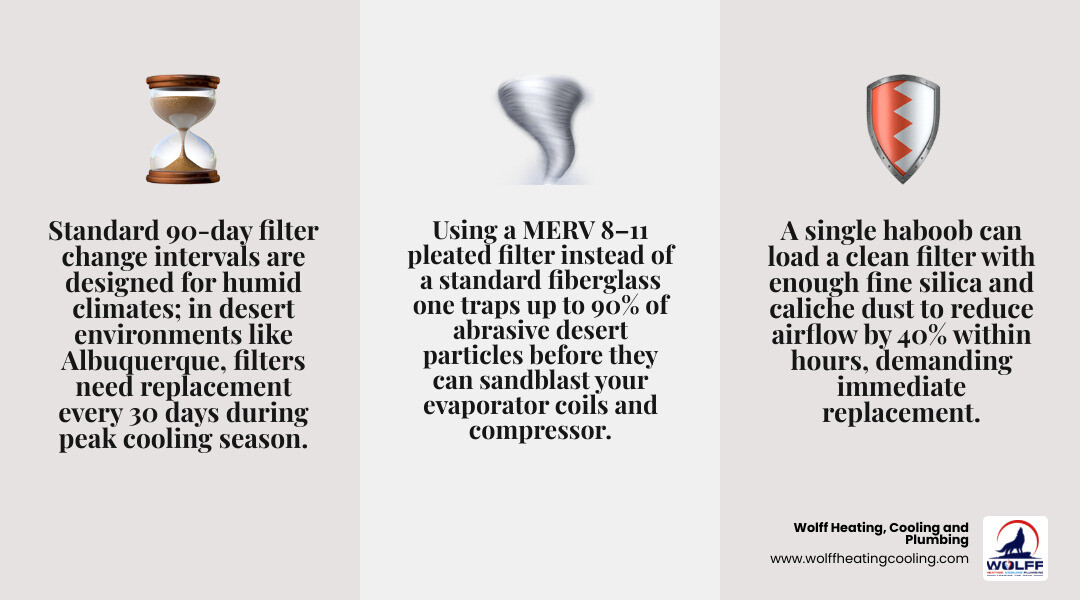
- Change your filter every 30 days during peak cooling season (June–September), not the standard 90 days printed on the packaging
- Replace immediately after any dust storm or haboob, regardless of when you last changed it
- Use a MERV 8–11 pleated filter to trap fine silica and caliche dust without choking your blower motor
- A clean filter reduces compressor strain, which is the single biggest factor in whether your AC lasts 8 years or closer to 18
- Neglected filters in desert climates can cut your system’s lifespan from a national average of 15–20 years down to just 7.5–10 years
Standard filter advice is written for cooler, wetter climates. Albuquerque is not that. Between spring windstorms, summer haboobs, monsoon season, and a high-altitude elevation that thins the air your system has to move, your AC works harder here than almost anywhere else. Desert dust isn’t soft — it’s largely made up of microscopic silica and caliche particles that act like sandpaper on your system’s internal components every time your blower runs.
The good news is that a simple, consistent filter maintenance routine is the most affordable thing you can do to protect your investment. For a deeper look at how long AC systems typically last in the Southwest, see our guide on the Average Lifespan of an HVAC System in the Southwest.
How Proper Filter Maintenance in a Dusty Desert Environment Extends AC Lifespan
When you think of air conditioning maintenance, your mind might jump to complex mechanical repairs or refrigerant top-offs. However, the humble air filter is actually the primary gatekeeper of your system’s longevity.
In a high-altitude desert environment like Albuquerque, Rio Rancho, or Bernalillo, the relationship between a clean filter and a long-lived AC is direct and scientific. When your air filter becomes clogged with fine desert grit, it acts like a dam in your return air duct. This restriction forces your system to run longer, hotter cycles to cool your home, which dramatically increases wear and tear on the most expensive component in your system: the compressor.
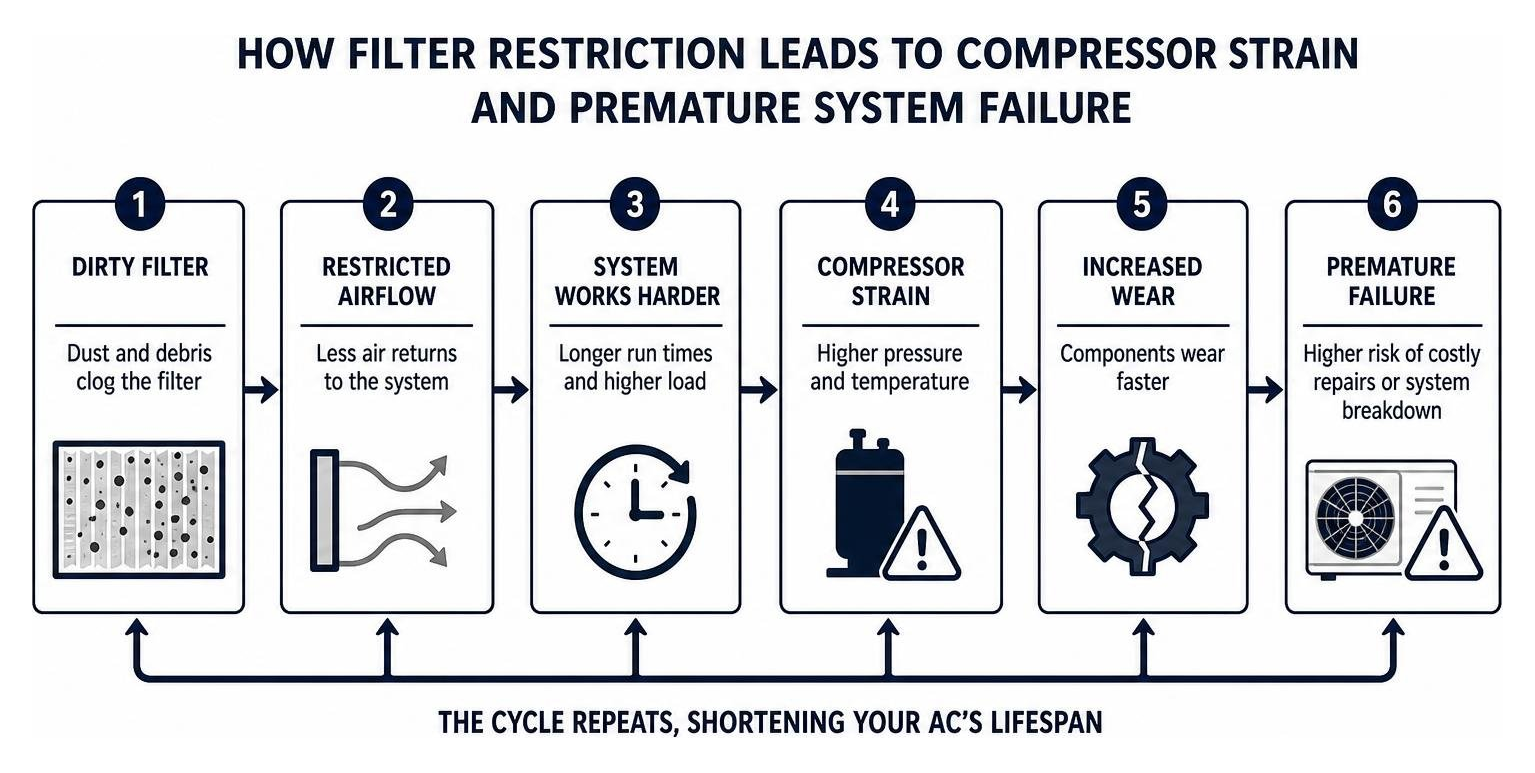
According to industry data, neglecting basic filter maintenance in an arid climate can slash an AC unit’s expected operational life in half. Instead of lasting 15 to 20 years, an overworked system in New Mexico might experience catastrophic compressor failure in as little as 7 to 10 years.
By keeping a fresh filter in place, you lower the system’s overall operating temperature, prevent electrical amperage spikes, and reduce run hours. This simple practice keeps your monthly energy bills under control and adds years of reliable service to your unit. For a deeper look at why clean air is so vital for your system’s health, check out The Dirty Truth About HVAC Maintenance in Dusty Environments.
Taking care of your filter is also the foundation of any comprehensive DIY maintenance plan. If you want to know what else you should be doing to protect your system, read our guide on the Essential Steps for AC Maintenance.
The Science of Desert Dust: How Silica, Caliche, and Environmental Stressors Damage AC Components
To understand why desert dust is so destructive, we have to look at what it is actually made of. Unlike the soft, organic “bunny dust” found in humid, forested regions, Southwest desert dust is highly mineralized. It consists of microscopic shards of silica (essentially pulverized glass) and caliche (calcium carbonate, which acts like natural concrete).
When these abrasive particles bypass your filter, they create what HVAC technicians call the “sandpaper effect.” As the blower motor pulls dusty air through the system, these microscopic shards physically score, pit, and wear down moving parts. They degrade the fan blades, compromise the motor bearings, and strip away the protective coatings on your indoor evaporator coils.
Once silica and caliche settle onto the damp surface of your evaporator coil, the moisture from condensation turns this dry powder into a thick, insulating mud. This layer of grime prevents the refrigerant inside the coils from absorbing heat from your home’s air, forcing the system to run continuously without ever reaching your thermostat’s set temperature.
To survive these harsh geological conditions, your HVAC system needs targeted protection. Learn more about shielding your system from Southwest elements in Desert Survival 101 for Your High Desert HVAC.
How Proper Filter Maintenance in a Dusty Desert Environment Extends AC Lifespan Against the Blow-By Effect
One of the most dangerous consequences of a neglected filter is a phenomenon known as the “blow-by effect.”
When an air filter becomes completely loaded with dust, the physical resistance across the filter media increases dramatically. Your AC’s blower motor is incredibly powerful; if it cannot pull air through the filter, the immense suction will find another path.
This high static pressure causes the filter frame to bend, warp, or pull away from the track. Unfiltered, dusty air is then sucked directly through the gaps around the edges of the filter frame. This is the blow-by effect. Once the air bypasses the filter, millions of abrasive silica particles are deposited directly onto your blower wheel, electrical contacts, and evaporator coils.
Ensuring a perfect, airtight seal within your filter cabinet is just as important as changing the filter itself. To find high-quality replacements that fit your home’s system perfectly, explore our options for Air Filters Albuquerque NM.
Environmental Stressors: Haboobs, Monsoons, and High Altitude
Albuquerque homeowners face a unique combination of environmental stressors that accelerate filter clogging:
- Haboobs and Dust Storms: Spring in New Mexico brings intense windstorms that can deposit more particulate matter into your HVAC system in a single afternoon than it would normally encounter in a month.
- Monsoon Humidity: When summer monsoons arrive, the sudden spike in outdoor humidity mixes with airborne dust. This creates a sticky, paste-like grime that clings to filters and coils, choking off airflow instantly.
- High-Altitude Physics: At over 5,000 feet above sea level, the air in Albuquerque, Rio Rancho, and Cedar Crest is significantly thinner than at sea level. Because thin air carries less heat, your blower motor must move up to 20% more air volume to achieve the same cooling effect.
When you combine thin high-altitude air with a restricted, dusty filter, your blower motor has to work twice as hard, leading to rapid overheating and premature motor burnout. You can optimize your system for our local geography by reading our Peak Performance Tips for High Altitude Desert Summer Efficiency.
Choosing the Right Filter: MERV Ratings and Materials for Arid Climates
Choosing the right filter for a desert climate is a delicate balancing act between dust capture and healthy airflow.
Air filters are rated using the MERV (Minimum Efficiency Reporting Value) scale, which ranges from 1 to 16 for residential systems. While it might seem logical to buy the highest-rated filter available to trap as much dust as possible, doing so in a desert climate can actually damage your system.
- Fiberglass Filters (MERV 1–4): These cheap, spun-glass filters are practically transparent. While they allow plenty of airflow, they only capture large debris like hair and lint. Fine desert silica passes right through them, offering almost zero protection for your coils.
- Standard Pleated Filters (MERV 8–11): This is the “sweet spot” for Southwest homes. Made of synthetic pleated fibers, these filters trap up to 85% of fine dust particles without creating excessive resistance to airflow.
- High-Efficiency Filters (MERV 13–16): These filters are incredibly dense. In a high-altitude, thin-air environment, a MERV 13+ filter can act like a brick in your return duct, restricting airflow so severely that it mimics the effects of a completely clogged filter.
To find the perfect balance for your home’s specific system, check out our guide on HVAC Albuquerque NM Air Filters.
| Filter Type | MERV Rating | Desert Lifespan | Pros | Cons |
|---|---|---|---|---|
| Fiberglass | 1–4 | 15–30 Days | Low cost, high airflow | Allows fine silica dust to pass |
| Standard Pleated | 8–11 | 30–45 Days | Recommended. Excellent dust capture | Must be changed monthly |
| High-MERV Pleated | 13–16 | 30 Days | Captures micro-allergens | Restricts airflow in thin air |
| Deep Media (4-5″) | 8–11 | 3–6 Months | Long-lasting, high capacity | Requires professional housing |
How Proper Filter Maintenance in a Dusty Desert Environment Extends AC Lifespan Without Blower Motor Damage
Using a filter with a MERV rating that is too high—or leaving a dirty filter in place too long—creates high static pressure. Static pressure is the resistance to airflow within your ductwork.
In Albuquerque’s thin air, your blower motor is already operating under elevated stress. If you restrict its air supply with a clogged or overly restrictive filter, the motor must draw more electrical current (amperage) to spin. This extra workload causes the motor windings to overheat.
Over time, this thermal stress degrades the motor’s electrical insulation, leading to a burnt-out blower motor. By keeping static pressure low through regular filter changes, you ensure your blower runs cool and efficient. For professional advice on managing your system’s airflow, read our AC Maintenance Albuquerque Best Tips.
Establishing Your Desert Filter Replacement Schedule and Comprehensive AC Care
Because Albuquerque’s environmental conditions change rapidly, a rigid “change every 90 days” calendar reminder simply won’t cut it. You need a dynamic approach based on the seasons and your household’s unique footprint.
During the hot, dusty summer months (June through September), we recommend checking your filter every two weeks and replacing it at least every 30 days. During the windy spring season, a single severe dust storm can completely cake a brand-new filter in a matter of hours. Always inspect your filter immediately following any high-wind event.
For a comprehensive checklist on keeping your cooling system in top shape as the seasons shift, explore our Albuquerque AC Maintenance Tips 2025.
Several household factors will require you to tighten your replacement schedule even further:
- Pets: Pet dander and fur act like a sticky binder, gluing desert dust to the filter fibers and clogging it twice as fast.
- Nearby Construction: If you live in rapidly growing areas of Rio Rancho or Albuquerque, active construction kicks up massive amounts of heavy caliche dust.
- Allergy Sufferers: Keeping a strict 20-to-30-day replacement cycle is essential to manage indoor allergen loads.
- Home Size: Smaller homes have less duct volume, meaning the air circulates through the filter more frequently, leading to faster dust accumulation.
Beyond Filters: Essential Desert AC Maintenance Steps
While changing your filter is the most important task you can handle yourself, it is only one part of a complete desert maintenance plan. To truly maximize your AC’s lifespan, you must pair filter care with professional service.
- Condenser Coil Rinsing: Your outdoor condenser unit is constantly exposed to the elements. Dust and dirt build up on the metal fins, trapping heat inside. Gently rinsing these coils with a garden hose (with the power turned off) prevents high head pressure.
- Duct Sealing: If your return ducts have leaks in your attic or crawlspace, the system will suck dusty, unconditioned air directly into your home, bypassing your filter entirely. Sealing these leaks keeps your air clean and efficient.
- Professional Tune-Ups: A certified technician can clean your indoor evaporator coils, check refrigerant levels, measure electrical draw, and clear your condensate drain line before summer hits.
If you are looking for local experts to keep your system running smoothly, find reliable support at HVAC Maintenance Near Me. To understand the best timing for these visits, read our guide Don’t Wait for a Breakdown How Often to Schedule Tune Ups.
Frequently Asked Questions about Desert AC Maintenance
Taking care of your home’s air conditioner doesn’t have to be overwhelming. Below are some of the most common questions we hear from homeowners in the Albuquerque metro area. If you’re wondering whether your system is overdue for a professional look, check out our guide on when an AC Needs Professional Maintenance.
What are the signs that a neglected filter is actively reducing my AC’s lifespan?
If your filter is choked with dust, your system will start sending warning signals. The most common signs include:
- Frozen Evaporator Coils: Restricted airflow prevents warm indoor air from passing over the cold coils. The condensation on the coils quickly turns to ice, encased in a solid block that shuts down your system.
- Weak Airflow: If you feel only a faint breeze coming from your supply registers, your filter is likely clogged.
- Skyrocketing Energy Bills: When your AC has to run twice as long to cool your home, your utility bills will spike dramatically.
- Short-Cycling: The system turns on and off rapidly as internal safety switches shut the compressor down to prevent overheating.
If you notice any of these symptoms, turn off your system immediately to prevent permanent compressor damage. For tips on troubleshooting these issues in local homes, see AC Maintenance Albuquerque Homes.
Why does my filter look gray after only two weeks in Albuquerque?
In the high desert, our air carries a much higher concentration of fine, lightweight mineral dust than more humid regions. During our windy spring transitions, constant wind events keep this fine gray silica airborne.
Because this dust is so light, it doesn’t settle quickly; instead, it is constantly pulled into your return vents. Finding a gray, dusty filter after just two weeks simply means your filter is doing its job. However, it also means you need to stay vigilant. Learn how to prepare your system for these intense dusty seasons with our guide on How to Prepare HVAC for Spring in the Southwest.
Can I wash and reuse a disposable pleated filter?
No. You should never wet or wash a disposable pleated filter.
These filters are made of cardboard frames and specialized synthetic fibers designed for dry dust capture. Getting them wet completely destroys their structural integrity, causing the pleats to collapse and rendering the filter useless.
Furthermore, trapping moisture inside the dense fibers of a paper filter creates the perfect breeding ground for mold and bacteria once you slide it back into your dark, warm HVAC cabinet. Always replace disposable filters with brand-new ones. For more practical homeowner tips, check out our Tips for Maintaining Your AC System.
Protect Your Cool Oasis with Wolff Heating, Cooling, and Plumbing
Living in New Mexico means enjoying beautiful mesas, stunning sunsets, and plenty of sunshine — but it also means dealing with relentless dust and extreme summer heat. Don’t let the desert elements take years off your air conditioner’s life.
At Wolff Heating, Cooling, and Plumbing, we have over 25 years of experience keeping families comfortable across Albuquerque, Rio Rancho, Corrales, Placitas, Cedar Crest, Tijeras, and Bernalillo. We are licensed, bonded, insured, and dedicated to providing honest estimates and superior craftsmanship.
Whether you need help selecting the perfect filtration system, sealing leaky ductwork, or scheduling a comprehensive pre-summer tune-up, our friendly, expert team is here to help. Schedule professional AC services today and keep your home clean, cool, and comfortable all year long!