
 Menu
Menu
Why Air Purifier Benefits for Desert Homeowners Matter More Than You Think
Air purifier benefits for desert homeowners are significant — and if you live in the Albuquerque area, you already know the air inside your home can be just as challenging as what’s blowing around outside. Desert dust, low humidity, seasonal pollen, and wildfire smoke don’t stop at your front door. They settle into your home, circulate through your HVAC system, and affect how you breathe every single day.
Here’s a quick look at the top benefits desert homeowners report from using air purifiers:
- Fewer allergy and asthma symptoms — HEPA filters capture dust, pollen, and mold spores that trigger reactions
- Reduced dust buildup — Trapping airborne particles before they settle means less frequent cleaning
- Better respiratory comfort — Cleaner air eases breathing, especially during haboob events and wildfire smoke days
- Cardiovascular support — Studies show filtered air can improve microvascular function and lower blood pressure
- Protection from desert-specific threats — Including Valley Fever spores, PM2.5 particles, and VOCs
- Improved sleep quality — Especially when a purifier runs overnight in the bedroom
The EPA notes that indoor air can be two to five times more polluted than outdoor air — and in a sealed, air-conditioned desert home, that pollution has nowhere to go without active filtration. That’s what makes this topic so important for homeowners across the Albuquerque region in April 2026, as dust season ramps up and outdoor air quality alerts become more frequent.
Unique Indoor Air Quality Challenges in Arid Climates
Living in the high desert of New Mexico offers breathtaking vistas, but it also presents a gauntlet of Indoor Air Quality hurdles. In cities like Albuquerque and Rio Rancho, the climate is defined by dry, loose soil and high winds. When spring “haboobs” or dust storms roll through, they kick up massive amounts of particulate matter.
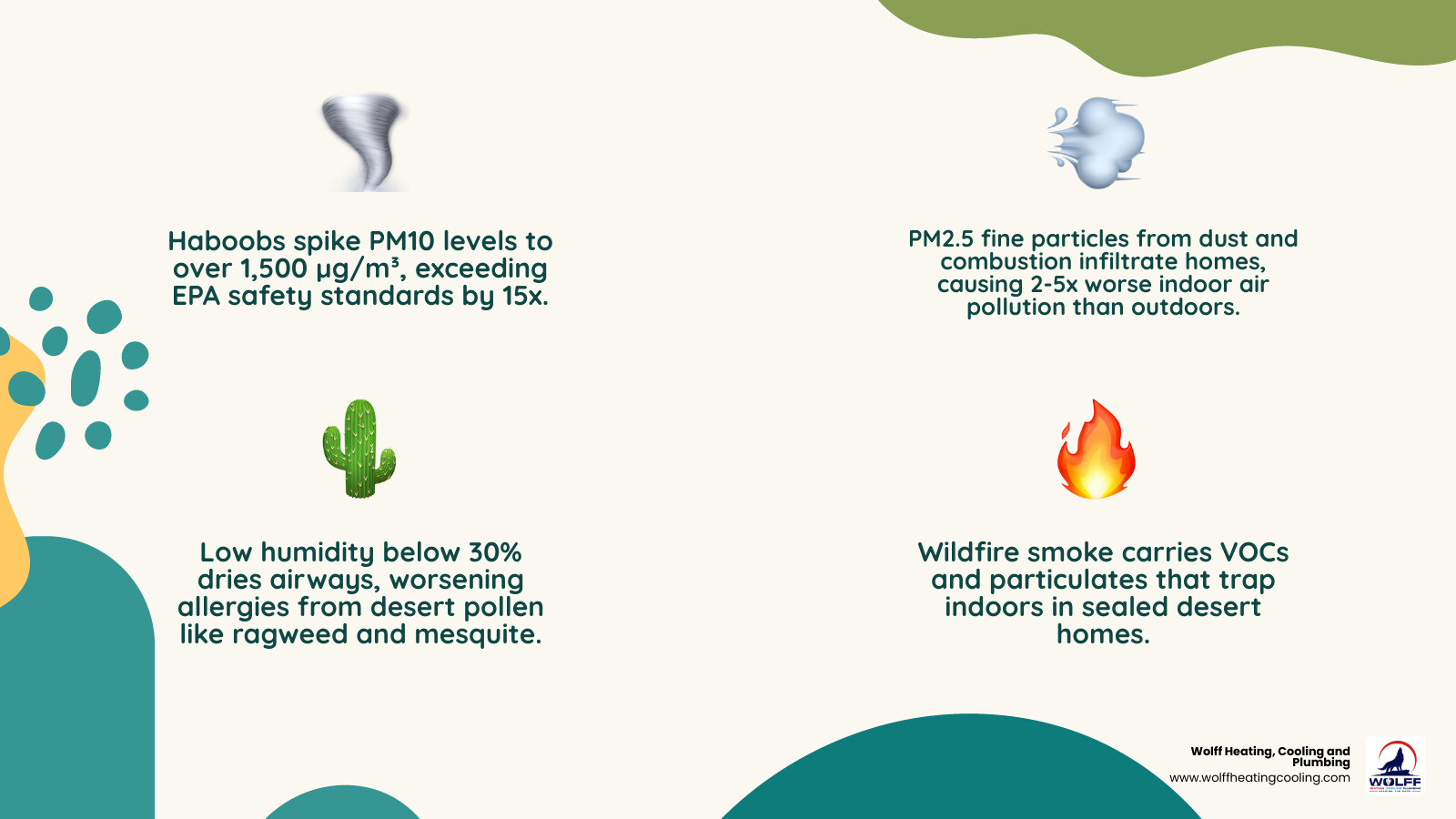
These particles are categorized by size: PM10 (larger dust and pollen) and the more dangerous PM2.5 (fine combustion particles and organic compounds). During a desert dust event, PM10 levels can spike from a normal range to over 1,500 µg/m³, far exceeding the EPA’s safety standards. Because our homes are sealed tight against the April heat, these particles infiltrate through tiny gaps and stay trapped inside.
Furthermore, our region faces specific biological threats. Valley Fever spores (Coccidioides fungi) live in the soil and become airborne when the ground is disturbed by wind or construction. When you Improve Your Homes Indoor Air Quality/, you aren’t just fighting dust; you’re defending against microscopic pathogens and seasonal allergens like mesquite, palo verde, and ragweed pollen that circulate year-round in our “no-off-season” climate.
Health-Boosting Air Purifier Benefits for Desert Homeowners
The primary reason we see so many neighbors in Bernalillo and Corrales investing in Air Purifiers Albuquerque Nm/ is health. Poor indoor air quality isn’t just a nuisance; it’s a medical risk. Research has shown that indoor air filtration can improve microvascular function by about 8.1% in older adults after just 48 hours of exposure to filtered air.
For those with chronic conditions, the evidence is even more compelling. Studies involving asthmatic children found that high-efficiency air filters reduced particulate matter by 69% to 80%, leading to a dramatic decrease in treatment requirements and bronchial reactivity. Even for healthy adults, portable air filters have been shown to increase the reactive hyperemia index (a measure of vascular health) by 9.4% and significantly lower systolic blood pressure.
When you look into Hvac/Albuquerque Nm/Air Purifiers/, you’re choosing a system that provides a refuge from the “urban haze” and wildfire smoke that often settles in the Rio Grande Valley.
HEPA vs. Standard Filters for Desert Pollutants
| Pollutant Type | Standard HVAC Filter (MERV 1-8) | HEPA Filter (99.97% Efficiency) |
|---|---|---|
| Large Desert Dust | Good | Excellent |
| Fine PM2.5 (Smoke) | Poor | Excellent |
| Valley Fever Spores | Ineffective | Highly Effective |
| Desert Pollen | Fair | Excellent |
| Dust Mites | Fair | Excellent |
How HEPA Technology Targets Desert Dust
HEPA (High-Efficiency Particulate Air) technology is the gold standard for desert homes. To be certified as true HEPA, a filter must capture 99.97% of particles as small as 0.3 microns. To put that in perspective, a human hair is about 50-70 microns wide.
In our dusty climate, Air Filters Albuquerque Nm/ need to handle a heavy load. Desert dust is often jagged and fine, allowing it to bypass lower-quality filters and settle deep in the lungs. HEPA filters use a dense mat of randomly arranged fibers to trap these particles through interception and diffusion, ensuring that even the tiniest dust mites and fungal spores are removed from the breathing zone. This is the single most effective way of maximizing air purifier benefits for desert homeowners.
Maximizing Air Purifier Benefits for Desert Homeowners with Activated Carbon
While HEPA handles the physical “stuff” in the air, desert dwellers also need protection against gases and odors. This is where activated carbon comes in. In April 2026, as we prepare for the possibility of early wildfire seasons, carbon filters are essential. They use a process called adsorption to trap Volatile Organic Compounds (VOCs), chemical residues from cleaning products, and the acrid smell of smoke.
If you are upgrading your Hvac/Albuquerque Nm/Air Filters/, look for a multi-stage system. A pre-filter catches the big “tumbleweed” sized dust bunnies, the HEPA layer stops the microscopic irritants, and the activated carbon layer neutralizes ozone and smoke particulates that sneak in during high-pollution days.
Strategic Placement and Maintenance for Dusty Environments
Buying a purifier is only half the battle; where you put it matters. We recommend placing units in high-traffic areas like the living room or in bedrooms where you spend eight hours a night breathing. For desert homes, pay close attention to the Clean Air Delivery Rate (CADR). You want a CADR that is high enough to cycle the air in your room at least five times per hour.
Maintenance is the “desert tax” we all have to pay. Because our air is so much dustier than the national average, filter lifespans are often shorter. While a manufacturer might say a filter lasts six months, an Albuquerque homeowner during a windy spring might need a change every three to four months.
Proper Ventilation For Indoor Air Quality/ also plays a role. While it’s tempting to throw open the windows on a “cool” day, doing so during a high-pollen or high-wind event can undo all the work your purifier has done. Use your purifier in tandem with controlled ventilation to keep noise levels down and air purity up.
Integrating Purification with Whole-Home Comfort Strategies
An air purifier is a powerful tool, but it works best as part of a “team.” In our arid climate, low humidity is a constant challenge. When indoor humidity drops below 30%, it dries out your nasal passages, making you more susceptible to the very dust and allergens you’re trying to avoid. We recommend keeping your home in the 30-50% humidity range using a humidifier.
The Importance Of Ventilation Systems/ cannot be overstated. Modern homes in places like Placitas and Cedar Crest are built to be airtight for energy efficiency, which unfortunately traps pollutants inside. A comprehensive strategy includes:
- HVAC Maintenance: Regular professional check-ups to ensure your system isn’t circulating dust from leaky ducts.
- Air Sealing: Using weatherstripping and caulking to prevent “unfiltered” desert air from leaking in.
- Duct Cleaning: Especially important if you’ve recently moved into a home or completed a remodel.
Frequently Asked Questions about Desert Air Quality
Do air purifiers help with Valley Fever spores?
Yes. Coccidioides fungi spores typically range from 2 to 5 microns in size. Since HEPA filters are certified to capture particles down to 0.3 microns with 99.97% efficiency, they are highly effective at removing these spores from the indoor air. This provides a critical layer of respiratory protection for families in areas with high soil disturbance.
How often should I change filters in a dusty climate like Albuquerque?
In our region, the standard “every three months” advice often isn’t enough. We recommend monthly filter checks during the high-wind seasons of spring and late summer. If the filter looks gray or “fuzzy,” it’s time for a change. Keeping a fresh filter not only protects your lungs but also maintains your HVAC efficiency.
Can air purifiers reduce the frequency of household dusting?
While no device will eliminate dusting entirely, air purifiers dramatically reduce the volume of airborne particles that eventually settle on your furniture. Homeowners often report they can go twice as long between cleaning sessions once they install a high-quality purification system. Using microfiber cloths in combination with a purifier is the best way to maintain long-term home cleanliness.
Conclusion
At Wolff Heating, Cooling, and Plumbing, we’ve spent over 25 years helping our neighbors in Albuquerque, Rio Rancho, and the surrounding communities navigate the unique challenges of desert living. We know that a home should be a sanctuary, not a source of sneezes and itchy eyes. By understanding the air purifier benefits for desert homeowners, you can make an informed decision that leads to long-term health savings and a more comfortable life.
Whether you’re looking for a whole-home solution integrated into your HVAC or need advice on the best filtration for our local dust, our team is here with honest estimates and superior service. Breathe easier with professional indoor air quality solutions and let us help you turn your home into the clean-air haven you deserve.