
 Menu
Menu
Why Knowing How to Prevent Gas Leaks in Your Home Could Save Your Family’s Life
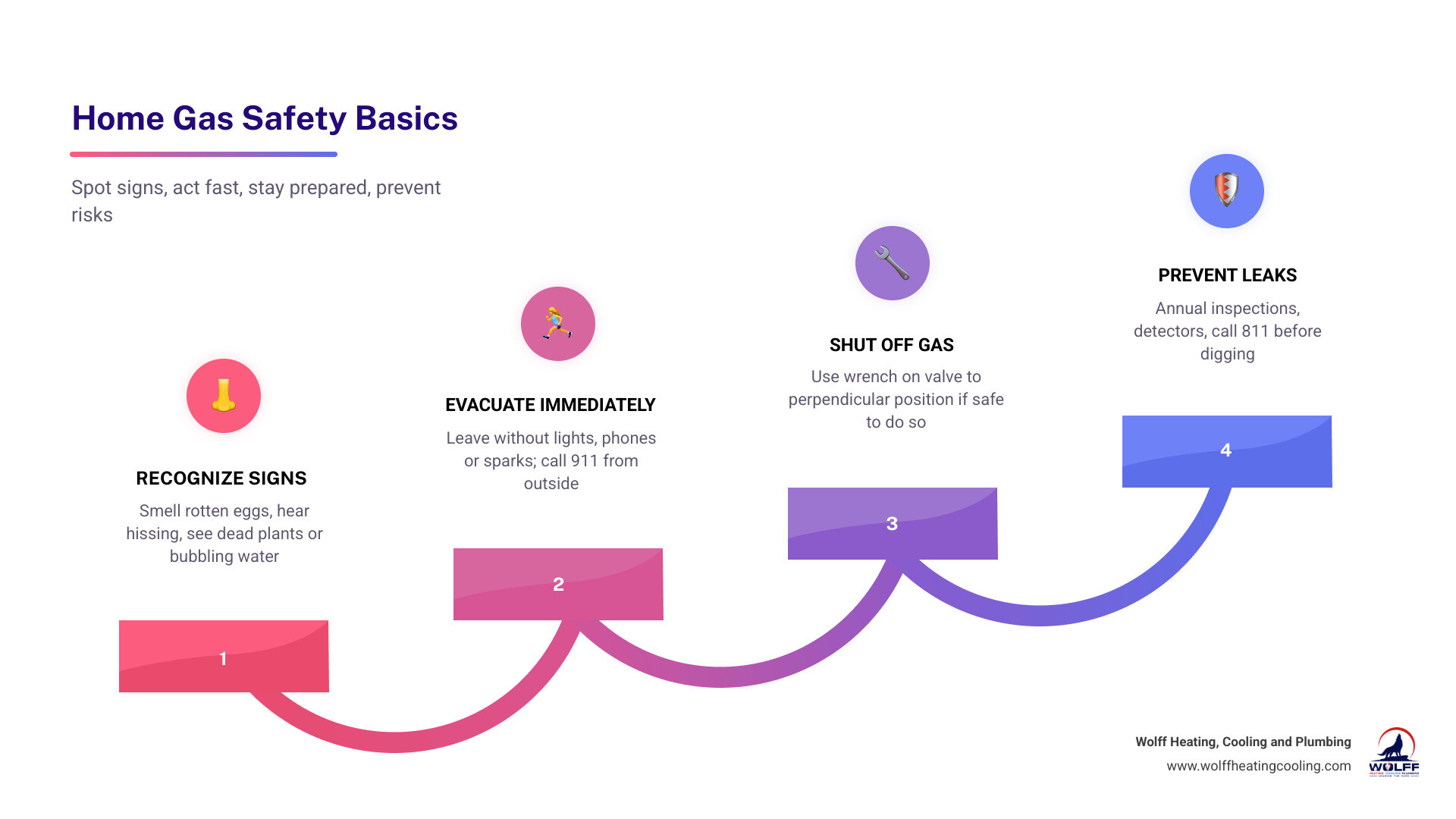
Knowing how to prevent gas leaks in your home starts with these key steps:
- Schedule annual inspections of all gas appliances with a certified technician
- Install gas and carbon monoxide detectors on every floor, especially near sleeping areas
- Know where your gas shutoff valve is and how to turn it off quickly
- Never ignore the smell of rotten eggs — evacuate immediately and call your gas company
- Call 811 before any digging to avoid hitting underground gas lines
- Never attempt DIY repairs on gas lines or fittings — always hire a licensed professional
- Keep a 3-foot clear zone around all gas appliances, free of combustible materials
Natural gas keeps more than half of American homes warm, powers stoves, heats water, and dries clothes. For the over 189 million Americans who rely on it daily, it’s easy to take for granted — until something goes wrong. Gas leaks are rare, but when they happen, the risks are serious: fire, explosion, and silent health threats like carbon monoxide poisoning, which sends as many as 100,000 Americans to the emergency room every single year.
Here in Albuquerque, homes face added challenges from aging infrastructure, shifting soils, and temperature extremes that can stress gas lines over time. The good news? Most gas leaks are preventable. With the right knowledge, a few simple habits, and routine professional maintenance, you can protect your home and everyone in it.
This guide walks you through everything you need to know — from spotting early warning signs to building a long-term maintenance routine that keeps your gas system safe year-round.
Recognizing the Warning Signs of a Household Gas Leak
The first step in safety is awareness. While natural gas is naturally colorless and odorless, utility companies add a chemical called mercaptan to give it a distinct “rotten egg” or sulfur smell. This is your primary warning system, but it isn’t the only one. Sometimes, “odor fade” can occur in new steel pipes or due to moisture and rust, making the scent harder to detect. That is why we teach our neighbors in Albuquerque to use all their senses.
Use Your Senses: Sight, Sound, and Smell
- Smell: If you catch a whiff of sulfur or rotten eggs, treat it as a gas leak until proven otherwise.
- Sound: Listen for unusual hissing or whistling noises near gas appliances, meters, or piping. This often indicates gas escaping under high pressure.
- Sight: Look for physical changes around your property. Indoors, this might be soot buildup around a pilot light or a flame that burns orange or yellow instead of a crisp blue. Outdoors, look for “blowing dirt” where there is no wind, or bubbling water in puddles or wet soil near your gas lines.
- Nature’s Clues: Vegetation is a great “silent” alarm. Because leaking gas displaces oxygen in the soil, it can cause patches of grass or houseplants to turn yellow and die unexpectedly.
Physical Symptoms of Exposure
Sometimes, the body reacts to a leak before the nose detects it. It is vital to distinguish between a natural gas leak (which can lead to fire or asphyxiation) and carbon monoxide (CO) poisoning (a byproduct of incomplete combustion).
| Symptom | Natural Gas Exposure | Carbon Monoxide (CO) |
|---|---|---|
| Dizziness | Common | Very Common |
| Nausea | Often present | Severe |
| Fatigue/Drowsiness | Yes | “Flu-like” without fever |
| Headache | Mild to Moderate | Severe / “Band around head” |
| Chest Pain | Rare | Possible |
| Asphyxiation Risk | High in confined spaces | High (Odorless) |
If you or your pets suddenly feel unwell but symptoms improve when you step into the fresh air, you may have a leak.
Immediate Emergency Protocols: What to Do (and Never Do)
If you suspect a leak, your priority is life safety. Do not go looking for the leak with a flashlight or try to tighten a connection yourself. In April 2026, we still see too many avoidable accidents caused by people staying inside to “double-check” the smell.
The “Smell. Go. Let Us Know.” Rule
- Immediate Evacuation: Get everyone, including pets, out of the house immediately. Do not stop to grab valuables or open windows unless they are already open.
- Avoid All Sparks: Do NOT touch anything electrical. This includes light switches, thermostats, garage door openers, or even your cell phone. Do not start a car if it is in the garage or near the house. A single tiny spark can ignite the accumulated gas.
- Call for Help: Once you are at a safe distance (across the street or further), call 911 or the New Mexico Gas Company emergency line.
Your Home Gas Safety Emergency Kit
We recommend every household in the Albuquerque area keep a small emergency kit in an accessible outdoor shed or a “go-bag” near the exit. It should include:
- An adjustable wrench: To turn off the gas meter if instructed by authorities.
- A list of emergency contacts: Including your local utility and a trusted plumber.
- A battery-powered radio and flashlight: For use only once you are safely away from the leak area.
How to Safely Shut Off Your Gas
In a disaster like an earthquake or a major pipe rupture, you may need to turn off the gas yourself. Locate your gas meter (usually on the side or front of the house). Look for the main shutoff valve on the pipe coming out of the ground. Use your wrench to turn the bolt a quarter-turn until it is perpendicular (at a right angle) to the pipe. This is the “off” position. Important: Never turn the gas back on yourself; this must be done by a professional after a safety inspection.
How to Prevent Gas Leaks in Your Home Through Regular Maintenance
Prevention is always better than an emergency. Most leaks stem from aging connectors, corroded pipes, or poorly maintained appliances. By staying proactive, you can ensure your home remains a safe haven.
The Importance of Annual Inspections
Gas appliances like furnaces, water heaters, and stoves should be professionally inspected at least once a year. During these visits, a certified technician will check for hairline fractures in gas lines and ensure that fittings haven’t vibrated loose over time.
One of the biggest tell-tale signs of a problem is the flame color. A healthy gas flame should be a steady, crisp blue. If you see an orange or yellow flame, it indicates incomplete combustion, which can lead to soot buildup and dangerous carbon monoxide levels. We also check for proper ventilation, ensuring that flues and chimneys are clear of bird nests or debris, and that there is a 3-foot clearance around appliances to keep combustible materials away from heat sources.
For more details on what a professional checkup entails, see our guide on Regular Gas Line Inspection Maintenance.
How to prevent gas leaks in your home with the soapy water test
If you suspect a minor leak at a connection point—perhaps after moving a stove to clean behind it—you can perform a simple DIY check.
- Mix a teaspoon of concentrated dish soap with a cup of water.
- Using a brush or spray bottle, apply the solution to the gas valve, the pipe joints, and the flexible connectors.
- Watch closely. If the gas is escaping, it will cause the soapy water to form large, growing bubbles.
If you see bubbles, turn off the gas supply to that appliance immediately and call a professional. Even a small “pinhole” leak can grow into a major hazard.
How to prevent gas leaks in your home by calling 811 before digging
Not all gas leaks start inside the house. Many occur when homeowners or contractors accidentally strike an underground line while landscaping, installing a fence, or building a deck. In New Mexico, calling 811 is a free service and a legal requirement. When you call, utility companies will come out to mark the exact location of underground lines with yellow paint or flags. This simple step is the most effective way to ensure outdoor excavation safety and pipeline protection.
How to prevent gas leaks in your home with advanced detection technology
While your nose is good, technology is better. We strongly recommend installing UL-approved natural gas detectors in addition to your carbon monoxide detectors.
- Carbon Monoxide Detectors: These alert you to the “silent killer” produced by malfunctioning appliances.
- Natural Gas Detectors: These specifically sniff out methane (natural gas) before it reaches explosive levels.
Many modern detectors now offer smart home integration, sending an alert to your smartphone if a leak is detected while you are away. Remember to test these units monthly and replace the batteries every year to ensure they are always ready to protect you. If you need help with placement or installation, our team is an expert in Gas Lines Albuquerque Nm/ and can help you set up a comprehensive safety grid.
Frequently Asked Questions about Gas Safety
Why is natural gas odorized with a rotten egg smell?
In its natural state, gas is completely odorless and colorless. To make it a viable fuel for homes, the safety industry adds mercaptan. This pungent odorant serves as a built-in alarm system, ensuring that even a tiny leak is detectable by the human nose long before it becomes a fire hazard.
How often should gas appliances be professionally inspected?
We recommend an annual service for all gas-burning equipment. As infrastructure ages, corrosion can set in on older valves and flexible connectors. A yearly checkup allows us to catch these issues before they turn into leaks. This is especially important for Hvac/Albuquerque Nm/Gas Lines/ which may be located in attics or crawlspaces where small leaks can go unnoticed for months.
What are the risks of DIY gas line repairs?
Gas lines are not a “weekend DIY” project. Improper installation can lead to code violations, which may complicate home insurance claims or the sale of your house. More importantly, an improperly sealed joint or a mismatched fitting is a massive explosion hazard. Licensed professionals have the specialized tools, like electronic sniffers and pressure gauges, to ensure every connection is 100% airtight.
Conclusion
At Wolff Heating, Cooling, and Plumbing, we have spent over 25 years serving the Albuquerque, NM community. We know that your family’s safety is your number one priority, and it’s ours, too. From the shifting sands of Rio Rancho to the historic homes of Corrales and Bernalillo, we provide the honest estimates and superior workmanship needed to keep your gas systems in peak condition.
Don’t wait for a “rotten egg” smell to take action. Whether you need a routine inspection, a new appliance hookup, or a full system safety check, we are here to help. Taking the time to learn how to prevent gas leaks in your home is a small investment that pays off in ultimate peace of mind.
If you have concerns about your gas lines or want to schedule your annual preventative maintenance, visit us at https://www.wolffheatingcooling.com/hvac/albuquerque-nm/gas-lines/ today. Let’s work together to keep Albuquerque safe, warm, and leak-free.