
 Menu
Menu
How Monsoon Season Affects Your HVAC System in Albuquerque, NM
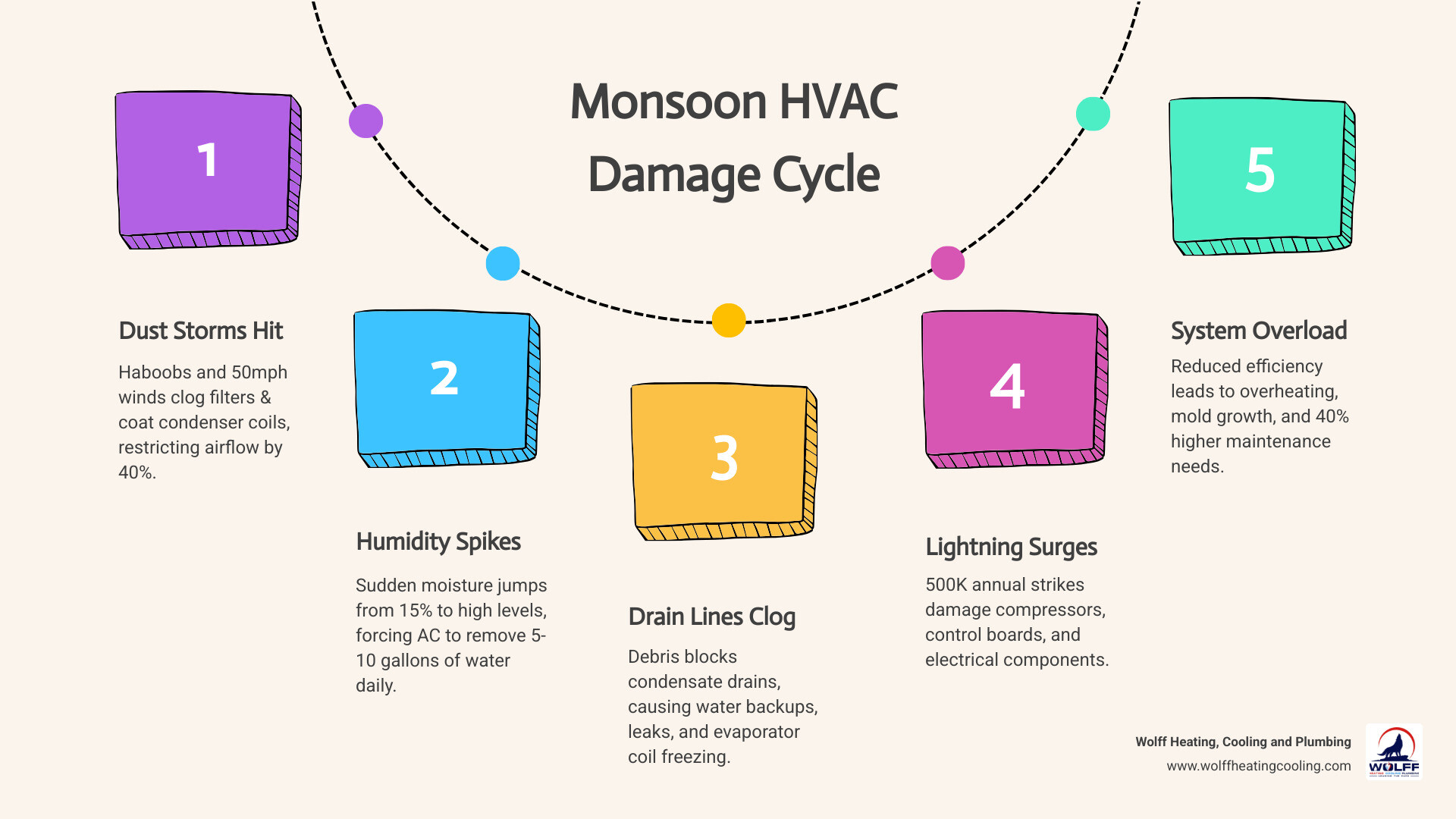
How monsoon season affects your HVAC system is something every Albuquerque homeowner needs to understand before June arrives. The high desert doesn’t just get rain during monsoon season — it gets dust walls, lightning, sudden humidity spikes, and winds that regularly top 50 mph. For an HVAC system built to handle dry desert air, that combination hits hard and fast.
Here’s a quick overview of the main ways monsoon season impacts your HVAC:
- Dust and debris clog air filters and coat condenser coils, reducing efficiency and causing overheating
- Humidity spikes force your AC to work much harder, generating up to 5-10 gallons of condensation per day
- Lightning and power surges can damage compressors, control boards, and other electrical components
- Clogged condensate drain lines lead to water backup, leaks, and mold growth indoors
- High winds and flying debris physically damage outdoor condenser units
- Shortened filter lifespan drops from the normal 90 days down to 30 days or less
Most of the year, Albuquerque’s low humidity — often sitting around 15% or below — makes life easy for your cooling system. But when monsoon season rolls in between June and September, that changes almost overnight. Your AC suddenly has to manage both heat and moisture, while simultaneously defending itself against dust storms that can increase overall maintenance needs by up to 40%.
The good news is that most monsoon-related HVAC damage is preventable. This guide walks you through exactly what’s happening inside your system during storm season and what you can do to protect it.
Understanding the High Desert Monsoon Cycle
In New Mexico, our monsoon season typically spans from mid-June through the end of September. Unlike the steady, drizzly rains seen in other parts of the country, our storms are characterized by dramatic shifts. One moment it is 100 degrees and bone-dry; the next, a wall of dust is followed by a torrential downpour.
These storms bring winds that routinely exceed 50 miles per hour, turning everyday yard debris into projectiles. For those utilizing Air Conditioning Albuquerque NM, the sudden influx of moisture is the biggest shock to the system. Our local climate is usually ideal for cooling because dry air sheds heat easily. When the dew point rises during a storm, the atmospheric pressure changes, and your AC unit must work twice as hard to remove “latent heat”—the energy trapped in water vapor.
If you use an evaporative cooler (swamp cooler), this season is particularly challenging. These units rely on dry air to evaporate water and create a cooling effect. When humidity spikes above 30% or 40%, the evaporation process slows down significantly, often leaving your home feeling clammy rather than cool.
How Monsoon Season Affects Your HVAC System: Dust and Debris
The most visible threat during a New Mexico monsoon is the “haboob”—a massive wall of dust pushed forward by storm fronts. These dust storms are more than just a nuisance for your car; they are a direct assault on your air conditioner. In fact, research shows that dust storms can increase HVAC maintenance needs by up to 40 percent.
When fine desert silt gets sucked into your system, it acts as an insulator. Instead of your condenser coils releasing heat into the outdoor air, they become “blanketed” in dust. This forces the compressor to run longer and hotter to achieve the same cooling results, leading to a high risk of overheating and premature component failure.
| Operating Condition | Normal High Desert (May) | Monsoon Season (July/August) |
|---|---|---|
| Average Humidity | 10% – 15% | 30% – 60%+ |
| Wind Speeds | 5-15 mph | 50+ mph (during gusts) |
| Air Filter Life | 90 Days | 30 Days or less |
| Condensation Output | 1-2 Gallons/Day | 5-10 Gallons/Day |
| Dust Exposure | Low | High (Haboobs) |
How Monsoon Season Affects Your HVAC System and Air Filter Lifespan
We often tell our neighbors in Rio Rancho and Bernalillo that your air filter is your system’s first line of defense. Under normal circumstances, a high-quality filter might last three months. However, during the monsoon, that lifespan is slashed to a single month.
Using the right Air Filters Albuquerque NM is critical. We recommend filters with a MERV rating between 8 and 11 for residential homes during this period. This range is high enough to catch fine particulate matter stirred up by haboobs without being so restrictive that it causes blower motor strain. If you notice a drop in airflow or a dusty smell when the AC kicks on, it’s a clear sign the filter is choked and needs immediate replacement.
The Impact of Haboobs on Outdoor Condenser Units
Your outdoor unit is essentially a giant vacuum. When a dust storm hits, it pulls that grit directly into the delicate metal fins of the condenser coils. Clogged fins prevent efficient heat exchange, which is one of the most common Signs You Need AC Repair.
To protect your unit, we suggest maintaining a 2-foot clear perimeter around the condenser. Remove weeds, loose gravel, or decorative items that could be swept into the unit by 50 mph winds. After a major dust storm has passed, it is a good idea to gently rinse the exterior of the unit with a garden hose (use a low-pressure setting to avoid bending the fins) to dislodge the silt buildup.
Managing Humidity Spikes and Moisture Risks
Albuquerque homeowners are often surprised by how much water their AC produces when the humidity climbs. During a heavy monsoon stretch, your system can pull between five and ten gallons of water out of the air every single day. This is part of the process of trying to Improve Your Home’s Indoor Air Quality, but it puts an immense load on your drainage system.
If the air is too humid and the system is struggling with airflow (perhaps due to a dirty filter), the evaporator coil can actually drop below freezing. This leads to ice formation on the coils, which completely blocks cooling and can cause a massive puddle in your mechanical closet when it finally thaws.
Why Your AC Is Dripping Water Inside During Storms
Finding water pooling around your indoor furnace or air handler is a classic monsoon headache. There are several reasons Why Your AC Is Dripping Water Inside during a storm:
- Condensate Drain Clogs: The massive increase in water flow can stir up “algae slime” or dust settled in the drain line, causing a blockage.
- Horizontal Rain: High winds can literally blow rain sideways into air intakes or vent hoods that aren’t properly shielded.
- Float Switch Failure: If your system has a safety float switch, it should shut the unit down if water backs up. If it’s stuck or broken, the water will simply overflow the primary pan.
Indoor Air Quality and Mold Prevention
High moisture levels in a normally dry climate are a recipe for mold. If your Ducting Albuquerque NM has even minor leaks, humid air from the attic or crawlspace can be sucked in, leading to condensation inside the dark, cool vents. This often results in musty odors—the first sign of biological growth.
To combat this, ensure your home is well-sealed against the elements. In some cases, installing whole-home Dehumidifiers Albuquerque NM is the best way to maintain a consistent 30-50% humidity level, protecting both your comfort and your health.
Protecting Electrical Components from Lightning and Surges
The Albuquerque and Santa Fe areas can see hundreds of thousands of lightning strikes during a single monsoon season. These strikes don’t have to hit your house directly to cause damage; a strike blocks away can send a power surge through the grid.
Thousands of HVAC systems across the region fail every year due to these surges. The most vulnerable parts are the electronic control boards and the compressor motor. Frequent power flickering during a storm can also cause the refrigerant pressure to spike as the system tries to restart too quickly, which can “slug” the compressor and kill it instantly.
We strongly recommend installing a whole-home surge protector. This is one of the most effective AC Problems and Professional Solutions to prevent a total system loss during a summer thunderstorm.
A Homeowner’s Guide to Monsoon HVAC Preparation
Preparation is the difference between a cool, comfortable summer and an emergency repair call on a Sunday night. Use this checklist to get your home ready:
- Trim Vegetation: Ensure all shrubs and trees are trimmed at least 2 to 3 feet away from the outdoor unit.
- Check the Drain Line: Look for a steady drip at the outdoor exit point while the AC is running.
- Stock Up on Filters: Have at least three spare filters ready for the July-September stretch.
- Seal the Envelope: Check weatherstripping around doors and windows to keep humid, dusty air outside.
- Smart Thermostat Settings: Use a “circulate” mode to keep air moving, which helps prevent moisture buildup in the ducts.
- Schedule a Tune-Up: A professional AC Tune-Up Albuquerque NM ensures your system is clean and electrically sound before the first storm hits.
Professional Solutions for How Monsoon Season Affects Your HVAC System
While there is plenty you can do as a homeowner, some tasks require a professional touch. During a pre-monsoon visit, we focus on Essential Steps for AC Maintenance that specifically target storm resilience.
This includes tightening all electrical connections (which can loosen due to wind vibration), verifying refrigerant levels to prevent coil freezing, and chemically cleaning the condenser coils to ensure they can handle the heat even when the humidity rises. If you haven’t had your system checked this year, it is time to Schedule HVAC Service to avoid being part of the “emergency repair” statistics.
Frequently Asked Questions about Monsoon HVAC Care
How often should I change my air filter during monsoon season?
In Albuquerque, we recommend checking your filter every two weeks during the peak of monsoon season (July and August) and replacing it at least every 30 days. If we experience frequent haboobs or if you have pets that shed, you might even need to change it every three weeks to maintain proper airflow and system efficiency.
Can I run my AC during a heavy dust storm or haboob?
If you see a massive wall of dust approaching, it is actually best to turn your AC system off temporarily. This prevents the unit from sucking in large volumes of fine grit that can clog the coils and the filter instantly. Once the “dust wall” has passed and the air has cleared (or the rain has started to wash the dust out of the air), you can safely turn the system back on.
What are the signs that my HVAC system has monsoon-related damage?
Keep an ear out for unusual grinding or rattling noises, which could indicate debris stuck in the outdoor fan. Weak airflow usually points to a choked filter or frozen coils. Musty smells or pooling water are dead giveaways for drainage issues. Most importantly, if your AC is running but the air feels lukewarm, you may have Signs Your AC Compressor Is Failing due to a power surge or overheating.
Conclusion
At Wolff Heating, Cooling and Plumbing, we have spent over 25 years helping our neighbors in Albuquerque, Rio Rancho, and Corrales navigate the unique challenges of New Mexico weather. We know that how monsoon season affects your HVAC system is a major concern for local families, and we are here to ensure your home stays a sanctuary from the storms.
Don’t wait for the first haboob to realize your system isn’t ready. Proactive maintenance is always more affordable than emergency repairs. Whether you need a seasonal tune-up, duct sealing, or a surge protector installation, our team is ready to help. For reliable HVAC Albuquerque NM, trust the experts who know the high desert best. Give us a call today and let’s get your home monsoon-ready!