
 Menu
Menu
How Long Does AC Replacement Take in the Albuquerque Area? Here’s What to Expect
How long does ac replacement take in the albuquerque area depends on the type of system and your home’s existing setup — but here’s a quick breakdown so you can plan your day:
| Installation Type | Typical Timeline |
|---|---|
| Standard central AC replacement (existing ductwork) | 4 to 8 hours (same day) |
| Full HVAC system replacement (AC + furnace) | 6 to 10 hours |
| Ductless mini-split (single zone) | 4 to 8 hours |
| Swamp cooler to refrigerated air conversion | 1 to 3 days |
| New ductwork or major electrical upgrades | 1 to 3 days |
Most Albuquerque homeowners get their new AC up and running the same day. A straightforward swap — same location, same system type, existing ductwork in good shape — typically wraps up in 4 to 6 hours. More complex jobs, like converting from an evaporative swamp cooler to refrigerated air, or adding new ductwork and electrical upgrades, can stretch to two or three days.
Albuquerque’s high-desert climate adds its own wrinkles. At 5,300 feet of elevation, with intense afternoon sun, 30°F daily temperature swings, and a July–September monsoon season that makes swamp coolers nearly useless, getting the right system installed correctly matters a lot. Nobody wants to be without cooling in the middle of an Albuquerque summer.
I’m Joe Wolff, and after 25+ years helping Albuquerque homeowners stay comfortable year-round, I want to walk you through exactly what affects your installation timeline — so you know what to expect from start to finish.
How Long Does AC Replacement Take in the Albuquerque Area?
When we talk about a standard, straightforward AC replacement in Albuquerque, NM, we are usually referring to a “change-out.” This means we are removing an old central air conditioner and installing a new, modern, energy-efficient unit in the exact same location.
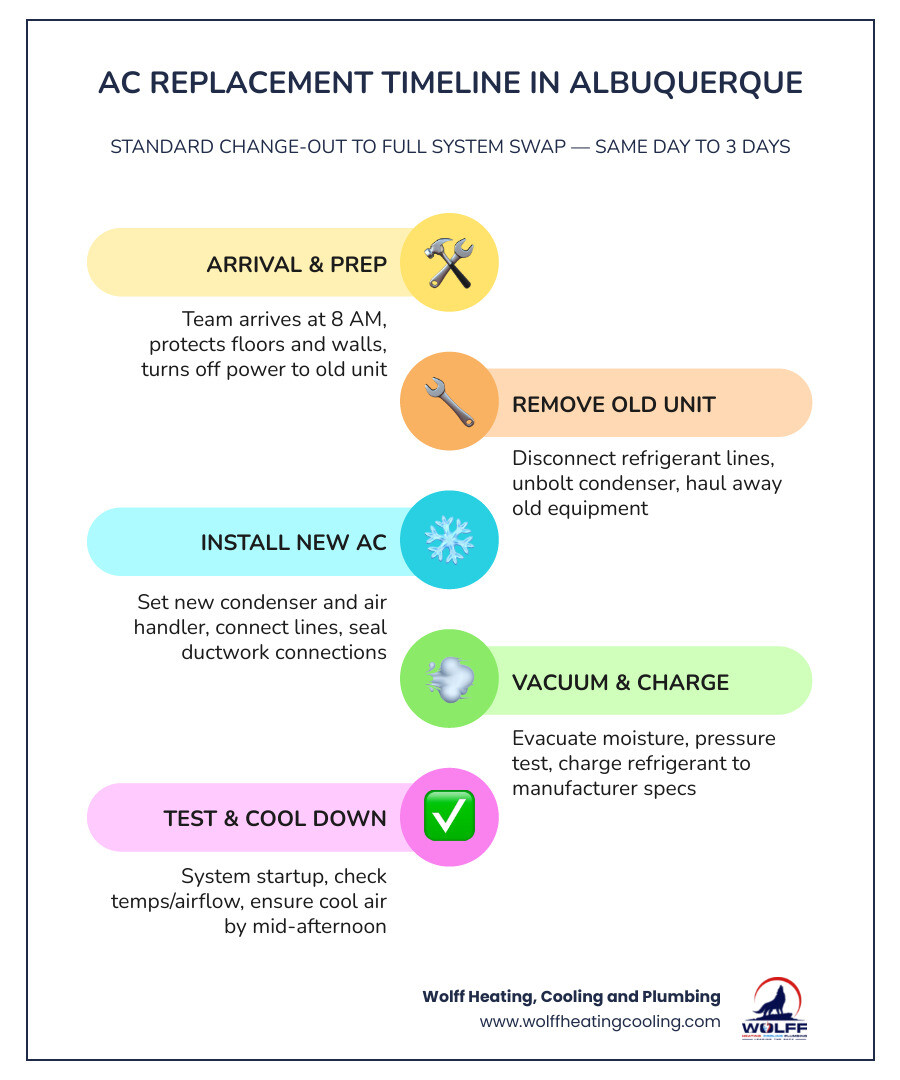
For the vast majority of our neighbors in Albuquerque, Rio Rancho, and Bernalillo, this standard process takes between 4 and 8 hours. This means that if our team arrives at your home at 8:00 AM, you will typically have cool air flowing through your vents by mid-to-late afternoon.
Why does a standard replacement move so quickly? Because the foundation is already there. The electrical connections are run, the refrigerant lines are in place (though they will be thoroughly flushed or replaced), and the ductwork matches up to the indoor air handler or evaporator coil.
However, if you are looking to upgrade your home’s system in nearby areas, you might want to look into our specific guides, such as the guide to AC replacement in Rio Rancho, which covers localized factors for that community.
Factors That Influence How Long Does AC Replacement Take in the Albuquerque Area
While we always aim to complete standard replacements in a single day, several local home styles and layout challenges can add time to the job. Understanding these factors helps us give you an honest, accurate timeline during our initial home evaluation.
- System Accessibility: Where is your current unit located? In the Albuquerque metro area, many homes have packaged HVAC units or swamp coolers installed directly on the roof. Rooftop installations require extra safety prep, ladder setups, and sometimes even a crane to lift the heavy equipment safely. If your indoor unit is tucked away in a tight attic, a low-clearance crawl space, or a highly cramped utility closet, our technicians will have to work carefully and methodically, which can add 1 to 2 hours to the overall process.
- Corrosion and Desert Dust: Our high-desert windstorms bring plenty of dust and grit. Over 10 to 15 years, this fine dust, combined with hard water from outdoor spigots, can cause severe corrosion on mounting brackets, electrical disconnect boxes, and refrigerant line fittings. Safely removing rusted-on components without damaging your home’s structure requires patience and specialized tools, occasionally adding an hour or two to the teardown phase.
- Existing Component Condition: Before we hook up a brand-new, high-efficiency condenser, we must inspect the existing infrastructure. If we find that your indoor evaporator coil is mismatched, or the copper refrigerant lines have pinhole leaks, we must address these issues immediately. Skipping these steps would ruin your new system’s efficiency and void your manufacturer’s warranty.
To get a better handle on these technical elements, you can read more about understanding AC installation basics to see why proper system matching is so vital.

How Ductwork and Electrical Upgrades Affect How Long Does AC Replacement Take in the Albuquerque Area
Modern cooling systems are incredibly efficient, but they also have strict power and airflow requirements. If your home was built several decades ago, your current infrastructure might not be ready to support a modern, high-efficiency central air conditioner.
- Electrical Panel Upgrades (200-Amp Panels): Many older homes in historic Albuquerque neighborhoods or established parts of Corrales and Bernalillo still run on 100-amp or 125-amp electrical panels. Modern central AC systems often require a dedicated, high-voltage circuit. If your panel is fully loaded, we may need to coordinate an upgrade to a 200-amp panel. An electrical panel upgrade or adding a new subpanel can add 4 to 8 hours of work, sometimes requiring a separate day to coordinate with local utility providers for a brief power disconnect.
- Ductwork Modifications and Sealing: A new air conditioner needs to breathe. If your existing ductwork is undersized, collapsing, or severely leaking, your new AC will short-cycle, waste energy, and wear out prematurely. During our pre-installation inspection, we check the ducts. If we need to resize your plenum (the sheet metal box that connects your AC to your duct system) or seal leaky joints to meet local building codes, expect this to add anywhere from 2 to 6 hours to the installation timeline.
- Structural Modifications: In some cases, transitioning to a different system type requires cutting new access holes, reinforcing roof rafters to support a heavier rooftop unit, or pouring a new, level concrete pad in your yard for a ground-level condenser.
For a complete breakdown of how we evaluate these structural and mechanical needs, check out our comprehensive guide to air conditioning installation.
Swamp Cooler Conversions vs. Standard AC Replacements
In the Albuquerque area, one of the most common questions we get is about transitioning from traditional evaporative cooling (commonly known as a swamp cooler) to refrigerated air. Because our climate is incredibly dry for most of the year, swamp coolers have historically been a popular, budget-friendly option.
However, swamp coolers rely on evaporation to cool the air. When the July-to-September monsoon season hits New Mexico, the outdoor relative humidity spikes. When the air is already saturated with moisture, swamp coolers lose their cooling power, leaving your home feeling sticky, warm, and humid.
Converting to refrigerated central air conditioning gives you consistent, crisp, dehumidified comfort 365 days a year, regardless of the outdoor humidity. But because this is an upgrade from an entirely different cooling technology, the installation process is much more involved than a standard, like-for-like AC swap.
Timeline for a Swamp Cooler to Refrigerated Air Transition
A swamp cooler conversion is a major home improvement project that typically takes 1 to 3 days to complete. Here is why this transition takes longer and what we do during those days:
- Ductwork Modifications: Swamp coolers deliver a massive volume of damp air through large, centralized vents. Refrigerated air systems, on the other hand, distribute a lower volume of highly chilled air through smaller, insulated ducts designed to handle higher static pressure. If we hook up a refrigerated AC to old, uninsulated swamp cooler ducts, you will deal with severe condensation, water damage, and poor airflow. We must inspect, seal, insulate, and often resize or replace sections of your ductwork to ensure your new system runs efficiently.
- Electrical Upgrades: Swamp coolers run on standard 115-volt power, similar to a regular household outlet. Refrigerated central AC units require 230-volt power. This means we must run completely new, heavy-duty electrical wiring from your main breaker panel to the outdoor condenser site, install a dedicated outdoor disconnect box, and often upgrade your home’s electrical panel.
- Roof Work and Conversion Jacks: If your swamp cooler was roof-mounted, we must remove the old unit, install a specialized “conversion transition” or “roof jack,” seal the roof membrane to prevent leaks, and secure the new, heavier packaged unit or run refrigerant lines down into the home.
While a conversion requires a larger investment of time, it is one of the best ways to improve your home’s indoor air quality and comfort. For more details on planning this transition, take a look at our Albuquerque AC replacement guide to learn how we streamline the conversion process.
If you live in our mountain communities, you can also read our specialized advice on AC replacement in Tijeras or check out our Placitas AC replacement guide to see how local elevation and neighborhood styles affect the transition.
What to Expect on Your AC Installation Day
Knowing what happens during those 4 to 8 hours of installation day can help put your mind at ease. When our clean, professional, and licensed crew arrives at your home, we follow a highly coordinated, step-by-step process to ensure a flawless installation.
- Site Preparation and Floor Protection (30–45 Minutes): Our first priority is protecting your home. We lay down protective drop cloths and floor runners along all high-traffic indoor walkways. We also clear a safe path to your attic, closet, or crawl space, and set up our outdoor work areas.
- System Decommissioning and Old Unit Removal (1–2 Hours): We safely disconnect all electrical power and recover the old system’s chemical refrigerant using specialized EPA-certified recovery machines. We never vent refrigerant into the atmosphere. Once the system is safe and empty, we carefully dismantle and remove the old indoor coil, furnace or air handler components, and the outdoor condenser unit.
- New Equipment Placement and Fitting (2–4 Hours): We position the new indoor evaporator coil and the outdoor condenser. This step involves precision sheet metal work to connect the new equipment to your existing ductwork, brazing (welding) the new copper refrigerant lines, and installing a new, clean condensate drain line to safely carry away moisture.
- Electrical and Control Wiring (1–2 Hours): We connect the high-voltage power lines to the outdoor condenser and run the low-voltage thermostat wiring. If you are upgrading to a modern smart thermostat, we install and configure it during this stage.
- Vacuum Testing and Refrigerant Charging (1 Hour): Once all lines are connected, we connect a vacuum pump to the refrigerant lines. This removes all air and moisture from the closed loop. We perform a rigorous decay test to ensure there are absolutely zero microscopic leaks in our welds. Once verified, we release the clean refrigerant into the system.
- System Commissioning and Homeowner Walkthrough (30–45 Minutes): We turn the system on and let it run. We measure airflow, test temperature drops across the coils, and verify that all electrical draws match the manufacturer’s specifications. Finally, we clean up our work areas completely, show you how to operate your new thermostat, and answer any questions you have.
To help you get your home ready for our arrival, we have put together a guide on preparing your AC for Albuquerque summers so you know exactly what to expect.
How Homeowners Can Help Speed Up the Process
While our experienced technicians handle all the heavy lifting, there are a few simple things you can do before we arrive to ensure the job goes as quickly and smoothly as possible:
- Clear the Workspaces: Please clear a path to both your indoor unit (whether it’s in a closet, utility room, or garage) and the outdoor condenser site. Removing boxes, bicycles, or yard tools from these areas saves our team time and prevents accidental damage to your belongings.
- Secure Your Pets: AC installation involves open doors, heavy equipment, and plenty of trips back and forth to our service trucks. Keeping your dogs, cats, or other pets safely secured in a quiet room or at a neighbor’s house keeps them safe and allows our crew to work without distraction.
- Provide Clear Access and Parking: If you have a locked side gate, please make sure it is unlocked or that you are available to let us in. Clearing a spot in your driveway for our service vehicles also helps us load and unload heavy equipment much faster.
For more helpful preparation tips, check out our homeowner’s guide on how to prepare your AC for the Albuquerque summer.
Frequently Asked Questions about Albuquerque AC Replacement
How long does a full HVAC system replacement (AC + furnace) take?
A full system replacement — which includes installing a new central air conditioner, a new gas furnace (or heat pump), and a new evaporator coil — typically takes 6 to 10 hours.
We almost always recommend replacing both systems at the same time if they are of a similar age. Installing a “matched system” ensures that the indoor blower motor is perfectly calibrated to the outdoor condenser’s capacity, maximizing your overall energy efficiency. Doing both jobs at once also saves you money on labor, as our team only has to mobilize, prepare your home, and modify your plenum once.
If you want to dive deeper into how we coordinate these dual installations, take a look at our comprehensive HVAC installation Albuquerque guide.
How long does a ductless mini-split installation take compared to central AC?
A single-zone ductless mini-split installation typically takes 4 to 8 hours. If you are installing a multi-zone system (with indoor air handlers in multiple rooms connected to a single outdoor compressor), the project can take 1 to 2 days.
Ductless mini-splits are an incredible option for home additions, historic homes without existing ductwork, casitas, or specific rooms that always seem to stay too hot. Because they do not require ductwork, we only need to drill a small, three-inch hole in your exterior wall to run the copper refrigerant lines and electrical control wires. This makes the physical installation much less invasive than installing new central ductwork.
To help you decide which system layout fits your home’s architecture, you can read our guide on selecting the right AC system for your specific needs.
Do Albuquerque’s climate, altitude, and city permits affect the timeline?
Yes, our local geography and local municipal rules play a major role in how we plan your installation timeline.
- High Altitude (5,300+ Feet): The air is thinner in Albuquerque, Rio Rancho, and Cedar Crest. Thinner air holds less heat, which slightly reduces the heat transfer efficiency of air conditioners and requires altitude adjustments (derating) for gas furnaces. We perform precise Manual J load calculations to ensure your new system is sized correctly for our unique atmospheric conditions, rather than relying on generic sea-level rules of thumb.
- City Permits and Inspections: To protect your safety and property value, the City of Albuquerque and surrounding municipalities require building permits and post-installation inspections for all new AC installations. While we handle all the permit paperwork and pull the permits before we start, scheduling the city inspector to come out and sign off on the work can take a few days after the physical installation is complete.
For more information on how we navigate local city codes and climate-specific sizing, check out our dedicated page on Albuquerque air conditioning services.
Conclusion
Replacing your home’s air conditioning system is an investment in your comfort, health, and monthly energy savings. While a standard replacement usually takes just a single day, working with a team that understands our local high-desert climate, high altitude, and unique housing styles ensures that your installation is done right the first time.
At Wolff Heating, Cooling, and Plumbing, we bring over 25 years of local experience to every job. Whether you are in Albuquerque, Rio Rancho, Placitas, Corrales, Cedar Crest, Tijeras, or Bernalillo, we are dedicated to providing superior workmanship, honest estimates, and clear communication from start to finish.
If you are ready to upgrade your home’s comfort or have questions about transitioning away from an old swamp cooler, we are here to help. Check out our Albuquerque AC replacement guide for more tips, or contact our friendly team today to schedule your free, no-obligation system evaluation. Let us help you keep your cool, no matter how high the summer mercury climbs!