
 Menu
Menu
Does Repiping Increase Home Value in the Albuquerque Real Estate Market?
Does repiping increase home value in the Albuquerque real estate market? Yes — and for most homeowners with aging pipes, it is one of the highest-impact moves you can make before listing.
Here is a quick summary of what the research shows:
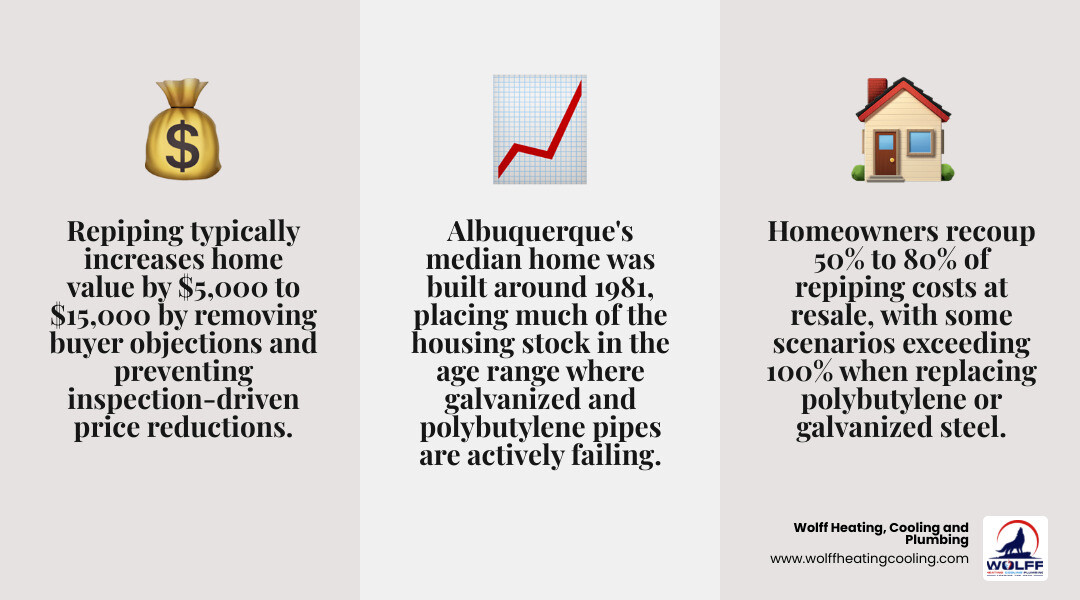
- Value added: Repiping typically increases a home’s effective market value by $5,000 to $15,000, primarily by removing buyer objections and preventing inspection-driven price reductions.
- ROI at resale: Homeowners generally recoup 50% to 80% of the cost of a full repipe at resale, with some scenarios exceeding 100% when replacing problem materials like polybutylene.
- Appraisal impact: Appraisers do not add a direct line item for new pipes, but they do deduct value for documented functional deficiencies — so repiping restores lost value rather than creating new value from scratch.
- Buyer and lender confidence: Homes with outdated plumbing (galvanized steel, polybutylene) frequently trigger FHA and VA loan flags, insurance complications, and aggressive buyer negotiations. Repiping eliminates all three.
- Unpermitted work risk: Repiping without a permit can cause price renegotiations averaging $8,500 and may derail financing entirely — permitted work is essential.
Albuquerque adds its own layer of urgency to this calculation. The city’s median home was built around 1981, placing a large portion of the housing stock right in the age range where galvanized steel and polybutylene pipes are failing. Add in the Rio Grande Valley’s notoriously hard water, clay soil movement under slab foundations, and occasional hard freezes, and the local environment is particularly tough on aging plumbing systems.
Put simply: in a market where outdated plumbing is one of the top three concerns buyers raise during negotiations, a documented repipe is not just a maintenance task — it is a strategic financial decision.
When preparing to list a home, sellers often focus on cosmetic upgrades like fresh paint or granite countertops. However, smart buyers and experienced home inspectors look past the surface. If they find outdated, corroded, or leaking pipes, those beautiful cosmetic upgrades quickly lose their luster.
By taking the time to understand how the plumbing system affects your property’s overall standing, you can protect your equity and ensure a much smoother transaction. For a complete look at how home systems operate in our unique high-desert climate, check out our Plumbing Albuquerque Complete Guide.

How Appraisers Evaluate Plumbing Systems
When a licensed residential appraiser evaluates a home in the Albuquerque area, they use a sales comparison approach. They look at recent sales of comparable properties in neighborhoods like the Northeast Heights, Corrales, or Rio Rancho to establish a baseline value.
Appraisers do not typically crawl through your home to inspect the exact chemical composition of your pipes. Instead, they evaluate the home’s overall “Condition Rating.”
Plumbing is viewed as a fundamental structural system. If your plumbing is fully functional and free of active leaks, the appraiser assumes the system is doing its job. However, if there is a documented history of slab leaks, visible water damage, or low water pressure, the appraiser must log these as functional deficiencies.
When you invest in a whole-home repipe, you are not necessarily adding a massive, separate line-item bonus to your appraisal. Rather, you are protecting your home from significant valuation deductions. A home with modern, permitted PEX or copper plumbing will secure a higher overall condition rating compared to a neighboring home with original, deteriorating pipes.
Why Does Repiping Increase Home Value in the Albuquerque Real Estate Market for Buyers?
For buyers, the value of a repiped home is largely psychological and practical. When a buyer walks through a property, they are constantly running a mental calculator of future expenses. If they see older galvanized steel or polybutylene pipes, that mental calculator immediately adds a massive buffer for a future plumbing disaster.
By replacing old pipes before listing your home, you completely eliminate this major buyer objection. This gives you substantial negotiating leverage. Buyers are much more likely to submit strong, clean offers when they know they will not have to deal with the mess, stress, and disruption of a major plumbing overhaul immediately after moving in.
Additionally, proactive upgrades help you avoid the cycle of frequent, costly spot repairs. To understand how staying ahead of these issues keeps more money in your pocket, read about how to Save Money with Regular Plumbing Repairs.
Albuquerque’s Environmental Challenges: Hard Water and Clay Soil
Albuquerque’s geography and climate create a unique set of challenges for residential plumbing systems. From the sandy soils of the West Mesa to the clay-rich earth near the foothills, and the mineral-heavy water of the Rio Grande Valley, local conditions accelerate the wear and tear on older piping materials.
If you suspect your home is already suffering from these environmental stressors, it is critical to seek professional assistance. Learn more about locating and resolving hidden system failures in our Leak Repair Albuquerque Guide.
The Impact of High Mineral Content on Old Pipes
The municipal water supply in the Albuquerque metro area, including communities like Bernalillo and Corrales, contains high concentrations of dissolved minerals, specifically calcium and magnesium. This “hard water” is highly prone to leaving scale deposits inside your plumbing system.
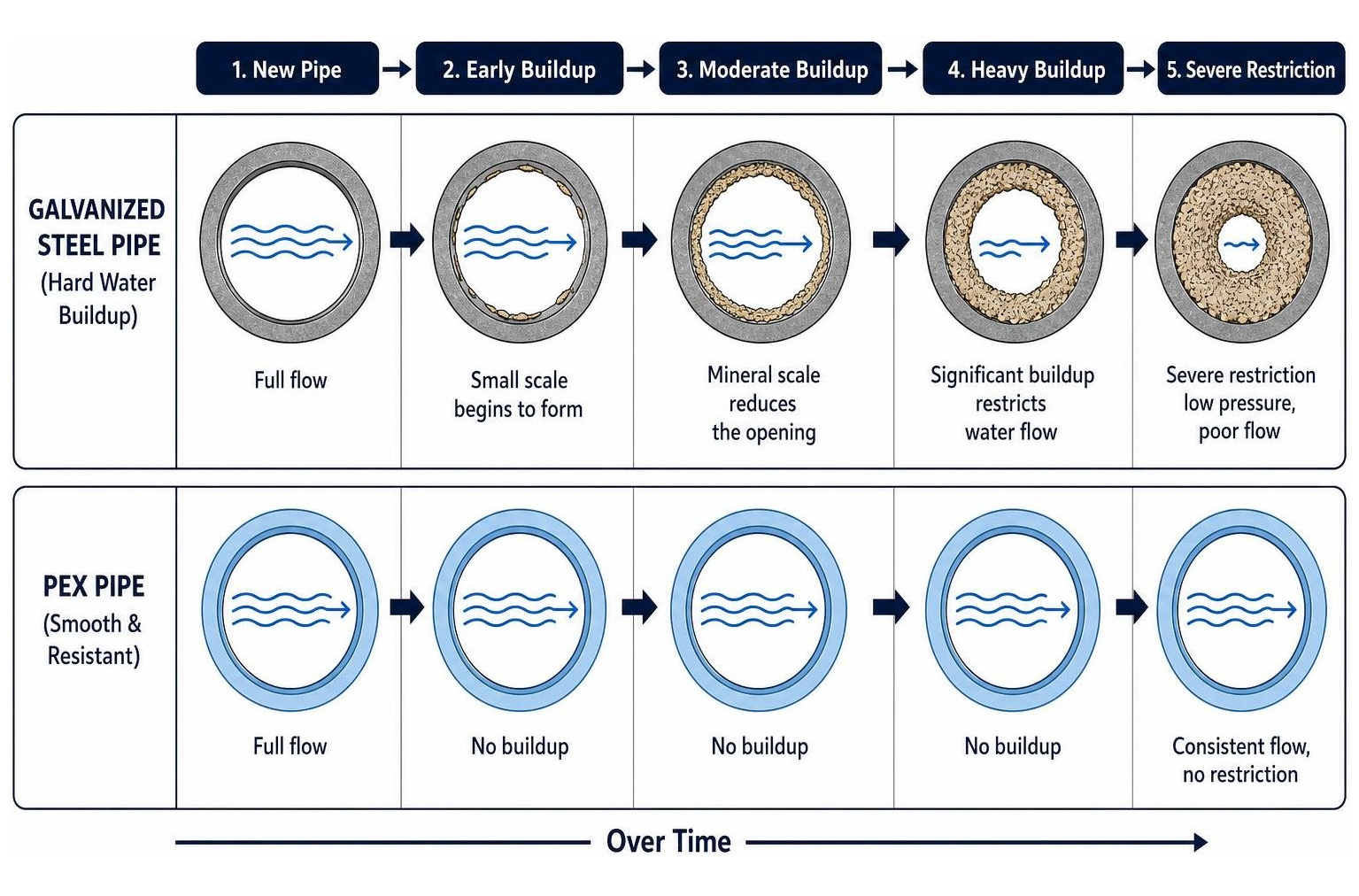
Over decades, this mineral scale acts like plaque in human arteries:
- Galvanized Steel: Hard water accelerates the internal corrosion of galvanized steel pipes. The combination of rust and mineral scale chokes the water flow, leading to a permanent drop in water pressure and rusty, discolored water at your taps.
- Copper: While copper is highly durable, Albuquerque’s hard water can still lead to mineral buildup and localized pitting corrosion, resulting in sudden pinhole leaks.
- PEX: Modern PEX piping is highly resistant to mineral scale and chemical corrosion, making it the ideal choice for our local water chemistry.
Soil Shifting and Slab Leaks in New Mexico
Another major localized issue is soil movement. Many neighborhoods in the Northeast Heights and Rio Rancho feature highly expansive clay soils. These soils expand when wet and contract when dry, causing subtle but persistent ground movement.
Because many mid-century and late-20th-century Albuquerque homes were built on concrete slab foundations, the original copper or galvanized supply lines were often run directly through or beneath the concrete. As the ground shifts, it puts immense stress on these rigid metal pipes.
This stress frequently leads to slab leaks—ruptures in the pipes beneath your concrete floor. Repairing a slab leak traditionally requires jackhammering through your flooring, which is incredibly destructive and expensive.
During a whole-house repipe, we typically bypass these under-slab lines entirely. We run flexible, modern PEX lines through the attic or crawl spaces, completely isolating your new plumbing system from future soil movement. If you are currently dealing with low water pressure or suspect a slab leak, find out how we can help by visiting our page on Plumbing Repair in Albuquerque.
Red Flag Pipe Materials in Older Albuquerque Homes
If your home was built between the 1950s and the mid-1990s, the choice of plumbing materials used during construction could be a major hurdle during a home sale. Buyers, home inspectors, and mortgage lenders are trained to spot specific “red flag” materials that are highly prone to catastrophic failure.
Particularly in historic or older neighborhoods like Nob Hill, the North Valley, and parts of the Northeast Heights, identifying these materials early is key to a successful transaction.
Polybutylene and Galvanized Steel Risks
Two materials stand out as major red flags in the local real estate market:
- Galvanized Steel: Common in pre-1970s homes. These pipes corrode from the inside out. By the time you notice rusty water or low pressure, the pipe walls have likely thinned to the point where a major leak is imminent.
- Polybutylene: Extremely common in homes built between 1978 and 1995. This gray plastic piping was once hailed as the material of the future. However, municipal water treatment chemicals (like chlorine) cause the material to become brittle, leading to micro-fractures and sudden, catastrophic joint failures.
| Pipe Material | Common Era | Major Risks in Albuquerque | Buyer/Lender Status |
|---|---|---|---|
| Galvanized Steel | Pre-1970s | Internal rust, severe scale buildup, low pressure | Red Flag (Often requires replacement) |
| Polybutylene | 1978–1995 | Chlorine degradation, brittle joints, sudden bursts | Major Red Flag (Hard to insure/finance) |
| Copper | 1960s–Present | Pitting corrosion from hard water, slab leak vulnerability | Generally Accepted (Monitor for age/leaks) |
| PEX | 1990s–Present | None (Scale-resistant, freeze-tolerant, flexible) | Gold Standard (Highly preferred) |
Financing and Insurance Hurdles for Outdated Plumbing
Selling a house with polybutylene or severely corroded galvanized steel can bring your transaction to a grinding halt.
Many major homeowners insurance companies in New Mexico will refuse to write a new policy for a home with known polybutylene plumbing, or they will charge incredibly high premium penalties. Because buyers must secure homeowners insurance to obtain a mortgage, an uninsurable plumbing system makes the home virtually unsellable to anyone using traditional financing.
Furthermore, FHA and VA loans have strict minimum property standards. If the home inspector flags active leaks or failing galvanized pipes, the lender will likely require a full system replacement before they will clear the loan for closing.
Strategic Decisions for Sellers: Repiping vs. Buyer Credits
If you are a seller on a tight timeline, you might wonder if it is better to tackle the repiping project before listing your home, or simply offer the buyer a financial credit at closing. While offering a credit seems easier, it rarely results in the highest net profit for the seller.
To get a clear picture of your system’s current health before making this decision, consider scheduling one of our Regular Plumbing Inspections.
Why Repiping Before Listing Yields Higher Net Profit
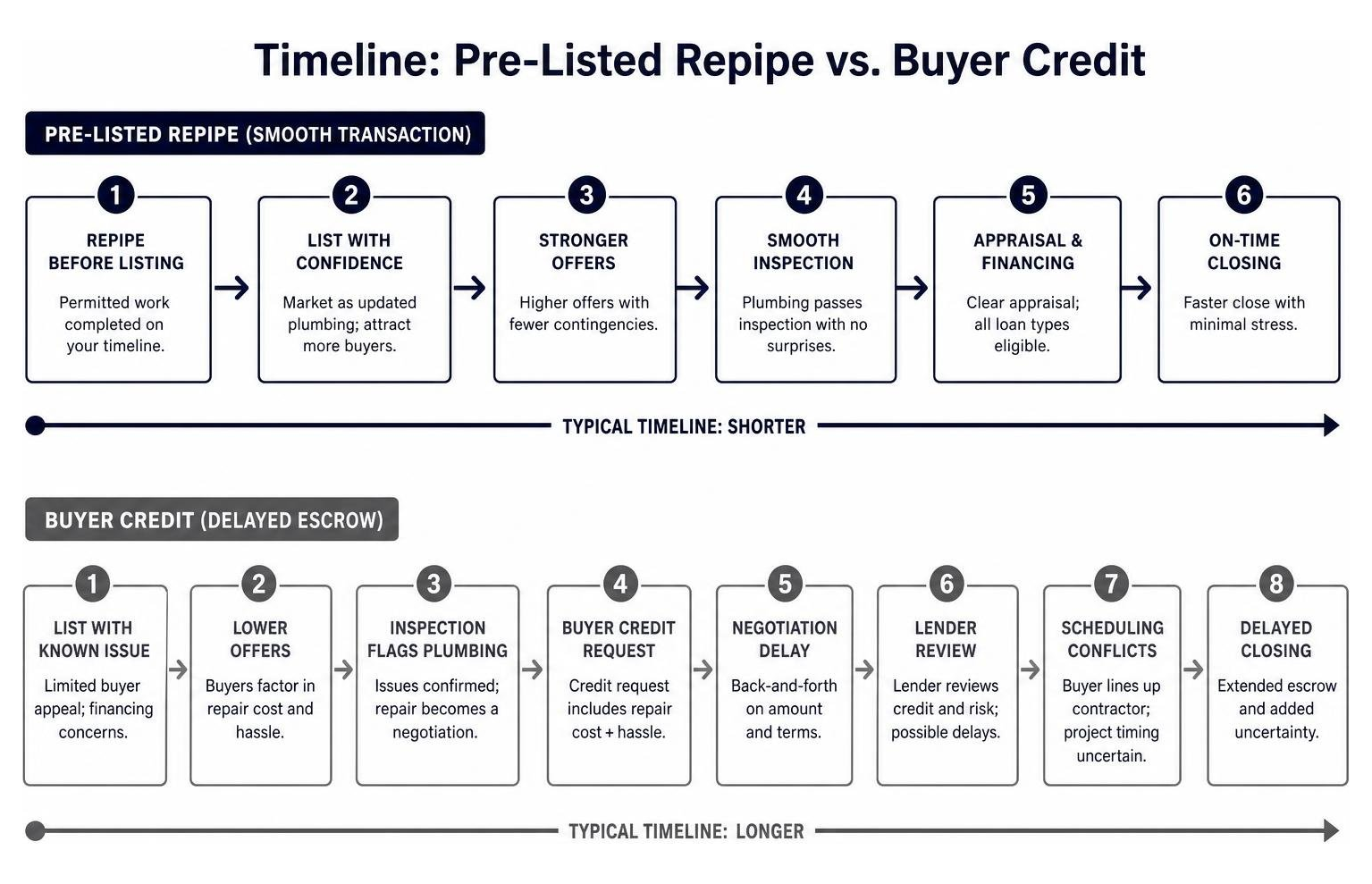
When you offer a buyer credit for a major repair, buyers do not simply calculate the retail cost of the job. They add a massive “hassle premium” to cover the stress of managing a major construction project, coordinating with contractors, and living in a home with open walls. A repair that could be resolved straightforwardly beforehand often turns into a massive price reduction demand at the negotiating table.
Furthermore, leaving the old pipes in place shrinks your buyer pool. You lose all the buyers using FHA or VA financing, as well as those who do not have the time or desire to tackle a major renovation immediately after moving in.
By repiping before you list, you keep complete control over the timeline, the choice of materials, and the contractor. You can market the home as “fully updated with permitted plumbing,” attracting top-dollar offers and ensuring a fast, smooth closing.
Does Repiping Increase Home Value in the Albuquerque Real Estate Market More Than AC Conversions?
Another common question we hear from local homeowners is how a plumbing upgrade compares to converting an old evaporative cooler (swamp cooler) to a modern central AC system.
Both upgrades are incredibly popular in Albuquerque, but they serve different strategic purposes:
- AC Conversion: This is a highly visible, lifestyle-focused comfort upgrade. It makes the home incredibly attractive during our hot summer months and monsoon season. It offers a very high aesthetic and functional appeal.
- Whole-House Repiping: This is a protective, structural upgrade. While it may not have the immediate visual “wow” factor of a new refrigerated air system, it protects your home’s core structure from water damage.
If your home has active plumbing leaks or red-flag materials, a buyer cannot secure financing or insurance. In this scenario, repiping is the absolute priority—a beautiful new AC system will not save a transaction that is derailed by uninsurable plumbing. Ideally, addressing both systems ensures your home stands out as a premium, worry-free listing in any neighborhood from Corrales to Tijeras.
Frequently Asked Questions About Albuquerque Repiping
Do I need a permit for a whole-house repipe in Albuquerque?
Yes, absolutely. In New Mexico, any major plumbing modification—including a whole-house repipe—requires a permit and a subsequent inspection. The New Mexico Regulation and Licensing Department requires that these permits be pulled by a licensed Master Plumber.
Skipping the permit process to save time or money is a major mistake. Unpermitted plumbing work must be disclosed to buyers and can lead to severe penalties, denied insurance claims, and transactions falling through during escrow.
How long does a typical home repiping project take?
For a standard single-story home with two bathrooms in areas like Rio Rancho or the Northeast Heights, the physical installation of new pipes typically takes between two and five days.
During this time, we take great care to protect your home’s interior with drop cloths and plastic sheeting. The water is usually shut off during the active working hours of the day, but we make sure it is restored every evening so you can maintain your daily routine with minimal disruption.
What documentation should I keep to prove my home was repiped?
To maximize the return on your investment, compile a comprehensive plumbing documentation packet for prospective buyers. This packet should include:
- The official permit records and signed-off final inspection certificates from the local building department.
- Detailed contractor invoices showing the exact materials used (such as high-quality, freeze-resistant PEX).
- Transferable manufacturer and workmanship warranties.
- Before-and-after photos of key installation areas before the drywall was patched and painted.
Conclusion
When it comes to protecting your home’s equity and ensuring a successful sale, few projects offer the peace of mind and structural security of a whole-house repipe. By addressing outdated plumbing before listing, you eliminate buyer objections, satisfy strict lender requirements, and protect your home from the environmental hazards of hard water and shifting desert soils.
At Wolff Heating, Cooling, and Plumbing, we bring over 25 years of local experience to every project. Whether you are in Albuquerque, Rio Rancho, Placitas, Corrales, Cedar Crest, Tijeras, or Bernalillo, our licensed and insured team is known for superior work, honest estimates, and unmatched service quality.
Ready to secure your home’s value for decades to come? Schedule a professional plumbing consultation today and let our family take care of yours.