
 Menu
Menu
Why the Monsoon Humidity and Mold Risk Connection Matters for Albuquerque Homeowners
The monsoon humidity and mold risk connection is something every Albuquerque homeowner needs to understand — because when the summer rains arrive, indoor conditions can shift fast and catch you off guard.
Here’s the core answer, quickly:
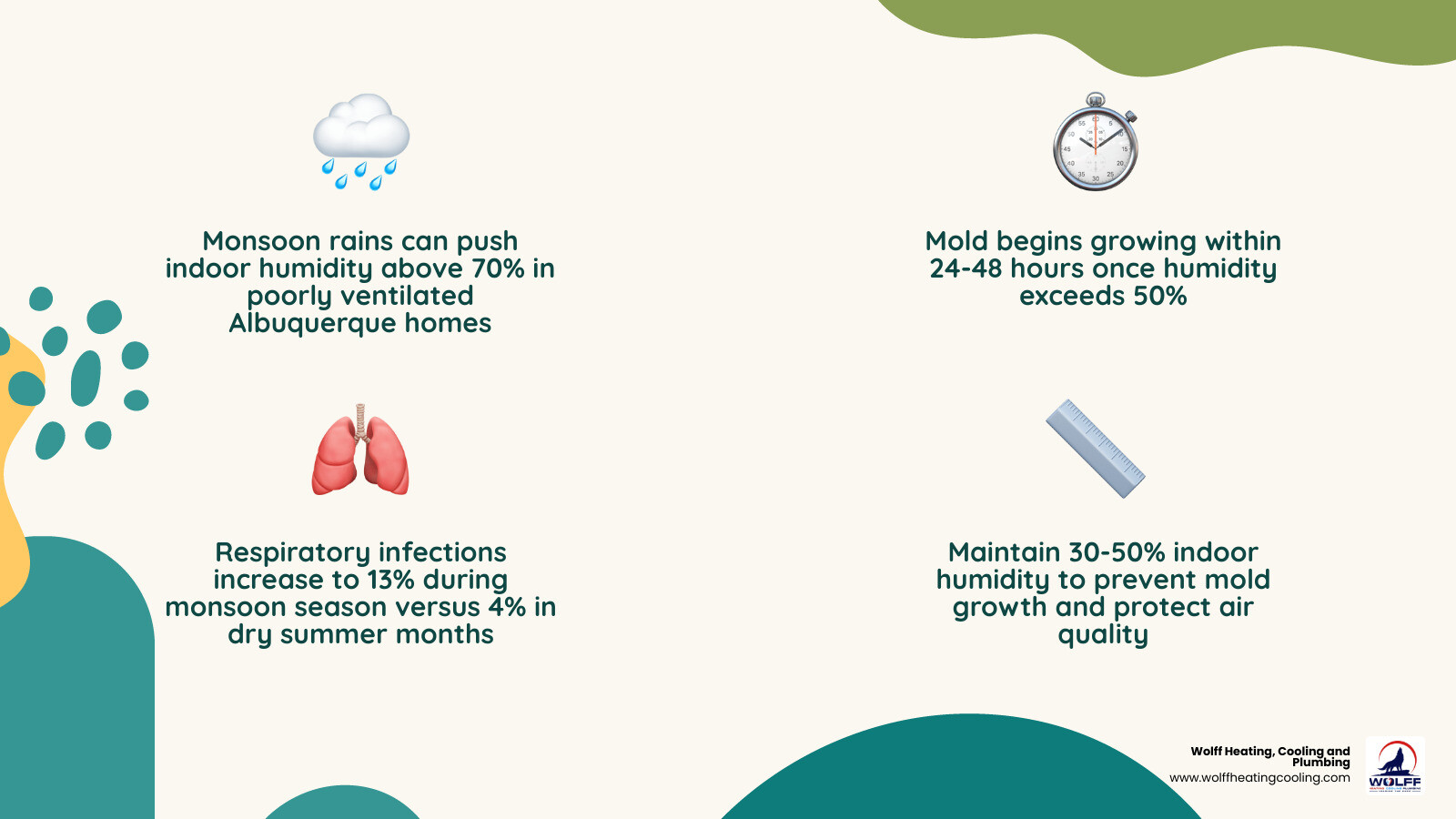
- Monsoon rains spike indoor humidity, often pushing levels above 70% in poorly ventilated spaces
- Mold can begin growing within 24 to 48 hours once humidity exceeds 50%
- Health risks rise sharply — respiratory tract infections occur at 13% during monsoon versus just 4% in summer, according to the SWORD study
- Keeping indoor humidity between 30% and 50% is the single most effective way to stop mold before it starts
- Ventilation, dehumidifiers, and regular HVAC maintenance are your main tools for staying protected
Albuquerque’s desert climate creates a unique problem. Most of the year, the air is too dry. But when monsoon season hits in July and August, humidity surges rapidly — and homes that aren’t prepared can develop mold problems faster than you’d expect. Monsoon rains can deliver 2 to 5 inches of precipitation in a short window, driving moisture into walls, wardrobes, AC units, and other hidden spaces. The same dry building materials that crack in winter can absorb that sudden moisture like a sponge.
And unlike coastal climates where residents expect humidity year-round, many Albuquerque homeowners don’t have the right equipment or habits in place when the monsoon arrives.
This guide walks you through exactly what’s happening inside your home during monsoon season, why mold takes hold so quickly, and what you can do to protect your indoor air quality and your family’s health.
Basic monsoon humidity and mold risk connection glossary:
Understanding the Monsoon Humidity and Mold Risk Connection
To understand why your Albuquerque home is suddenly smelling a bit musty in July, we have to look at how relative humidity and outdoor moisture interact with your indoor living space. Relative humidity (RH) measures how much water vapor is in the air compared to the maximum amount the air could hold at that specific temperature.
During the dry spring months in New Mexico, indoor relative humidity levels often hover well below 30%. However, when the monsoon season unleashes heavy rains, outdoor humidity spikes dramatically. This atmospheric shift causes immediate moisture intrusion. High outdoor humidity forces its way into your home through open windows, door seals, structural gaps, and ventilation systems.
When outdoor precipitation averages 2 to 5 inches over the season, the sheer volume of water entering the local ecosystem alters the indoor microclimate. Under normal dry conditions, mold spores remain dormant. But once indoor relative humidity crosses the 50% threshold, these microscopic spores wake up. If humidity reaches 70% or higher, mold can establish colonies on surfaces within a rapid 24-48 hours.
Adding fuel to the fire are the daily temperature swings characteristic of the high desert. Albuquerque can experience hot, sunny afternoons followed by sudden, cool downpours. When warm, humid air outside meets the cooler, air-conditioned surfaces of your home, condensation forms on windows, metal frames, and drywall. This localized standing water acts as a direct catalyst for mold growth, threatening your home’s overall Indoor Air Quality.
How Monsoon Humidity and Mold Risk Connection Affects Indoor Air
When high moisture levels combine with poor ventilation, indoor air becomes stagnant. During a heavy downpour, our natural instinct is to shut every window tightly. While this keeps the rain out, it traps moisture, cooking smells, and biological pollutants inside.
Stagnant air cannot easily disperse, leading to a concentrated buildup of airborne particles. Interestingly, indoor PM2.5 levels (fine particulate matter) during the monsoon season can remain significantly higher than WHO-recommended limits in poorly ventilated desert homes. This happens because the heavy, humid air prevents dust, pet dander, and mold spores from settling, keeping them suspended in your breathing zone.
The most obvious warning sign of this phenomenon is the development of musty odors. That signature “old basement” smell is actually the release of microbial volatile organic compounds (mVOCs) produced by actively growing mold and mildew. If you can smell it, mold is already growing somewhere in your home. Taking steps to Improve Your Home’s Indoor Air Quality becomes a matter of physical comfort and safety during these damp summer weeks.
The Science Behind the Monsoon Humidity and Mold Risk Connection in Arid Climates
In Albuquerque, Rio Rancho, and Bernalillo, we live in a semi-arid desert. This makes our relationship with monsoon moisture highly volatile. Throughout most of the year, our building materials—such as drywall, wood framing, and plaster—are incredibly dry. They develop tiny, microscopic cracks due to the low humidity.
When summer flash floods occur, the sudden downpour saturates the ground and the exterior of our homes. Because dry materials are highly porous, they absorb this sudden onslaught of water like a dry sponge.
Following the storm, the intense New Mexico sun emerges, causing rapid evaporation. As the moisture evaporates from the exterior, it is driven inward toward the cooler, air-conditioned interior of your home. This process creates hidden moisture pockets behind drywall, under carpets, and inside wall cavities. Because these spaces lack airflow, they become perfect, dark incubators for mold.
Furthermore, our windy, dusty climate means that local homes naturally accumulate fine desert dust inside wall voids and HVAC systems. To understand how this dust acts as a nutrient source for mold spores when humidity rises, you can read about The Dirty Truth About HVAC Maintenance in Dusty Environments.
Health Risks of Monsoon Mold Exposure
Ignoring the monsoon humidity and mold risk connection doesn’t just put your property at risk; it can actively compromise your physical health. When mold colonies thrive, they release millions of microscopic spores, cell fragments, and allergens into the air.
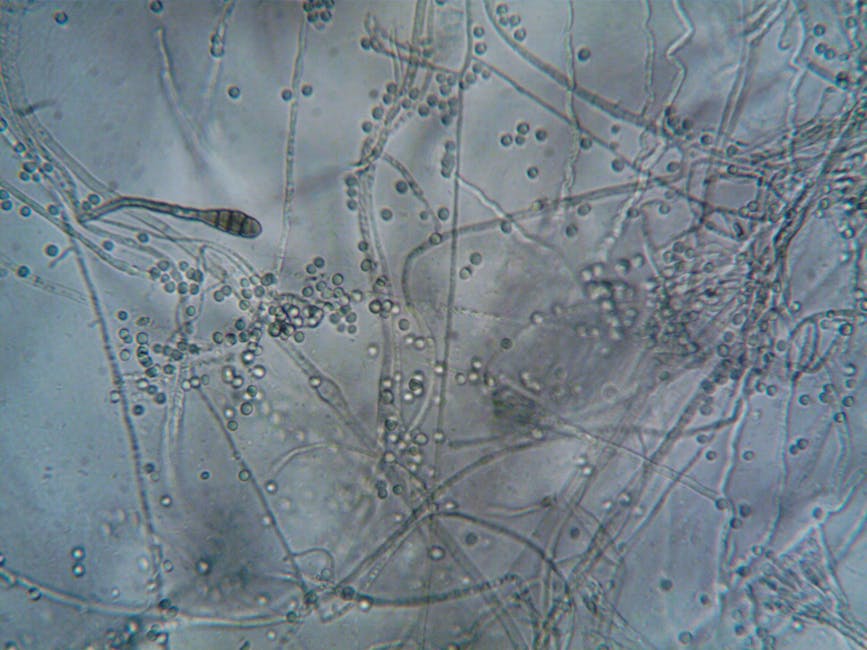
Inhaling these particles can lead to a variety of health issues:
- Respiratory Infections: Spores irritate the sensitive linings of your airways, making it easier for viral and bacterial pathogens to take hold.
- Asthma Triggers: For individuals with pre-existing asthma, mold exposure can cause sudden bronchial spasms, chest tightness, and severe asthma attacks.
- Allergic Rhinitis: Symptoms mimic a perpetual cold, including sneezing, runny nose, itchy eyes, and persistent congestion.
The World Health Organization (WHO) guidelines explicitly state that persistent indoor dampness and mold are strong, consistent indicators of health risks, even if specific mycotoxins cannot be measured in the air. In severe cases, active mold growth releases mycotoxins—toxic chemical compounds that can cause neurological symptoms, chronic fatigue, and severe inflammatory responses.
When a building’s air quality is so low that it causes widespread, non-specific illness among its inhabitants, it is referred to as Sick Building Syndrome (SBS). During the New Mexico monsoon, homes with trapped humidity and dirty HVAC systems are prime candidates for SBS, leaving residents feeling fatigued, congested, and generally unwell.
Vulnerable Populations and Seasonal Spikes
While mold exposure can affect anyone, certain vulnerable populations face much higher risks. Children, the elderly, pregnant women, and individuals with compromised immune systems are particularly susceptible to airborne mold spores. Because children have smaller airways and faster breathing rates, they inhale more spores relative to their body weight than adults.
The seasonal health impact of monsoon moisture is well-documented. According to the landmark SWORD study, respiratory tract infections spike to a staggering 13% during the monsoon months, compared to a mere 4% during the dry summer months. This dramatic increase is directly linked to the sudden rise in indoor mold exposure, dust mite proliferation, and trapped indoor allergens.
Maintaining the Ideal Indoor Humidity Level
To keep your home safe, you should aim to maintain a stable indoor relative humidity level of 30% to 50%. This range is the “sweet spot” where humans feel most comfortable, wood furniture doesn’t warp, and mold spores remain completely dormant.
To manage this, every homeowner in Albuquerque, Corrales, or Placitas should own a digital hygrometer. These inexpensive devices measure indoor temperature and relative humidity in real time, letting you know exactly when it’s time to take action.
If your hygrometer consistently reads above 50% during the monsoon, relying solely on your air conditioner may not be enough. You will likely need to introduce dedicated dehumidification.
| Feature | Portable Dehumidifier | Whole-Home Dehumidifier |
|---|---|---|
| Coverage Area | Single room or small space | Entire home (integrated with HVAC) |
| Maintenance | High (must empty water bucket daily, clean filter weekly) | Low (drains automatically, annual service) |
| Lifespan | Approximately 3 years | 10 to 15 years |
| Energy Efficiency | Low (runs constantly in one room) | High (cycles efficiently with your system) |
| Noise Level | Noticeable hum in the living space | Silent (located in utility closet or garage) |
For long-term protection against seasonal moisture spikes, investing in professional Dehumidifiers Albuquerque NM is the most reliable way to maintain balanced, healthy air throughout your entire house.
Strategic Ventilation and Air Purification
Controlling humidity is only half the battle; you also need to keep air moving. Strategic ventilation helps flush out humid, stale air and replaces it with cleaner air.
Always run your kitchen and bathroom exhaust fans during and for at least 20 minutes after cooking or showering. These fans draw moisture directly from the source and vent it outside before it can settle into your drywall. However, be careful with window ventilation. Only open your windows when the outdoor humidity is lower than your indoor humidity—which rarely happens during an active monsoon storm!
To clean the air of spores that have already found their way inside, utilize a high-quality air purifier. Look for units equipped with a True HEPA filter, which can trap 99.97% of airborne particles as small as 0.3 microns (including mold spores). Additionally, ensure the purifier contains an activated carbon filter. While HEPA filters catch physical spores, activated carbon is required to chemically neutralize the musty odors and volatile organic compounds that mold releases.
For professional ventilation upgrades and balanced fresh-air systems, exploring Ventilation Albuquerque NM can make a world of difference in your home’s air quality.
Practical Steps to Prevent Mold in High-Risk Home Areas
Mold doesn’t grow in the middle of your living room floor; it hides in dark, quiet, stagnant areas of your home. The three biggest trouble zones during monsoon season are wardrobes, external walls, and your air conditioning system.
Taking a proactive approach to these areas is essential. To keep your cooling system from spreading spores throughout your house, you should Keep Your Cool and Your Spores at Bay with Proper HVAC Maintenance before the heavy rains start.
Wardrobe and Wall Moisture Control
Wardrobes and closets are highly susceptible to mold because they remain dark, closed, and packed with porous fabrics that hold onto moisture.
- Create Airflow: Never pack your closets completely full. Leave space between hanging clothes to allow air to circulate.
- Keep Furniture Away from Walls: Pull heavy wooden dressers, wardrobes, and couches 2 to 4 inches away from external walls. If a piece of furniture is pushed flat against an exterior wall, it traps moisture escaping from the drywall, creating a hidden mold colony.
- Use Moisture Absorbers: Place hanging silica gel bags or calcium chloride moisture-absorbing tubs inside closets to pull excess water out of the air.
- Avoid Storing Damp Items: Never put worn, damp, or line-dried clothes straight into a closed drawer or wardrobe.
Air Conditioner and Drain Line Maintenance
Your air conditioner works hard during the summer, but it can easily become a breeding ground for mold if neglected.
- Run Fan Mode: After running your AC on a humid day, the indoor evaporator coils are soaking wet with condensation. When the system shuts off, that dark, wet environment is perfect for mold. Try running your system in “Fan Only” mode for 10 to 20 minutes after a heavy cooling cycle to dry out the internal coils.
- Keep Filters Clean: Dirty filters restrict airflow, causing the system to run longer and accumulate more moisture. Check and replace your filters monthly during monsoon season.
- Clear Clogged Condensate Drains: Your AC pulls gallons of water out of the air daily. If the drain line is clogged with dust or algae, that water backs up into your home, creating immediate water damage.
- Prevent Dry P-Traps: In our arid climate, plumbing p-traps in guest bathrooms or floor drains can dry out quickly. When they do, musty odors and sewer gases can travel up the drain and pollute your air. Run water down seldom-used drains weekly to keep the traps sealed.
When to Call a Professional vs. DIY Mold Remediation
If you spot a small patch of mold on a non-porous surface, like a tiled bathroom wall or a metal window frame, you can usually handle it yourself. Wear protective gloves, safety goggles, and an N95 mask. Clean the area gently using a mild detergent or an EPA-approved mold cleaner, and dry the space completely. Never mix bleach with ammonia or vinegar, as this creates highly toxic gas.
However, DIY cleaning has its limits. You should always call a professional if:
- The affected area is larger than 10 square feet (roughly a 3-foot by 3-foot patch), per EPA guidelines.
- Mold has penetrated porous materials like drywall, carpet padding, or unsealed wooden studs. These materials usually must be completely cut out and replaced.
- You suspect mold is growing inside your HVAC ducts or on the internal coils of your heating and cooling system.
- The moisture source is a hidden leak, such as a leaking roof or a pipe behind a wall.
- Occupants of the home suffer from severe asthma, allergies, or compromised immune systems.
If you suspect your home’s air is being compromised by hidden mold, calling for professional Air Quality Services Rio Rancho is the safest way to identify and resolve the issue.
Frequently Asked Questions About Monsoon Mold
What is the ideal indoor humidity level during monsoon season?
The ideal indoor relative humidity level is between 30% and 50%. Keeping your home within this range ensures personal comfort, protects wooden structural elements, and prevents mold spores from germinating. Use a digital hygrometer to monitor this daily.
How quickly can mold grow after monsoon water damage?
Under warm, humid conditions, mold spores can germinate and begin forming visible colonies within 24 to 48 hours after water exposure. This is why drying out wet materials immediately after a roof leak or flash flood is absolutely critical.
Can running my AC help reduce indoor humidity?
Yes, running your air conditioner naturally dehumidifies your home. As warm air passes over the cold evaporator coils, moisture condenses out of the air and drains away. However, if indoor humidity remains high without a drop in temperature, you may need to look into dedicated HVAC Albuquerque NM Dehumidifiers to manage moisture levels without over-cooling your living space.
Conclusion
Managing the monsoon humidity and mold risk connection is all about being proactive. Albuquerque summers are beautiful, but the sudden moisture of the monsoon season requires a shift in how we care for our homes. By keeping an eye on your indoor humidity, ensuring proper ventilation, and keeping up with regular HVAC maintenance, you can protect your property and your family’s health.
At Wolff Heating, Cooling, and Plumbing, we have over 25 years of experience helping homeowners in Albuquerque, Rio Rancho, Bernalillo, and surrounding communities stay comfortable and safe. If you’re concerned about your home’s Indoor Air Quality or need help preparing your HVAC system for the seasonal humidity, give us a call today. We are here to provide honest estimates and superior service to keep your home healthy all year long.