
 Menu
Menu
When Older Pipes and High-Desert Conditions Team Up Against Your Drains
How to prevent drain backups in a home served by older plumbing in the Albuquerque area is one of the most common concerns we hear from local homeowners — and for good reason. If your home was built before 1980, there’s a real chance your pipes are clay tile, cast iron, or galvanized steel, and all three of those materials are working against you right now. Add in Albuquerque’s very hard water, aggressive tree roots from mature cottonwoods and elms, and soil that shifts dramatically between monsoon season and dry spells — and you have a recipe for a slow drain that turns into a full sewage backup fast.
Here’s a quick answer to get you started:
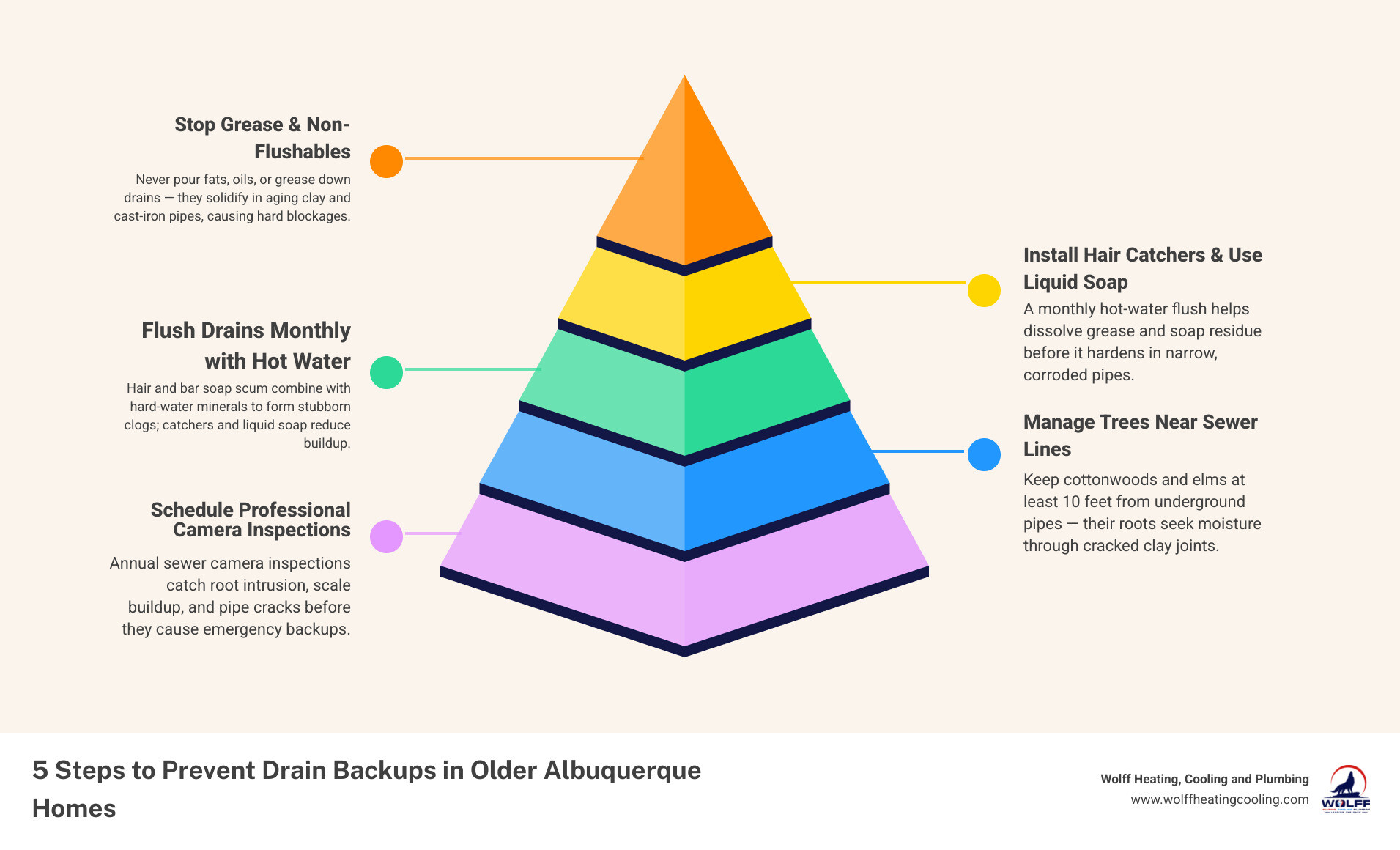
5 steps to prevent drain backups in older Albuquerque plumbing:
- Stop grease and non-flushables at the source — never pour fats, oils, or grease down any drain
- Install hair catchers and switch to liquid soap — reduce debris and soap scum buildup in bathroom drains
- Flush drains monthly with hot water — break down minor buildup before it hardens
- Manage trees and landscaping near sewer lines — keep large trees at least 10 feet from underground pipes
- Schedule professional sewer camera inspections — catch root intrusion, pipe cracks, and scale buildup before they become emergencies
The stakes are high. A sewer backup doesn’t just mean a bad smell — it can mean thousands of dollars in water extraction, flooring replacement, and mold remediation, costs that standard homeowners’ insurance typically won’t cover unless you’ve added a specific sewer backup endorsement to your policy. The good news is that most backups in older Albuquerque homes are preventable with the right habits and routine professional maintenance.
Why Older Albuquerque Homes Face Unique Drain Challenges
To keep your plumbing flowing smoothly, it helps to understand what is happening beneath your floors and yard. Older homes in the Albuquerque metro area possess incredible character, but their plumbing networks were designed for a different era. Decades of continuous use, combined with our unique high-desert environment, place a massive amount of stress on these aging materials.
Clay Pipes, Cast Iron, and Galvanized Steel
Depending on when and where your home was built, your underground lines are likely composed of one of three legacy materials:
- Clay Tile Pipes: Extremely common in historic neighborhoods like Old Town and the North Valley, some of these clay lines are 70 to 100 years old. While clay does not rust, it is highly brittle. Over the decades, individual pipe sections shift, causing joints to separate. These open gaps act as an open invitation for thirsty tree roots.
- Cast Iron Pipes: Widely used from the 1930s through the 1960s, particularly in neighborhoods like Nob Hill and the University area, cast iron is incredibly strong but highly susceptible to internal corrosion. Over time, cast iron undergoes a process called “tuberculation.” Rust scales and rough mineral bumps grow inside the pipe, narrowing the path for wastewater. This rough surface acts like Velcro, catching hair, toilet paper, and kitchen waste until a complete blockage forms.
- Galvanized Steel Pipes: Frequently installed in mid-century homes up through the 1970s (such as those in parts of the Northeast Heights), galvanized pipes corrode internally. As the protective zinc coating wears away, the pipe walls rust, restrict water flow, and eventually collapse.
If you suspect your sewer lateral is beginning to fail due to its age, reviewing a comprehensive Sewer Line Repair Albuquerque Guide can help you understand the structural options available to restore your lines. Additionally, understanding the signs of deteriorating pipes is the first step toward a targeted Drain Repair Albuquerque Guide intervention.
Why It Is Hard to Prevent Drain Backups in a Home Served by Older Plumbing in the Albuquerque Area
Maintaining older plumbing in Albuquerque is uniquely difficult because our high-desert climate and geology are incredibly tough on pipes.
First, we experience highly concentrated seasonal weather patterns. During our late-summer monsoon season, sudden, intense downpours saturate the dry desert clay. When this clay-heavy soil absorbs water, it expands rapidly. During the dry winter and spring months, the soil shrinks and cracks. This constant expansion and contraction cycle puts immense physical pressure on brittle clay and corroded cast iron pipes, often resulting in offset joints, sags (or “bellies”) where waste pools, and sudden structural fractures.
Second, our rapid temperature swings — where a 40-degree drop within a single day is not uncommon — cause older metal pipes to expand and contract repeatedly. This constant movement weakens aged joints and fittings, making them highly susceptible to leaks and structural failure.
Because these environmental factors are constantly working against your plumbing, relying solely on DIY quick fixes is rarely enough. True protection requires a dedicated strategy of Preventive Plumbing Maintenance to keep these environmental stressors from destroying your home’s foundation and drainage network.
How to Prevent Drain Backups in a Home Served by Older Plumbing in the Albuquerque Area
Preventing a catastrophic backup in an older home requires shifting from a reactive mindset (“fix it when it overflows”) to a proactive one. By implementing daily preventative habits and utilizing professional diagnostic tools, you can easily keep your historical or mid-century plumbing system operating safely. For a complete look at protecting your system, check out our Drain Maintenance Albuquerque Guide.
Step-by-Step: How to Prevent Drain Backups in a Home Served by Older Plumbing in the Albuquerque Area
Protecting your older home’s plumbing doesn’t have to be overwhelming. By breaking your maintenance down into five distinct, manageable steps, you can systematically eliminate the most common causes of drain failures.
Step 1: Avoid Grease and Non-Flushables
Kitchen grease is the single leading cause of sewer blockages nationwide, and our dry desert air actually accelerates how quickly fats, oils, and grease (FOG) solidify inside your pipes. When warm grease is poured down the sink, it cools rapidly and clings to the rough, corroded interior of older cast iron or galvanized pipes, creating a sticky trap for food particles.
- The Rule: Wipe all cooking pans with a paper towel and toss the residue into the trash.
- The Toilet Rule: Treat your toilets with extreme care. The only things that should ever be flushed are human waste and toilet paper. Even if wet wipes, feminine hygiene products, or paper towels are labeled “flushable,” they do not break down like toilet paper. In older pipes with rough interiors or root intrusions, these non-flushable items instantly snag and form severe blockages.
Step 2: Use Hair Catchers and Switch to Liquid Soap
Bathroom drains in older homes are highly vulnerable to hair clogs. Hair binds with soap scum to form dense, waterproof plugs deep inside your plumbing.
- Install Mesh Screens: Place inexpensive stainless steel mesh hair catchers over every shower and tub drain.
- Switch to Liquid Soap: Traditional bar soaps are made with fats and talc, which leave behind a sticky, heavy residue (soap scum) that coats the inside of your pipes. Liquid soaps and body washes do not contain these binding agents, meaning they flow through older pipes much more cleanly.
- Pet Grooming Tip: If you need to bathe your pets, try to do so outdoors when the weather permits, or place a heavy-duty silicone hair catcher over the drain to prevent dense pet fur from entering your plumbing.
Step 3: Perform Monthly Hot Water Flushes
Regularly flushing your drains is a simple, cost-effective way to clear out minor accumulations before they can harden into stubborn clogs.
- The Monthly Flush: Once a month, boil a large kettle of water and pour it slowly down your kitchen and bathroom drains (note: only do this if you have metal or clay pipes; do not use boiling water on modern PVC pipes, as extreme heat can soften plastic joints). The hot water melts accumulated grease and soap scum, flushing it out to the city main.
- The Baking Soda & Vinegar Refresh: Every three to four months, pour half a cup of baking soda down your drains, followed by half a cup of white vinegar. Let the mixture fizz for 30 minutes to break down organic buildup and eliminate odors, then flush the line thoroughly with hot water. Avoid using harsh chemical drain cleaners, as their highly corrosive formulas can eat through weakened cast iron and galvanized metal, causing costly leaks.
Step 4: Manage Landscaping and Tree Roots
Thirsty trees will seek out the moisture inside your sewer lines, especially during dry New Mexico winters.
- Keep Your Distance: Avoid planting large, water-loving trees or shrubs within 10 feet of your underground sewer lateral. If you already have mature trees on your property, monitor their growth closely.
- Identify Vulnerable Zones: Be aware of where your main sewer line runs through your yard. If you notice localized patches of unusually green, lush grass or a sudden dip in the soil near a tree, it may indicate that a root has cracked the pipe and is feeding on the wastewater.
Step 5: Schedule Professional Inspections
The most effective way to prevent a backup is to see exactly what is happening inside your pipes. Investing in Regular Plumbing Inspections allows us to spot hairline cracks, joint separations, minor root intrusions, and scale buildup before they turn into major water damage. For older homes, having a professional plumber run a fiber-optic camera down your main line every one to two years is the absolute best insurance policy against emergency backups.
The Role of Professional Maintenance
While daily habits are vital, older plumbing systems occasionally require professional intervention to restore their original flow capacity.
For routine clearing of stubborn blockages or invasive tree roots, traditional drain snaking (using a mechanical cable with a cutting blade) is highly effective. However, for older, fragile pipes, we must handle snaking with care to avoid cracking weakened clay or punching through corroded metal walls.
For a deeper, more comprehensive clean, hydro-jetting is the gold standard. Hydro-jetting utilizes specialized nozzles to blast high-pressure water (up to 4,000 PSI) through your sewer line. This process effectively scours away decades of accumulated grease, shaves off invasive tree roots, and descales corroded cast iron.
Before performing hydro-jetting on an older home, a professional plumber should always conduct a sewer camera inspection first. This ensures the structural integrity of the pipe is strong enough to withstand the pressure. For a detailed breakdown of how these professional methods work, explore our Drain Cleaning Albuquerque NM Guide. If you live in our northern service areas, you can also access specialized care through our Drain Cleaning Rio Rancho or Drain Cleaning Service Placitas services.
Frequently Asked Questions About Albuquerque Drain Backups
How does Albuquerque’s hard water affect older drains?
Albuquerque’s groundwater is rated “very hard” by the USGS because it is drawn from deep aquifer wells rich in dissolved calcium and magnesium. While these minerals are safe to drink, they pose a constant threat to your plumbing.
As hard water flows through your home, it leaves behind solid calcium carbonate deposits (limescale). Over decades, this limescale builds up inside your drain lines, creating a rough, chalky coating. This scale significantly narrows the interior diameter of your pipes and catches passing debris like hair and grease.
Installing a whole-house water softener is highly effective at reducing mineral content at the source. By removing calcium and magnesium before the water enters your pipes, you slow down scale buildup, protect your water heater, and extend the lifespan of your entire plumbing system.
What role do tree roots play in sewer line backups?
In our arid high-desert climate, tree roots are incredibly aggressive in their search for water. Mature trees — particularly elms, willows, and Rio Grande cottonwoods common in historic neighborhoods and areas near the valley bosque — have massive root systems that extend far past their branch lines.
Because older clay tile and cast iron sewer lines have joints every few feet, they are highly vulnerable. As these joints settle and develop tiny hairline cracks, moisture escapes into the surrounding soil. Tree roots detect this moisture and grow directly toward the crack, eventually slipping inside the pipe.
Once inside, the root thrives in the warm, nutrient-rich wastewater, growing into a dense, broom-like mass that completely blocks the flow of waste. If left unchecked, the growing roots will exert enough pressure to completely shatter or collapse the aging pipe.
How does caliche and desert clay soil affect underground pipes?
Albuquerque’s subsurface contains unique geological challenges, most notably caliche — a hardened, concrete-like layer of calcium carbonate hardpan — and expansive desert clay.
During dry spells, our clay soil shrinks, pulling away from underground pipes and leaving them unsupported. When our heavy monsoon rains arrive, the water quickly saturates the clay, causing it to expand and shift. Because caliche does not absorb water well, it creates uneven underground runoff that forces sandy soil to erode, creating empty pockets (voids) beneath your plumbing.
When the soil shifts or erodes, older clay and cast iron pipes can sag, creating a low spot known as a “pipe belly.” Waste and heavy solids collect in these bellies rather than flowing to the city main, leading to recurring, stubborn backups.
Conclusion
Preventing drain backups in an older Albuquerque home doesn’t have to be a source of constant stress. By practicing mindful waste disposal, protecting your drains with simple screens, performing monthly hot water flushes, and keeping an eye on your landscaping, you can easily keep your historical plumbing flowing safely.
When you do need professional support, we are here to help. At Wolff Heating, Cooling, and Plumbing, we bring over 25 years of local New Mexico experience to every job. Whether you need a preventative sewer camera inspection, professional hydro-jetting, or urgent drain repairs, our licensed, bonded, and insured team is committed to providing honest estimates and superior workmanship throughout Albuquerque, Rio Rancho, Placitas, Corrales, Cedar Crest, Tijeras, and Bernalillo.
Don’t wait for a slow drain to turn into an expensive emergency. Schedule professional plumbing services with Wolff Heating, Cooling, and Plumbing today to protect your older home and keep your pipes clear for years to come.