
 Menu
Menu
How Often Should You Flush Your Water Heater in a Hard Water Area Like Albuquerque?
If you’ve been wondering how often should you flush your water heater in a hard water area like Albuquerque, here’s the short answer:
| Your Situation | Recommended Flushing Frequency |
|---|---|
| Standard water (soft or moderately hard) | Once per year |
| Hard water (10–15 GPG) — typical for Albuquerque | Every 6 months |
| Very hard water (above 15 GPG) | Every 3–6 months |
| Hard water area with a water softener installed | Once per year |
| Tankless water heater in a hard water area | Every 12 months (descaling) |
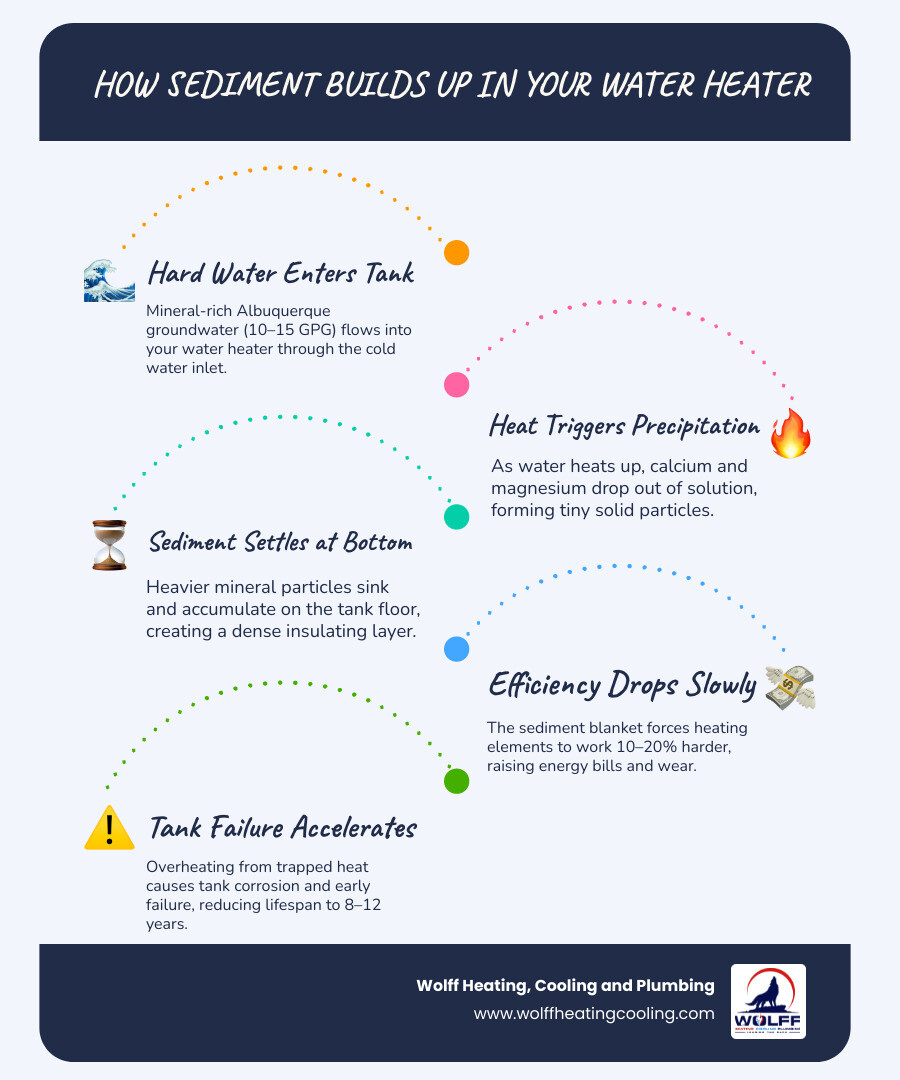
Albuquerque’s water is notoriously hard. The city draws from groundwater sources that pass through New Mexico’s mineral-rich geology, picking up high concentrations of calcium and magnesium along the way. When that water enters your water heater and gets heated, those minerals drop out of solution and settle at the bottom of the tank as sediment.
Over time, that sediment layer acts like a blanket between your heating element and the water above it. Your heater has to work harder, your energy bills creep up, and the tank wears out years sooner than it should. Tank water heaters in hard water regions like Albuquerque often last only 8–12 years, compared to 12–15 years in areas with softer water.
The good news? Regular flushing is a straightforward maintenance task that can cut your monthly energy bills by 10–20% and add years to your system’s life.
Why Albuquerque’s Hard Water is a Silent Killer for Water Heaters
To understand why our water heaters struggle so much in the Middle Rio Grande Valley, we have to look beneath our feet. Albuquerque, Rio Rancho, Bernalillo, and surrounding areas rely heavily on groundwater aquifers. As this water filters through our unique, mineral-rich desert soil and geological formations, it naturally dissolves and absorbs high levels of calcium carbonate, magnesium, and other total dissolved solids (TDS).
By the time this groundwater reaches your home’s plumbing system, it is highly mineralized. While these minerals are perfectly safe to drink, they are absolute kryptonite for home appliances—especially your water heater.
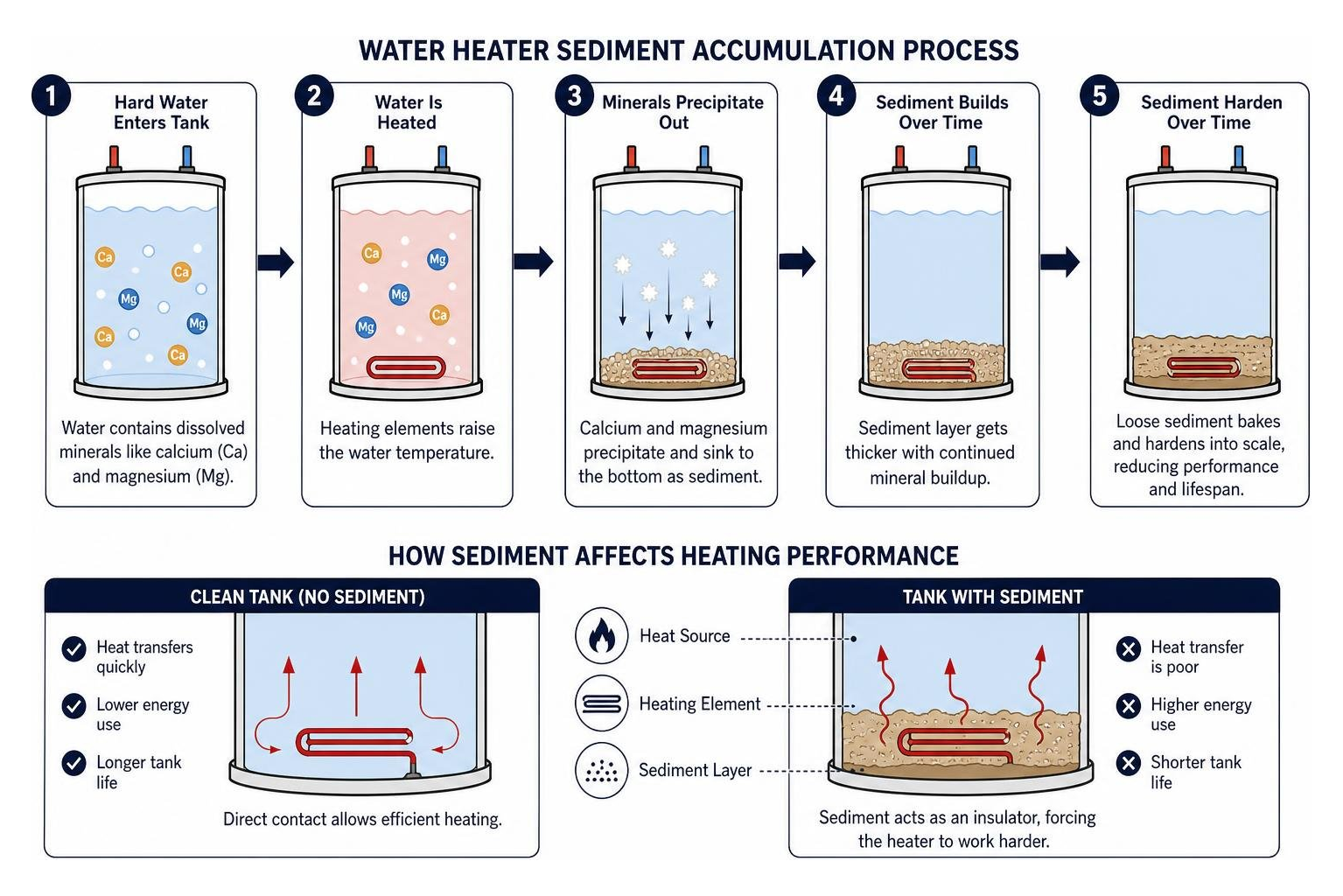
When hard water is subjected to high temperatures inside your water heater, a chemical reaction occurs. The dissolved calcium and magnesium precipitate out of the water, transforming back into solid mineral crystals. These tiny white or yellowish particles sink to the bottom of the tank, forming a thick, sandy layer of sediment.
Without routine Water Heater Maintenance in Albuquerque, this loose sediment gradually bakes under the intense heat of the burner or electrical elements, solidifying into a rock-hard scale crust.
How often should you flush your water heater in a hard water area like albuquerque to prevent scale?
If your goal is to prevent that loose sediment from turning into a permanent, petrified scale crust, how often should you flush your water heater in a hard water area like albuquerque?
We highly recommend flushing your tank-style water heater every 6 months.
Waiting a full year in the Albuquerque metro area gives the accumulated minerals too much time to compact and bake onto the bottom of the tank. Once this scale layer hardens, a simple flush will no longer be enough to wash it away.
This thermal barrier severely reduces your system’s thermal efficiency. Instead of directly heating the water, your gas burner or electric heating elements must first heat through inches of solid stone. This wastes energy, spikes your monthly utility bills, and subjects the bottom of your tank to extreme thermal stress, leading to microscopic cracks in the protective glass lining.
The Real Cost of Neglect: How Mineral Scale Damages Your System
Ignoring the mineral buildup inside your water heater doesn’t just result in lukewarm showers; it actively destroys your plumbing investment.
When sediment accumulates at the bottom of a gas water heater, it acts as an insulating blanket. The burner underneath has to run significantly longer and hotter to transfer heat to the water. This localized overheating causes the steel tank to expand and contract violently, which eventually cracks the internal glass lining. Once water reaches the outer steel shell, rust takes over, and a catastrophic tank failure is only a matter of time.
For electric water heaters, the danger is even more immediate. The lower heating element is completely submerged in the water. As sediment builds up, it literally buries the element in a mountain of sand-like minerals. Deprived of water to cool it down, the element overheats, suffers from localized “hot spots,” and burns out prematurely.
Here are the most common consequences of neglecting your flushing schedule:
- Skyrocketing Energy Bills: A sediment layer as thin as 6 mm can force your system to use 10% to 30% more energy to heat the same amount of water.
- The Infamous “Popcorn” Noise: If you hear strange popping, rumbling, or banging noises coming from your utility closet during a heating cycle, that’s the sound of trapped water boiling underneath the sediment layer and escaping as steam bubbles.
- Rapid Anode Rod Depletion: Your sacrificial anode rod is a brave little metal soldier designed to corrode so your steel tank doesn’t. In hard water areas, the anode rod can be completely eaten away in just 2 to 3 years. Once it’s gone, the tank itself begins to rust.
- Reduced Hot Water Capacity: As sediment fills the bottom 20% to 40% of your tank, it physically displaces water, leaving you with significantly less hot water for back-to-back showers.
If you are already experiencing these warning signs, it is time to look into Affordable Water Heater Maintenance in Albuquerque, NM to clear out the buildup before irreversible damage occurs.
How Often Should You Flush Your Water Heater in a Hard Water Area Like Albuquerque?
As established, geography is destiny when it comes to plumbing. If you live in soft-water regions of the country, an annual flush is plenty. But here in New Mexico, our municipal water hardness frequently ranges from 10 to over 15 grains per gallon (GPG).
Because of this, a 6-month flushing schedule is the sweet spot for homes in Albuquerque, Rio Rancho, Corrales, and Bernalillo. If you live in areas closer to the mountains like Cedar Crest, Tijeras, or Placitas, water conditions can vary, but hard groundwater remains a consistent challenge.
By flushing twice a year, you catch the mineral deposits while they are still loose, powdery, and easy to wash through the drain valve. If you wait 12 to 24 months, the sediment can become so thick and compacted that it clogs the drain valve entirely, turning a simple maintenance task into a major plumbing headache. If you’ve inherited an older system that has never been serviced, scheduling 24-Hour Water Heater Maintenance in Albuquerque, NM is a smart move to have a professional safely assess and clear the tank.
How often should you flush your water heater in a hard water area like albuquerque if you have a water softener?
What if you have invested in a whole-home water softener? Does that mean you are completely off the hook for maintenance?
Not quite. While a water softener is highly effective at exchanging calcium and magnesium ions for sodium ions—drastically reducing scale formation—it does not completely eliminate the need for flushing. Some residual minerals, microscopic pipe rust, and system sediment will still find their way into your tank over time.
If you have a properly functioning water softener, you can safely transition to an annual (once per year) flushing schedule. The softener protects your heating elements from rapid scale crusting, but a quick yearly flush remains essential to clear out any minor sediment and to inspect your system’s components, such as the pressure-relief valve and anode rod.
Step-by-Step Guide: How to Safely Flush Your Water Heater
Flushing a conventional tank water heater is a highly rewarding DIY project that typically takes under two hours. However, working with high voltage, natural gas, and scalding hot water requires strict adherence to safety protocols.
Here is our step-by-step guide to flushing your water heater safely:
Step 1: Turn Off the Power or Gas Source
Never attempt to drain a water heater while it is actively powered.
- For Electric Heaters: Turn off the dedicated circuit breaker in your main electrical panel. If you fail to do this, the upper heating element will dry-fire and burn out within seconds of the water level dropping.
- For Gas Heaters: Turn the thermostat dial on the gas valve to the “Pilot” or “Vacation” setting. This keeps the pilot light lit but prevents the main burner from firing up.
Step 2: Turn Off the Cold Water Supply
Locate the cold water shutoff valve at the top of your water heater (usually marked with a blue handle or ring). Turn it clockwise to shut off the incoming water supply.
Step 3: Let the Water Cool (Highly Recommended)
Hot water inside your tank can easily reach 120°F to 140°F, which can cause severe, third-degree burns. If possible, let the heater sit for a few hours to cool down before draining, or wear heavy-duty plumbing gloves and safety goggles.
Step 4: Connect a Garden Hose to the Drain Valve
Locate the drain valve near the bottom of the tank. Screw a standard garden hose securely onto the valve threads. Route the other end of the hose to a safe drainage location that is lower than the drain valve itself—such as a floor drain, your driveway, or out to the yard.
- Tip: Avoid draining hot, mineral-heavy water directly onto delicate plants or your lawn, as the heat and mineral concentration can damage them.
Step 5: Open a Hot Water Faucet in the House
Go to a nearby sink or bathtub and turn on the hot water tap. This admits air into your plumbing system, breaking the vacuum and allowing the water to drain smoothly out of the tank (much like putting your finger over the end of a straw to hold liquid, then releasing it).
Step 6: Open the Water Heater Drain Valve
Slowly open the drain valve at the bottom of the water heater. Depending on the model, you may need a flathead screwdriver to turn the valve stem counterclockwise. Water should begin flowing through the garden hose. Let the tank drain completely.
Step 7: Perform a “Power Flush”
Once the tank is empty, a layer of heavy sediment may still be resting on the bottom. To dislodge this, keep the drain valve open and turn the cold water inlet valve back on in short, 15-second bursts. This sudden rush of cold water will stir up the remaining sediment and push it out through the hose. Repeat this process until the water running out of the hose is crystal clear.
Step 8: Refill the Tank and Restore Power
Once the water runs clear, close the drain valve and disconnect the garden hose. Turn the cold water supply valve back on to refill the tank.
CRITICAL STEP: Keep the hot water faucet inside your house open while the tank refills. At first, you will hear sputtering and air rushing out of the faucet. Once you get a steady, uninterrupted stream of water from the tap, the tank is completely full. Only now is it safe to turn the electrical breaker back on or turn your gas valve back to “On.”
Tankless vs. Traditional: Different Systems, Different Maintenance Needs
If you have upgraded your home to a modern tankless water heater, you might assume you are free from sediment worries. After all, there is no tank for sediment to settle in!
However, tankless systems are actually more sensitive to hard water than traditional tanks. Instead of a large reservoir, tankless units rely on a series of narrow copper or stainless steel tubes inside a high-powered heat exchanger to heat water on demand.
As hard water passes through these incredibly narrow channels, calcium scale rapidly bonds to the hot metal walls, restricting water flow and insulating the heat exchanger. This leads to fluctuating shower temperatures, system error codes, and eventual system shutdown. To dive deeper into how this process occurs, check out our guide on Tankless Water Heater Scale Issues.
Descaling a tankless unit is a completely different process than flushing a tank. It requires:
- Isolating the unit from your home’s plumbing using the built-in service bypass valves.
- Connecting a small submersible utility pump to the cold service port.
- Circulating a food-grade descaling solution or pure white vinegar through the heat exchanger for 45 to 60 minutes to dissolve the calcium scale.
- Flushing the system with fresh water and cleaning the inline inlet screen filter.
Because tankless systems are highly technical, most manufacturers require annual professional descaling to keep your warranty valid in hard water areas. You can read our comprehensive Tankless Water Heater Maintenance Albuquerque Guide to learn more about protecting your tankless investment.
Frequently Asked Questions About Water Heater Maintenance
What are the signs my water heater needs immediate flushing?
You should schedule a flush immediately if you notice any of the following warning signs:
- Strange Noises: Rumbling, popping, or crackling sounds coming from the tank during heating cycles.
- Cloudy or Rusty Water: Hot water that looks hazy, discolored, or has a distinct metallic odor.
- Slow Recovery Time: The system takes significantly longer to provide hot water after someone showers.
- Fluctuating Temperatures: Sudden drops in hot water temperature during normal use.
Can I flush my water heater myself, or should I call a professional?
Many homeowners can successfully complete a basic DIY flush. However, you should call a professional if:
- Your water heater has a plastic drain valve. These are highly prone to cracking, leaking, or stripping during operation.
- The system has not been flushed in several years. Compacted sediment can seal old pinhole leaks; flushing it out yourself might suddenly cause the tank to start leaking, or the valve may refuse to shut closed again.
- You are uncomfortable working around electrical breakers, gas lines, or scalding water.
What is the difference between flushing and draining a water heater?
While the terms are often used interchangeably, they are different:
- Draining means completely emptying the water out of the tank. This is usually done when replacing the system, moving it, or replacing internal parts like heating elements.
- Flushing involves running fresh water through the system while draining it to actively stir up, suspend, and wash away accumulated sediment and minerals.
Conclusion
Living in the beautiful Albuquerque metro area means accepting our unique desert geology—including our highly mineralized water. While our hard water is a natural part of life in New Mexico, letting it destroy your water heater doesn’t have to be.
By keeping up with a regular flushing schedule every 6 months (or annually with a water softener), you can protect your appliance, enjoy lower monthly utility bills, and ensure your household has a reliable supply of hot water for years to come.
At Wolff Heating, Cooling, and Plumbing, we have spent over 25 years helping homeowners in Albuquerque, Rio Rancho, Corrales, Placitas, Cedar Crest, Tijeras, and Bernalillo keep their home comfort systems running flawlessly. Whether you need a professional water heater flush, a tankless descaling service, or a complete system upgrade, our licensed and experienced plumbers are here to provide superior workmanship and reliable service.
Don’t wait for the rumbling sounds in your utility closet to turn into an emergency. Contact Wolff Heating, Cooling, and Plumbing today to schedule your professional water heater service!