
 Menu
Menu
When Your Comfort is on the Line: Understanding Emergency Heat Pump Replacement
When your heat pump stops working in the middle of an Albuquerque winter night or during a scorching summer afternoon, you need answers fast. Emergency heat pump replacement in albuquerque, nm becomes critical when your system fails completely, poses safety risks, or leaves your home dangerously uncomfortable—and knowing who to call can make all the difference.
If you need immediate help:
- Call a 24/7 emergency HVAC service that serves Albuquerque and can respond the same day
- Turn off your system if you smell burning odors or hear loud grinding noises
- Evacuate and call emergency services if you suspect a gas leak or carbon monoxide issue
- Expect 1-2 days for a full emergency replacement, with many providers starting same-day
For comprehensive guidance on maintaining your system year-round, explore our HVAC resources for Albuquerque homeowners, or if you’re ready to restore comfort now, schedule your emergency heat pump replacement service.
Heat pumps are workhorses in Albuquerque’s climate, providing both heating and cooling efficiently. But when they fail—especially during extreme weather—the consequences go beyond discomfort. Frozen pipes, skyrocketing energy bills, and even health risks can follow quickly. Understanding when a repair won’t cut it and replacement is your only safe option helps you act decisively. Most heat pumps last 10-15 years with proper care, but age, frequent breakdowns, or catastrophic failure can push you into emergency territory without warning.
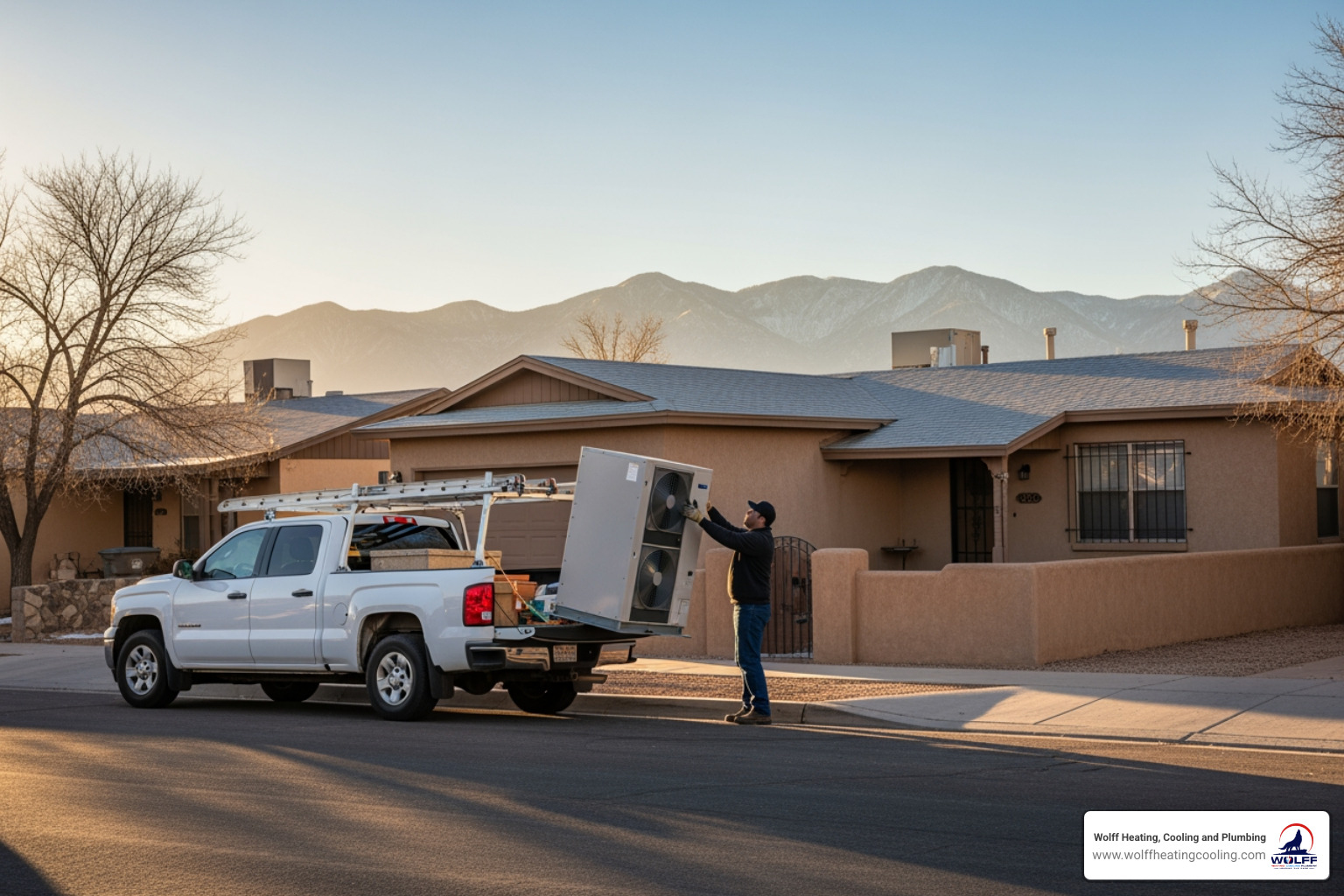
Is It a Real Emergency? Key Signs Your Heat Pump Needs Immediate Replacement
Albuquerque’s unique climate, with its warm summers and chilly winters, demands a lot from your home’s heating and cooling systems. A heat pump is designed to handle these fluctuations, providing year-round comfort by transferring heat rather than generating it. However, even the most robust systems have a lifespan. Most heat pumps are built to last between 10 to 15 years, with some well-maintained units stretching to 20 years. But when your heat pump starts to act up, how do you know if it’s just a minor hiccup that needs a quick fix, or if you’re facing a full-blown emergency that requires immediate replacement?
We often see homeowners wrestling with this decision. If your system is nearing or has surpassed its average 15-year lifespan, or if you find yourself calling for repairs more frequently than you’d like—especially if those repair costs are starting to creep up to half the value of a new system—it’s a strong indicator that replacement might be more economical in the long run. Continued repairs on an aging unit can become a money pit, draining your wallet and leaving you without reliable comfort.
Beyond the financial aspect, safety is paramount. A failing heat pump can pose serious risks, from electrical hazards to the potential for carbon monoxide leaks if you have a dual-fuel system with a furnace component. These aren’t issues you can afford to delay. For more insights on when your system needs attention, check out our guide on When Your Heat Pump Needs Attention.
To help you decide, here’s a quick comparison of signs that typically call for a repair versus those that scream “emergency replacement!”:
| Sign of Trouble | Calls for Repair If… | Calls for Emergency Replacement If… |
|---|
Signs You Need an Emergency Heat Pump Replacement in Albuquerque, NM
When a heat pump fails, the signs can range from subtle to overtly alarming. While some issues might be repairable, certain symptoms indicate that an emergency heat pump replacement is the only viable solution, especially when your comfort is at stake in Albuquerque’s unique climate.
Here’s what to look for:
- Complete System Failure: This is the most obvious sign. If your heat pump completely shuts down and won’t turn back on, leaving your home without any heating or cooling, it’s an emergency. Whether it’s the dead of winter or the peak of summer, a total loss of climate control demands immediate attention.
- Loud Grinding or Banging Noises: While some operational sounds are normal, loud grinding, banging, or screeching noises are not. These often signal a severe mechanical failure within the compressor or fan motor, indicating internal damage that is often beyond repair and can quickly escalate if ignored.
- Electrical Issues or Burning Smells: Any strange electrical odors, burning smells, or visible sparks coming from your unit are critical warning signs. These could indicate overheating components, wiring problems, or even a fire hazard. If you experience this, turn off your system immediately at the breaker and call for emergency service.
- Refrigerant Leaks (Visible or Suspected): If you notice ice buildup on your outdoor unit (often called the “coil”) or hear a hissing sound, you might have a significant refrigerant leak. Refrigerant is essential for your heat pump’s operation, and a substantial leak means your system can’t efficiently heat or cool, potentially leading to compressor failure. Damaged AC systems, which share components with heat pumps, can also leak refrigerant, causing health-related issues.
- Constant Tripping of Circuit Breaker: If your heat pump repeatedly trips your home’s circuit breaker, it’s a sign of a serious electrical problem or an overloaded component. This could be due to a short circuit, a failing motor, or other issues that require professional diagnosis and often, replacement.
- Inconsistent Temperatures Despite Continuous Operation: Is your heat pump running constantly but your home still feels too hot or too cold? This “running without relief” scenario points to a severe lack of efficiency, often due to a failing compressor or a major system breakdown. It’s not just uncomfortable; it’s also incredibly inefficient and can drive up your energy bills significantly.
For a deeper dive into common issues you might face, explore our page on Heat Pump Issues in Albuquerque. These signs, especially in combination, are clear indicators that your heat pump has reached the end of its functional life and an emergency replacement is your best course of action.
The Risks of Delaying a Replacement
Ignoring the warning signs of a failing heat pump, especially emergency ones, isn’t just an inconvenience—it can lead to serious consequences for your home, your health, and your wallet.
Here are the critical risks of delaying an emergency heat pump replacement:
- Frozen Pipes and Property Damage: During Albuquerque’s colder months, a complete loss of heat can quickly lead to freezing temperatures inside your home. This is a prime recipe for frozen pipes, which can burst and cause extensive water damage, flooding, and costly repairs to your walls, floors, and belongings. Trust us, it’s a mess no one wants to deal with.
- Health Concerns and Discomfort: Extreme indoor temperatures, whether too hot or too cold, can pose significant health risks, particularly for vulnerable populations like the elderly, infants, or individuals with pre-existing medical conditions. A home that’s too cold can lead to hypothermia, while an overheated home can cause heat exhaustion. Maintaining a comfortable temperature is crucial for overall well-being.
- Skyrocketing Energy Bills: Even if your failing heat pump is still limping along, it’s likely working overtime to maintain a semblance of comfort. This inefficiency translates directly into drastically higher energy bills. You’re paying more for less comfort, which is hardly a good deal!
- Carbon Monoxide Risk: If your heat pump is part of a dual-fuel system that includes a gas furnace, a malfunctioning unit can increase the risk of a carbon monoxide leak. This odorless, colorless gas is highly dangerous and potentially fatal. While heat pumps themselves don’t produce CO, a compromised integrated system could. Always have working carbon monoxide detectors in your home.
- Further System Damage: Attempting to run a severely damaged heat pump can cause a domino effect, leading to even more extensive and expensive damage to other components. What might have been a contained failure can become a total system catastrophe, complicating the replacement process.
- Loss of Home Functionality: In an emergency, your home can quickly become uninhabitable. Without reliable heating or cooling, your family’s daily routine is disrupted, and you might even need to seek temporary alternative accommodation, adding further stress and expense.
When you weigh these risks, it becomes clear that acting swiftly on an emergency heat pump replacement is not just about comfort—it’s about protecting your home, your family’s health, and your peace of mind. To understand more about the repair-or-replace dilemma, visit our page on Repair or Replace Your Heat Pump.
What to Do When Your Heat Pump Fails: An Immediate Action Plan
When your heat pump suddenly gives up the ghost, it can feel like a punch to the gut. But don’t panic! Taking the right steps immediately can ensure your safety and prepare your home for a swift resolution. We’ve got your back, but here’s what you, as a homeowner in Albuquerque, should do first:
Homeowner Actions and Safety Precautions
- Prioritize Safety: If you detect any burning smells, hear loud electrical buzzing, or suspect a gas leak (like a rotten egg smell), turn off your heat pump immediately at the thermostat and then at the main electrical breaker for the unit. If you suspect a gas leak, evacuate your home, move to a safe distance, and then call your gas company and emergency services. Do not re-enter until authorities say it’s safe.
- Check the Thermostat: It sounds simple, but sometimes the issue is just a dead battery or an incorrect setting. Ensure it’s set to “Heat” or “Cool” (depending on the season) and that the temperature setting is appropriate. A quick restart might also clear a minor glitch.
- Check Circuit Breaker: Sometimes, a heat pump might trip its dedicated circuit breaker. Check your electrical panel and reset any tripped breakers. If it trips again immediately, do not force it back on; this indicates a more serious electrical issue.
- Inspect the Outdoor Unit: Look for obvious obstructions like debris, leaves, or even ice buildup on the outdoor unit. Clear away anything blocking airflow, but do not attempt to chip away ice as you could damage the coils.
- Seek Temporary Solutions: In extreme weather, consider temporary measures. For cold snaps, bundle up, use extra blankets, or gather in a single room with a safe space heater (ensure proper ventilation). For summer heat, open windows at night, use fans, and close blinds during the day.
- Call for 24/7 Emergency Service: Once you’ve taken initial safety steps, it’s time to call the professionals. We offer 24/7 emergency heating and cooling services throughout Albuquerque and surrounding areas, because we know emergencies don’t stick to business hours.
Preparing for Technicians
Once you’ve called for help, you can make the replacement process smoother and faster for our technicians:
- Clear the Area: Ensure a clear and unobstructed path to both your indoor (furnace/air handler) and outdoor heat pump units. This means moving furniture, storage boxes, or anything else that might impede access. Technicians need ample space to work safely and efficiently.
- Address Obstructions: If your heat pump is in a closet, basement, or utility room, clear out any extra storage items. The team will need room to diagnose the problem and, if necessary, remove the old unit and bring in a new one.
- Ensure Clear Pathways for Equipment: If a replacement is needed, we’ll be hauling new equipment in and old equipment out. Clear hallways and doorways to allow for easy maneuverability of large components.
- Secure Pets: For the safety and efficiency of the service, please secure any pets in a separate area of your home. This prevents them from getting underfoot or becoming stressed by the activity.
By taking these proactive steps, you not only ensure the safety of your household but also help us provide the fastest and most effective emergency heat pump replacement in Albuquerque, NM. For more detailed guidance, refer to our page on Emergency Heat Pump: What Homes Need.
Navigating an Emergency Heat Pump Replacement in Albuquerque, NM
When a heat pump emergency strikes, the thought of a complete replacement can feel overwhelming. But with the right team, it’s a streamlined process designed to restore your home’s comfort as quickly as possible. We specialize in making this transition seamless, efficient, and beneficial for you.
The process of an emergency heat pump replacement typically involves a few key steps:
- Rapid Assessment: Upon arrival, our expert technicians will quickly diagnose the issue to confirm that replacement is indeed the most viable solution. We’ll assess the extent of the damage, consider your unit’s age, and determine if it’s beyond economical repair.
- System Selection: Based on your home’s unique needs, size, insulation quality, and the specific demands of Albuquerque’s climate, we’ll help you select an ideal heat pump system. This ensures your new unit is correctly sized for optimal performance and energy efficiency. We tailor solutions to Albuquerque’s unique climate, ensuring your new system will provide efficient, all-season comfort.
- Efficient Installation: Our certified technicians will then proceed with the careful removal of your old unit and the professional installation of your new heat pump. We prioritize safety, precision, and minimizing disruption to your home.
- Thorough Testing: Once installed, the new system undergoes thorough testing to ensure everything is operating safely, efficiently, and effectively. We’ll walk you through its operation and answer any questions you might have.
We pride ourselves on expert heat pump installation, ensuring long-term performance and reliability for homes across Albuquerque, Rio Rancho, Placitas, Corrales, Cedar Crest, Tijeras, and Bernalillo. To learn more about our installation services, visit our page on Heat Pump Installation in Albuquerque, NM. For broader HVAC needs in the area, our HVAC in Albuquerque, NM page offers additional information.
How to Prepare for a Quick Installation
While our team works efficiently, a little preparation on your end can significantly speed up the emergency heat pump replacement process:
- Clear Access Paths: As mentioned earlier, ensure that all pathways to both your indoor and outdoor units are completely clear. This includes moving furniture, personal belongings, and any stored items.
- Secure Pets and Children: For their safety and to allow our technicians to work without distraction, please ensure children and pets are kept away from the work area.
- Be Ready to Make Decisions: We understand this is an urgent situation, but being prepared to discuss options for your new system can expedite the selection process. Having an idea of your budget and any specific comfort preferences (e.g., smart thermostat integration) can be helpful.
- Ask Questions: Don’t hesitate to ask our technicians any questions you have about the process, the new system, or maintenance. We’re here to help you understand every step.
For more helpful tips and information, our HVAC Resources Albuquerque, NM page is a great place to start.
What to Look for in an Emergency Heat Pump Replacement in Albuquerque, NM Provider
When your heat pump fails unexpectedly, choosing the right service provider is crucial. You need a team that can respond quickly, efficiently, and with the expertise to get your home comfortable again.
Here’s what to look for when selecting a company for your emergency heat pump replacement in Albuquerque, NM:
- 24/7 Availability: Emergencies don’t wait for business hours, and neither should your service provider. Look for companies that offer genuine 24/7 emergency heating and cooling services. This means they can be there for you whether your unit fails in the middle of the night or on a holiday weekend.
- Licensed and Insured: Always verify that the company and its technicians are fully licensed and insured. This protects you from liability and ensures that you’re receiving service from qualified professionals.
- Local Expertise and Experience: Albuquerque’s climate has its own quirks. A provider with extensive local experience will understand the specific challenges and optimal solutions for homes in our area. We, for example, have over 25 years of experience serving Albuquerque and its surrounding communities. Look for a track record of superior work, excellent service, and honest estimates.
- Positive Reviews and Reputation: Check online reviews and testimonials. A company with a strong reputation for customer satisfaction and reliable service is a good indicator of quality. Look for consistent feedback praising their responsiveness, professionalism, and technical skill.
- Rapid Response Time: In an emergency, every minute counts. Inquire about their typical response times for emergency calls. A provider that can offer same-day service is often essential when facing extreme temperatures.
- Financing Options: A sudden heat pump replacement can be an unexpected financial burden. Look for companies that offer flexible financing options to help ease the cost, allowing you to get the comfort you need without undue stress.
Choosing a reputable HVAC company means you’re investing in peace of mind, knowing that your emergency will be handled professionally and effectively. For a comprehensive list of reliable HVAC companies in the area, check out our guide on HVAC Companies in Albuquerque, NM.
The Long-Term Payoff: Benefits of a Modern Heat Pump
While an emergency heat pump replacement might feel like an unexpected expense, it’s also an opportunity to significantly upgrade your home’s comfort, efficiency, and value. Modern heat pumps offer substantial advantages over older models, turning a stressful situation into a smart long-term investment.
Here are the long-term benefits you can expect from a new, reliable heat pump system:
- Exceptional Energy Efficiency: Newer heat pumps are significantly more energy-efficient than their predecessors. They work by transferring heat rather than generating it, which requires less energy than traditional heating and cooling systems. This efficiency translates directly into lower energy consumption year-round.
- Lower Utility Bills: Thanks to improved energy efficiency, a new heat pump can lead to noticeable reductions in your monthly utility bills. This is a benefit you’ll appreciate every month, year after year, especially with Albuquerque’s fluctuating temperatures.
- Improved Indoor Air Quality: Many modern heat pumps come equipped with advanced filtration systems that can significantly improve your home’s indoor air quality. By reducing airborne contaminants, allergens, and pollutants, a new system contributes to a healthier living environment for you and your family.
- Consistent Comfort: Say goodbye to hot and cold spots! New heat pumps provide more consistent heating and cooling throughout your home, maintaining your desired temperature with greater precision. This means a more comfortable living space, no matter the season.
- Smart Home Integration: Many contemporary heat pumps are designed to integrate seamlessly with smart home technology. This allows for programmable controls, remote temperature management via your smartphone, and even learning capabilities that optimize energy usage based on your habits.
- Quieter Operation: Advances in technology mean that new heat pumps operate much more quietly than older models. You’ll enjoy a peaceful home environment without the distracting noises that can accompany an aging, struggling unit.
- Increased Home Value: Upgrading to a high-efficiency, modern heat pump system can improve your home’s appeal and increase its resale value. Potential buyers often look for energy-efficient appliances and updated HVAC systems.
- Reduced Environmental Impact: By consuming less energy, a new heat pump contributes to a smaller carbon footprint, making your home more environmentally friendly.
Investing in a new heat pump after an emergency replacement isn’t just about restoring comfort; it’s about upgrading to a system that offers superior performance, significant savings, and improved living quality for years to come. For more details on the range of services we provide, including heat pump solutions, visit our Heat Pump Services Albuquerque, NM page.
Frequently Asked Questions about Emergency Heat Pump Services
We understand that an emergency heat pump replacement can bring up a lot of questions. Here are some common inquiries we receive from homeowners in Albuquerque:
How quickly can an emergency heat pump replacement be done?
While a typical heat pump installation might take one to two days, depending on its complexity and any necessary modifications, emergency services prioritize restoring your comfort as fast as humanly possible. Our goal is always to get your new system installed and running swiftly, often starting the same day we assess the issue. The exact timeline can vary based on factors like system availability and the specific requirements of your home. We work diligently to minimize disruption and get your home comfortable again without delay.
What types of heat pumps are best for the Albuquerque climate?
For Albuquerque’s unique climate, which features moderate winters and warm, often intense summers, high-efficiency air-source heat pumps are often highly effective. These systems excel at providing reliable, all-season comfort by efficiently transferring heat in and out of your home. We also install and service other types, such as ductless mini-split systems for targeted heating and cooling, and in some cases, geothermal heat pumps. Our experts can perform a comprehensive assessment of your home’s size, insulation, and specific needs to recommend the ideal heat pump system that will perform optimally in our local conditions.
How can I avoid future heat pump emergencies?
The best way to avoid future heat pump emergencies and extend the life of your system is through consistent, professional maintenance. Regular annual tune-ups are key; ideally, schedule them before the heating season and, if applicable, before the cooling season. During these service calls, our technicians can identify potential issues before they escalate into major failures, clean components, check refrigerant levels, and ensure everything is running efficiently. This proactive approach not only helps prevent unexpected breakdowns but also ensures your system operates at peak efficiency, saving you money on energy bills and extending its overall lifespan. Regular maintenance is an investment in your home’s comfort and your peace of mind. To schedule your next check-up, visit our page on Heat Pump Service in Albuquerque, NM.
Your Partner for Urgent HVAC Solutions in Albuquerque
A heat pump failure is a major disruption, but a fast, professional response makes all the difference. By recognizing the signs and calling for expert help, you can quickly restore safety and comfort to your home. For reliable, 24/7 service from a team with over 25 years of local experience, trust Wolff Heating, Cooling and Plumbing. Schedule your emergency heat pump replacement in Albuquerque, NM today.