
 Menu
Menu
What You Need to Know About How Heavy Rain Affects Your Plumbing and Drainage
How heavy rain affects your plumbing and drainage is something every homeowner should understand before the next storm hits. Here’s a quick summary:
- Sewer backups – Overwhelmed municipal systems push wastewater back into your home through drains and toilets
- Soil saturation – Waterlogged ground shifts and presses against underground pipes, causing cracks and misalignment
- Drain blockages – Debris carried by stormwater clogs indoor and outdoor drains
- Hydrostatic pressure – Rising groundwater forces water into basements and foundation walls
- Sump pump failure – Heavy rain can overwhelm or burn out sump pumps, leading to basement flooding
- Pipe corrosion – Repeated exposure to excess moisture accelerates deterioration over time
For Albuquerque homeowners, this is especially relevant. The region’s monsoon season brings sudden, intense downpours onto dry, hard-packed soil that can’t absorb water fast enough — turning streets and yards into fast-moving streams in minutes. That same water finds its way into your plumbing system in ways that aren’t always obvious until real damage has already been done.
Most residential drainage systems are simply not designed to handle the sudden surge of water that comes with a major storm. When the ground is saturated and municipal sewer lines are at capacity, your pipes become the path of least resistance — and that’s when things go wrong fast.
Understanding the warning signs, the causes, and the right steps to take can save you from a costly emergency repair down the road.
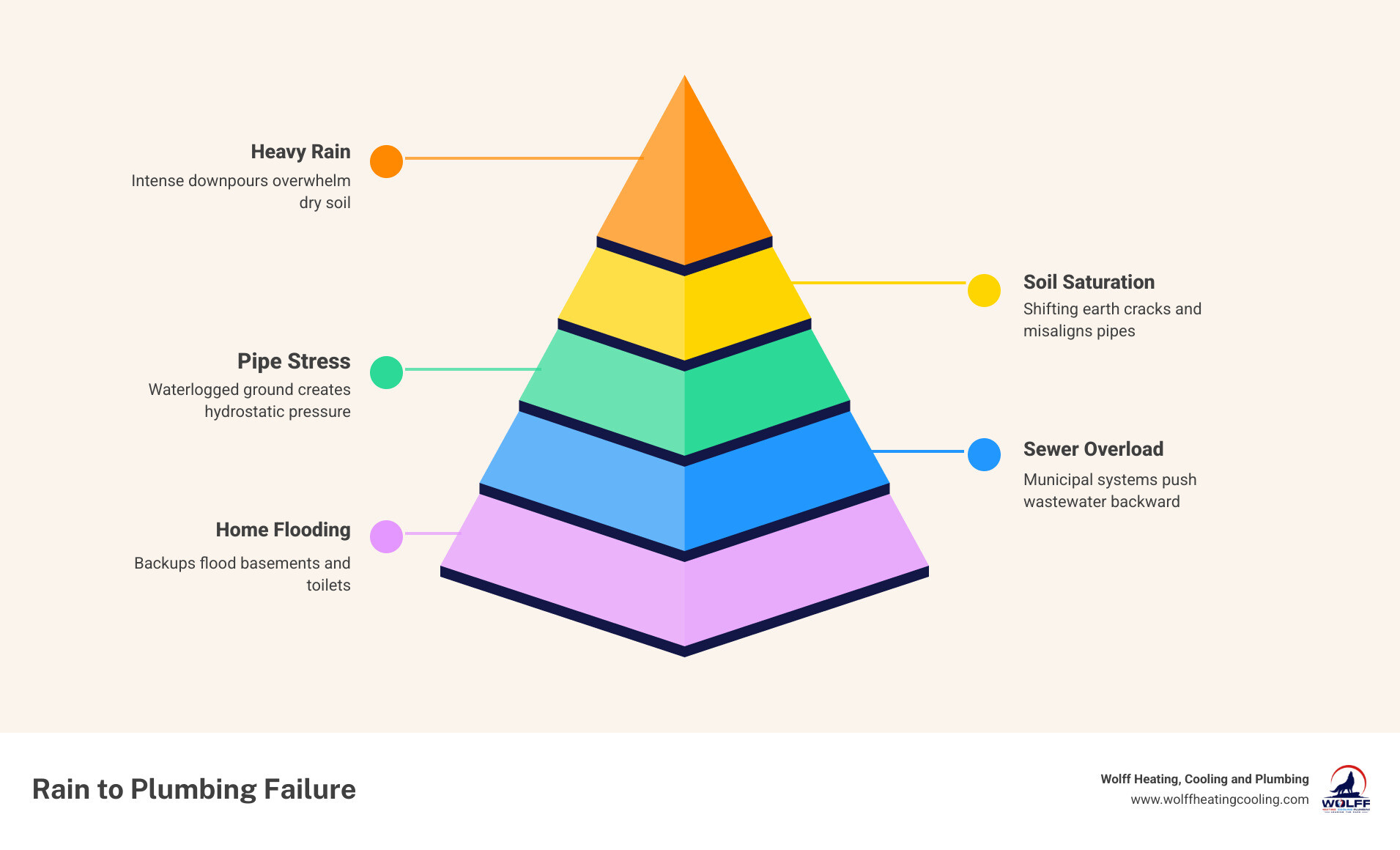
How Heavy Rain Affects Your Plumbing and Drainage Systems
When we talk about how heavy rain affects your plumbing and drainage, we have to start with the ground beneath our feet. In areas like Albuquerque, Rio Rancho, and Bernalillo, our soil is often semi-arid and very hard. When a heavy storm rolls in, the earth doesn’t act like a sponge; it acts more like a slide. The water runs off the surface initially, but once it starts to soak in, it creates massive amounts of hydrostatic pressure.
Hydrostatic pressure is essentially the weight of the water-saturated soil pressing against everything buried beneath it. This includes your home’s foundation and, more importantly, your Plumbing lines. As the soil becomes heavy and unstable, it can shift. Even a slight movement in the earth can cause underground pipes to bow, snap, or become misaligned. This is a primary reason why we see an uptick in calls for Plumbing/Albuquerque Nm/ services immediately following a heavy monsoon season.
Flash flooding also plays a role. In the high desert, water moves fast. This rapid movement can erode the soil supporting your pipes, leaving them “suspended” in mid-air underground. Without the support of the earth, the weight of the water inside the pipes combined with the external pressure often leads to catastrophic failures.
The Impact of Soil Saturation on Underground Pipes
As the groundwater rises, it doesn’t just sit there. It looks for any opening to enter. If your pipes have even the smallest hairline fracture, the increased pressure from saturated soil will force water and silt into the line. This can lead to sinkholes in your yard—a clear sign that the earth is being sucked into a broken pipe.
Furthermore, shifting earth can pull pipe joints apart. In older neighborhoods across the Albuquerque metro area, many homes still rely on clay or cast-iron pipes. These materials are particularly brittle. When the ground moves during a heavy rain event, these pipes are the first to crack. If you suspect your underground lines have been compromised, utilizing Leak Detection Services for Your Home is the best way to pinpoint the damage before a full collapse occurs.
Long-Term Infrastructure Risks from Recurrent Storms
It isn’t just the one big storm that causes trouble; it’s the cumulative effect of season after season. Recurrent heavy rain accelerates pipe corrosion. When pipes are constantly subjected to high moisture levels and shifting soil, the protective coatings on older metal pipes wear away.
Over time, this leads to structural instability in your entire drainage system. Sediment buildup is another long-term risk. Stormwater often carries fine sand and debris into your sewer lines through small cracks. This sediment settles in the “bellies” or low spots of your pipes, gradually reducing the diameter of the pipe until a total blockage occurs. This is why regular Plumbing/Albuquerque Nm/Plumbing Repair/ is vital for maintaining the longevity of your home’s infrastructure.
Common Signs of Rain-Related Plumbing Stress
Your plumbing system will usually try to tell you when it’s struggling. The most common “cry for help” is the gurgling drain. If you’re washing dishes or taking a shower during a rainstorm and you hear a glug-glug sound coming from the drain, it’s not just “the wind.” It’s air being trapped in the lines because the water isn’t flowing out fast enough.
Other signs include:
- Slow drainage: Sinks and tubs that usually empty quickly suddenly take forever.
- Bubbling toilets: If the water in your toilet bowl bubbles or “talks” to you when it rains, the sewer line is likely under pressure.
- Foul odors: A sudden whiff of raw sewage inside the house or near the foundation often means a backup is imminent.
When we Address Common Plumbing Issues, we often find that these symptoms are ignored until a full backup happens. If you notice these signs, it’s time to look at Common Plumbing Problems Solved guides or call in a professional to check the health of your main line.
Identifying Yard Drainage vs. Sewer Line Issues
It’s important to distinguish between a “yard problem” and a “house problem.” If you see standing water or a soggy lawn near your foundation, you likely have a surface drainage issue. This means your gutters or land grading aren’t directing water away from the house correctly.
However, if you have water backing up into your basement or lower-level showers while it’s raining, that is a sewer line issue. The saturated ground is likely overwhelming your pipes or the municipal system. We recommend Regular Plumbing Inspections to ensure your indoor and outdoor systems are working in harmony.
Warning Signs of Impending Sewer Collapse
A collapsed sewer line is a nightmare, but it rarely happens without warning. In Albuquerque’s older neighborhoods, keep an eye out for:
- Unexpectedly lush grass: If one patch of your lawn is much greener and thicker than the rest, it might be “feeding” on a sewage leak.
- Sinkholes or indentations: Small dips in the soil directly above where your sewer line runs are a major red flag.
- Persistent clogs: If you have to snake your drain every time it rains, the pipe is likely failing.
For these serious issues, you’ll need comprehensive Plumbing/Albuquerque Nm/Plumbing Services/ to determine if a trenchless repair or full replacement is necessary.
Why Drains and Toilets Back Up During Heavy Rain
The primary reason for backups during a storm is municipal overload. Many older cities have “combined” sewer systems where stormwater and household sewage travel in the same pipes. When a massive storm hits, these pipes fill to capacity. Once the city’s main line is full, the wastewater has nowhere to go but back up the “lateral” lines—and that means into your home.
Even in areas with separate systems, heavy rain can enter the sewer lines through manhole covers or cracks in old city pipes (a process called inflow and infiltration). This creates a hydraulic overload. Your home’s drains are the lowest point of exit, making them the path of least resistance for that rising sewage. To prevent this, many homeowners are turning to Backflow prevention devices. These are essentially one-way doors for your plumbing.
If you live in a low-lying area of Albuquerque or Rio Rancho, checking your Hvac/Albuquerque Nm/Backflow/ status is a smart move before the next rainy season.
Understanding How Heavy Rain Affects Your Plumbing and Drainage via Sewer Backups
Wastewater reversal is a serious health hazard. When the municipal lines are overwhelmed, the pressure can be so great that it forces sewage through the seals of your toilets. This is why we emphasize Understanding Backflow Prevention. A backwater valve is installed on your main sewer line and automatically closes if it detects water flowing toward the house instead of away from it. It’s the single best defense against a flooded basement during a storm.
The Role of Sump Pumps in Flood Prevention
For homes with basements or crawl spaces, a sump pump is your best friend. Its job is to collect water that accumulates in a “sump pit” and pump it safely away from the foundation. However, during heavy rain, these pumps work overtime. If the pump is old or the discharge line is clogged with debris, it can fail exactly when you need it most.
We always suggest Professional Sump Pump Installation to ensure the unit is sized correctly for your home’s needs. Furthermore, since heavy storms often cause power outages, a battery backup for your pump is essential. You can explore Sump Pump Installation Services to see which backup options are right for your specific property.
Protecting Your Home: Preventive Measures and Maintenance
Prevention is always cheaper than a midnight emergency call. The first step is simple: keep your gutters clean. When gutters are clogged, water pours over the sides and pools directly at your foundation, which is the worst possible place for it. Extend your downspouts at least five to ten feet away from the house to ensure the water stays away from your underground pipes.
Land grading is another DIY-friendly task. Ensure the soil around your home slopes away from the foundation. If you have chronic puddling, a French drain—a gravel-filled trench with a perforated pipe—can help redirect groundwater.
Regular maintenance is the key to longevity. Here is a quick comparison of why professional help matters:
| Feature | DIY Maintenance | Professional Inspection |
|---|---|---|
| Gutter Cleaning | Easy to do twice a year | Often included in whole-home checks |
| Visual Checks | Good for spotting surface leaks | Can see inside pipes with cameras |
| Drain Cleaning | Limited to retail snakes/chemicals | Hydro-jetting for deep cleaning |
| Sewer Line | Cannot inspect underground | Full video diagnostic available |
| Peace of Mind | Variable | High – backed by expert estimates |
By investing in Preventive Plumbing Maintenance, you can Save Money Regular Plumbing Repairs by catching small cracks before they become total pipe collapses.
Proactive Steps for How Heavy Rain Affects Your Plumbing and Drainage
Beyond the basics, there are high-tech ways to “storm-proof” your home.
- Camera Inspections: We can run a waterproof camera through your sewer line to check for cracks or tree root intrusions that will worsen during a rainstorm.
- Hydro-jetting: This uses high-pressure water to scrub the inside of your pipes, removing years of sediment and grease that could cause a backup when the system is stressed.
- Backwater Valve Installation: As mentioned, this is your primary defense against city sewer surges.
When Finding a Reliable Plumber for these tasks, look for a team with local experience in the unique soil conditions of New Mexico.
Maintaining Septic Systems During the Rainy Season
If you live in more rural areas like Placitas or Cedar Crest, you likely have a septic system. Heavy rain is particularly hard on these. When the drain field (the area of soil that treats the wastewater) becomes saturated, it can no longer absorb liquid from the tank. This causes the entire system to back up into the house.
During the rainy season, try to reduce your indoor water usage. Avoid running the dishwasher and laundry at the same time. If your tank is due for a pump-out, do it before the rainy season begins. Knowing How to Choose a Trustworthy Plumber who understands septic health is crucial for homeowners outside the city’s main sewer network.
Frequently Asked Questions about Rain and Plumbing
Why does my toilet gurgle only when it rains?
This usually indicates an issue with air pressure or a partial restriction in your main sewer line. When heavy rain enters the sewer system, it displaces the air in the pipes. If your vent stack (the pipe that goes through your roof) is clogged or if your sewer line is partially blocked, that air has to escape somewhere—and the easiest path is often through the water trap in your toilet.
Can heavy rain cause my septic tank to overflow?
Yes. If the groundwater level rises above the level of your septic tank, water can actually leak into the tank through unsealed lids or cracks. This is called groundwater infiltration. Additionally, a saturated drain field creates hydraulic failure, where the water has nowhere to go but back into your home’s drains.
When should I call a professional after a storm?
You should call Plumbers Albuquerque NM if you experience any of the following:
- Multiple fixtures backing up at the same time.
- Persistent sewage odors that don’t go away after the rain stops.
- Visible sinkholes or new, deep cracks in your foundation.
- Water pooling in your basement that your sump pump can’t keep up with.
Conclusion
At Wolff Heating, Cooling, and Plumbing, we’ve spent over 25 years helping our neighbors in Albuquerque, Rio Rancho, Corrales, and the surrounding areas stay dry and comfortable. We know exactly how heavy rain affects your plumbing and drainage in our unique New Mexico climate. From the shifting sands of the West Mesa to the rocky soil of the East Mountains, we have the tools and the expertise to protect your home.
Don’t wait for the next big monsoon to find out if your pipes are up to the task. Whether you need a simple inspection, a sump pump upgrade, or a complex sewer repair, our team is known for superior work and honest estimates.
Ready to storm-proof your home? Contact the experts at Plumbers Albuquerque NM today and let us help you keep your plumbing flowing smoothly, no matter what the weather brings!