
 Menu
Menu
Gas Leak Warning Signs Every Homeowner Should Know Before It’s Too Late
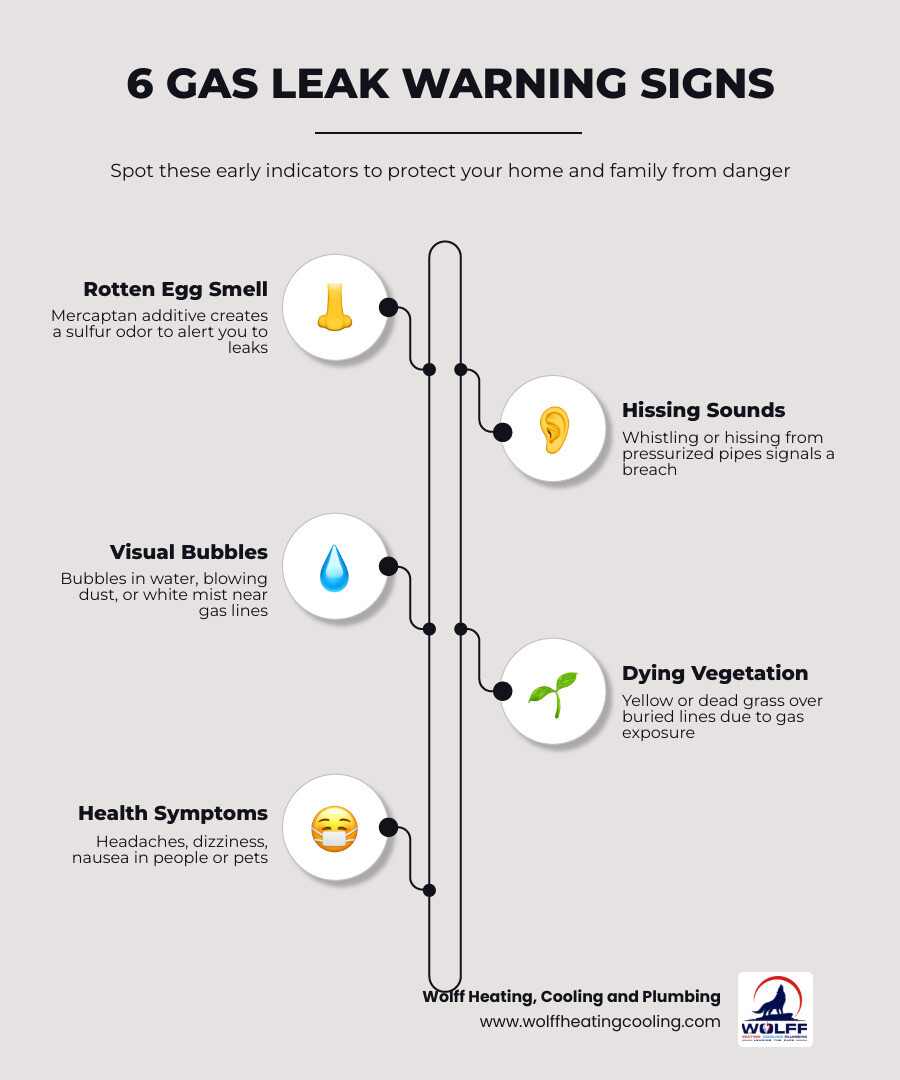
Gas leak warning signs every homeowner should know include these six key indicators to watch for right now:
- Rotten egg or sulfur smell – a chemical called mercaptan is added to natural gas specifically so you can detect leaks by odor
- Hissing or whistling sounds near gas lines, pipes, or appliances
- Bubbles in standing water, blowing dust, or white mist near gas lines outdoors
- Dead or dying vegetation in an otherwise healthy yard, especially over buried gas lines
- Physical symptoms such as headaches, dizziness, nausea, or fatigue in people or pets
- Unexplained spikes in your gas bill or poor appliance performance
Over 189 million Americans use natural gas in their homes every day. It’s reliable, efficient, and when everything is working correctly, it’s safe. But a leak can turn that everyday convenience into a serious emergency — fast.
The problem is that gas leaks aren’t always obvious. Many are silent and invisible. You might not smell anything at first, or the odor may have faded. Your pets might seem off, or your gas bill quietly climbs month after month. By the time something feels clearly wrong, the situation may already be dangerous.
Knowing what to look, listen, and feel for can make all the difference — for your family, your home, and your Albuquerque neighbors.
Understanding the Dangers of Natural Gas
To keep your home safe in April 2026, it helps to understand what we are actually dealing with. Natural gas is primarily composed of methane. In its purest state, methane is actually colorless, tasteless, and completely odorless. If you had a leak of pure methane, you wouldn’t be able to sense it at all until it was too late.
Because natural gas is highly flammable, utility companies add a chemical called mercaptan to the mix. This gives the gas its signature “rotten egg” or sulfur-like scent. The danger isn’t just about fire or a potential explosion risk—though those are the most immediate concerns. Natural gas also acts as an asphyxiant. As it fills a room, it displaces the oxygen. If you or your pets breathe in too much, it can lead to natural gas poisoning or suffocation.
Ensuring your Gas Lines are in good repair is the first step in preventing these hazards. Whether you live in Albuquerque, Rio Rancho, or Bernalillo, understanding these properties is the foundation of home safety.
Gas Leak Warning Signs Every Homeowner Should Know
Early detection is your best defense. While the statistics show that over 189 million Americans rely on this fuel, the leading cause of leaks remains damage to pipelines—often caused by simple digging in the yard. However, indoor leaks from aging appliances or corroded fittings are just as common. By training your senses to pick up on the gas leak warning signs every homeowner should know, you can catch a problem before it becomes a catastrophe.
1. The Distinctive “Rotten Egg” Odor
The most famous sign is that pungent sulfur smell. Most people describe it as rotten eggs or dirty socks. If you catch a whiff of this near your stove, water heater, or furnace, it’s a major red flag.
However, you shouldn’t rely only on your nose. A phenomenon called “odor fade” can occur. This happens when the mercaptan is absorbed by new steel pipes, moisture, or soil, stripping the gas of its scent. Additionally, if you have a cold or “olfactory fatigue” (where your nose gets used to a smell after being around it for a while), you might stop noticing the danger. If someone else in the house says they smell gas, believe them—even if you don’t smell it yourself.
2. Auditory Cues: Hissing and Whistling
Natural gas is kept under pressure so it can travel through the lines to your home. When a pipe has a puncture or a fitting is loose, that pressurized gas forces its way out, creating a distinct hissing or whistling sound.
You might hear this behind your dryer, near the kitchen range, or outside by the gas meter. A faint hiss often indicates a moderate leak, while a loud roaring sound suggests a significant break in the line. If you hear an unfamiliar persistent noise coming from your gas appliances, don’t ignore it.
3. Visual Indicators: Bubbles and Dust
Sometimes you can see a leak before you smell or hear it. If you suspect a connection is loose, you can perform a “soapy water test.” By brushing a mixture of dish soap and water onto a pipe connection, you’ll see bubbles form if gas is escaping.
Other visual cues include:
- Blowing Dust: If an underground line is leaking, you might see dirt or dust being blown into the air from a hole in the ground.
- White Clouds: A severe leak can create a mist or fog-like cloud near the line.
- Bubbling in Water: If you see bubbles in a puddle or a muddy area of your yard where there shouldn’t be any air, gas could be rising through the soil.
- Misting or Freezing: In some cases, the cooling effect of escaping gas can cause condensation or even frost to form on the pipe or the ground around it.
4. Dying Vegetation and Outdoor Clues
Your landscaping can act as a silent alarm system. Natural gas prevents a plant’s roots from absorbing oxygen. If you notice a patch of dead or yellowish grass in an otherwise healthy green lawn—especially if that patch is directly over the path of your buried gas lines—you likely have an underground leak.
This is why the “811 Call Before You Dig” service is so critical. Whether you are planting a tree in Corrales or installing a fence in Rio Rancho, hitting a buried line is the number one cause of outdoor leaks. Always have your lines marked before starting any project.
Physical Symptoms: Gas Leak Warning Signs Every Homeowner Should Know
Sometimes the house doesn’t show signs, but the people inside do. Natural gas exposure can cause a variety of physical symptoms that often mimic the flu.
| Symptom | Natural Gas Exposure | Carbon Monoxide Poisoning |
|---|---|---|
| Headaches | Persistent and dull | Severe and throbbing |
| Dizziness | Frequent lightheadedness | Feeling faint or spinning |
| Nausea | General queasiness | Often leads to vomiting |
| Skin Color | Pale or bluish skin | “Cherry red” or flushed skin |
| Breathing | Irregular or labored | Shortness of breath |
| Fatigue | Sudden sleepiness | Extreme lethargy |
Don’t forget your four-legged family members. Pets often show signs of gas exposure before humans do because of their smaller size and faster respiratory rates. Watch for vomiting, red or watery eyes, disorientation, or sudden lethargy in your cats or dogs.
Hidden Indicators: Gas Leak Warning Signs Every Homeowner Should Know
Not all leaks are “blowouts.” Some are slow, chronic “pinhole” leaks that waste fuel over time. A major indicator is an unexplained spike in your utility bill. If your usage has jumped but the weather hasn’t changed and you haven’t added new appliances, gas might be escaping somewhere in the system.
Poor appliance performance is another clue. Check your stove burners; the flame should be a crisp, steady blue. If you see flickering orange or red flames, it indicates incomplete combustion and a potential leak or carbon monoxide issue. Frequent pilot light outages are also a sign that the gas supply is inconsistent. For these reasons, Regular Gas Line Inspection Maintenance is essential to catch these hidden issues before they escalate.
Emergency Protocol: What to Do if You Suspect a Leak
If you suspect a leak, your priority is safety, not investigation. Do not go looking for the leak.
- Evacuate Immediately: Gather everyone, including pets, and leave the house right away.
- Leave the Door Open: As you exit, leave the door open to help some of the gas dissipate.
- Move to a Safe Distance: Get at least 300 to 400 feet away from the structure. Try to stay upwind so you aren’t breathing in the escaping gas.
- Call for Help: Only once you are safely away should you use your cell phone to call 911 or the New Mexico Gas Company.
When dealing with Gas Lines Albuquerque Nm, taking these steps quickly can save lives.
Critical Actions to Avoid
In a gas-filled environment, a single tiny spark can cause an explosion. While evacuating, you must AVOID the following:
- Do NOT flip light switches: Turning a light on or off can create a spark.
- Do NOT use electronics: This includes your cell phone, landline, or even a flashlight inside the house.
- Do NOT use the garage door opener: The motor creates a significant spark.
- Do NOT start a car: If your car is in the garage or near the house, leave it there.
- Do NOT light matches or lighters: This seems obvious, but people often do it out of habit.
- Do NOT attempt DIY repairs: Gas lines are under pressure and require specialized tools and licensing to handle safely.
Who to Contact Immediately
Once you are at a safe distance, call 911 first. They will dispatch the fire department to ensure the area is secure. Next, call the New Mexico Gas Company emergency line. They will send a technician to shut off the gas at the meter and perform a pressure test (sometimes called a “merc test”).
If they find a leak, they will “red tag” the appliance or pull the meter to ensure no one turns the gas back on until a licensed plumber has made the necessary repairs and the system has passed a local code inspection.
Frequently Asked Questions about Residential Gas Safety
Can a carbon monoxide detector detect a natural gas leak?
No. This is a common and dangerous misconception. Carbon monoxide (CO) detectors are designed to sense the byproduct of incomplete combustion. They do not “smell” raw natural gas or methane. To detect a gas leak, you need a specific combustible gas detector. Many modern safety companies sell dual-purpose alarms that detect both, but you must check the label to be sure.
Why does my gas stove have an orange flame?
A healthy natural gas flame should be blue. An orange or red flame means the gas isn’t burning cleanly. This could be caused by a clogged burner, but it can also indicate that the appliance is releasing dangerous levels of carbon monoxide. If cleaning the burner doesn’t fix the color, shut off the stove and call a professional.
What is the leading cause of residential gas leaks?
Outside the home, the leading cause is accidental damage from digging activity by homeowners or contractors. Inside the home, the most common causes are corroded pipes (especially old black iron pipes), improper appliance installation, and aging flexible connectors behind stoves or dryers that have become brittle over time.
Conclusion
Gas leaks are serious, but they are also preventable. By staying alert to the gas leak warning signs every homeowner should know—the smells, the sounds, and the physical symptoms—you can protect your household from the “silent danger.”
At Wolff Heating, Cooling, and Plumbing, we’ve spent over 25 years helping our neighbors in Albuquerque, Rio Rancho, and the surrounding areas stay safe. We provide expert inspections, honest estimates, and superior repairs for all your Gas Lines.
Don’t wait for a hiss to become a headache. If you haven’t had your gas system inspected recently, or if you’ve noticed any of the “hidden indicators” mentioned above, give us a call. We’re here to ensure your home remains the comfortable, safe sanctuary it’s meant to be.