
 Menu
Menu
Why Your Cooling System Needs a Spring Head Start in the Desert
A solid spring cooling maintenance checklist for desert homes can mean the difference between a reliable, efficient AC all summer long and a breakdown during the hottest week of the year. In Albuquerque, Rio Rancho, and Placitas, HVAC systems face conditions that most generic maintenance advice simply doesn’t account for — high-desert dust, triple-digit afternoon temperatures, and cooling seasons that can stretch well past 3,000 hours of annual runtime. That kind of demand accelerates wear on every part of your system, from the filters and coils to the capacitors and electrical connections.
Here’s a quick look at the essential spring cooling maintenance tasks desert homeowners should complete before summer heat arrives:
Spring Cooling Maintenance Checklist for Desert Homes
- Replace or clean air filters — every 30 days during cooling season; check monthly
- Clear debris around the outdoor unit — maintain at least 2 feet of clearance on all sides
- Rinse condenser coils — gently with a garden hose; never use a pressure washer
- Test the thermostat — replace batteries, confirm accuracy, and set seasonal schedules
- Inspect vents and registers — remove blockages and check for uneven airflow
- Check the condensate drain line — look for clogs, standing water, or musty smells
- Listen for warning signs — unusual noises, warm air, weak airflow, or rising energy bills
- Schedule a professional tune-up — coil cleaning, refrigerant check, electrical inspection, and more
The stakes are high. Research shows that neglecting spring maintenance increases the risk of a mid-summer AC failure by 40% in extreme heat regions. Dirty coils and clogged filters alone can rob your system of up to 30% of its efficiency — and in a New Mexico summer, that inefficiency shows up fast on your utility bill and in your comfort level.
Spring — especially March through May — is the right time to act. Technicians are more available, temperatures are still manageable for accurate system testing, and small problems can be caught before they turn into expensive emergency repairs.
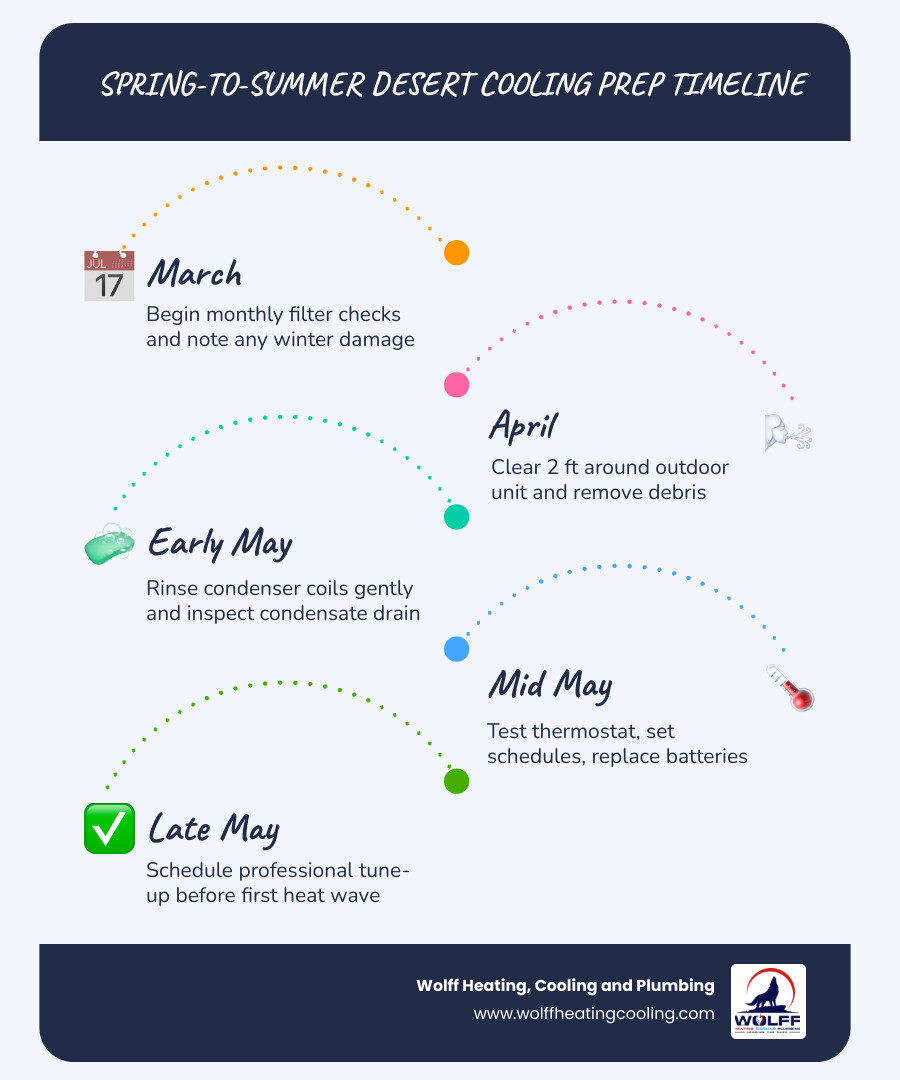
Spring Cooling Maintenance Checklist for Desert Homes: Quick Cheat Sheet
Before we get into the details, here is the desert-home version of AC prep in plain English: keep air moving, keep dust out, keep the outdoor unit breathing, and have the technical parts checked before the first major heat wave.
For more local AC care guidance, see our guide to AC maintenance tips for Albuquerque homes.
What This spring cooling maintenance checklist for desert homes Covers
This checklist focuses on the cooling tasks that matter most for homes in Albuquerque, Rio Rancho, Placitas, Corrales, Cedar Crest, Tijeras, Bernalillo, and nearby New Mexico communities:
- Air filter replacement and cleaning
- Outdoor condenser clearance and coil rinsing
- Thermostat testing and programming
- Supply and return vent inspection
- Condensate drain line checks
- Warning signs that point to AC trouble
- Professional spring tune-up items
- Desert dust, heat stress, and long-term system lifespan
The goal is simple: help your cooling system work less hard while keeping your home more comfortable.
When to Start This spring cooling maintenance checklist for desert homes in New Mexico
Start in March if possible. April is still a good window. May is your “please do not wait much longer” month.
In New Mexico’s high-desert climate, spring can flip from chilly mornings to hot afternoons quickly. Testing your AC early gives you time to spot problems before the system is running for hours every day. It also helps avoid the summer rush, when many homeowners discover AC problems at the same time.
Use this timing as a rule of thumb:
- March: Replace filters, clear outdoor debris, schedule professional service.
- April: Test cooling mode, confirm thermostat settings, inspect airflow.
- May: Recheck filters, rinse outdoor coils after dust events, address any warning signs immediately.
Why Desert Homes Need More Than a Generic AC Checklist
Generic AC advice often assumes moderate summers, lower dust levels, and shorter run times. That is not our reality.
High-desert homes deal with:
- Heavy spring dust and pollen
- Windblown debris around outdoor units
- Long cooling seasons
- Extreme temperature swings
- Hot attic conditions that stress electrical parts
- Dry air that carries fine dust into filters, vents, and coils
When filters clog and coils get dirty, an AC can lose up to 30% of its efficiency. That means longer run times, weaker cooling, and extra stress on the compressor. For more desert-specific HVAC advice, read our desert HVAC survival tips.
1. Replace Filters and Restore Indoor Airflow Before the First Heat Wave
Your air filter is small, inexpensive compared with major equipment, and wildly important. It is also the first thing desert dust attacks.
A clogged filter restricts airflow, makes the blower work harder, and can allow dust to settle on the evaporator coil. Once airflow drops, the system may run longer, cool unevenly, or even freeze the indoor coil. Not exactly the relaxing summer vibe anyone is going for.
For a broader seasonal overview, review our essential steps for AC maintenance.
How Often Should Desert Homeowners Replace or Clean Air Filters?
Check your filter monthly during cooling season. During heavy use, dust storms, wildfire smoke events, high pollen periods, or monsoon debris season, many homes need a fresh disposable filter or cleaned washable filter about every 30 days.
Filter frequency depends on:
- Pets in the home
- Allergy concerns
- Home occupancy
- Nearby dirt roads or construction
- How often the system runs
- Filter type and size
- Recent wind or dust events
Most desert homes do well with a filter that balances dust capture with airflow. Many systems can use MERV 8 to 11 filters, but the right choice depends on your equipment. A filter that is too restrictive can create its own airflow problem, so check your system requirements or ask us during service.
Check Vents, Registers, and Ducts for Blocked Cooling
A clean filter cannot help much if the rest of the airflow path is blocked.
Walk through your home and check:
- Supply registers are open and not covered by rugs or furniture.
- Return grilles are clean and unobstructed.
- Dust buildup is vacuumed from grilles.
- Interior doors are not creating major pressure imbalances.
- Hot rooms are noted for professional inspection.
- Accessible ductwork does not show obvious gaps or disconnections.
Uneven cooling is common in desert homes, especially when attic ducts are dusty, leaky, or poorly insulated. If one room feels like a walk-in oven while another feels comfortable, your AC may not be the only thing to blame. Airflow and duct performance matter.
Why Clean Filters Matter So Much in Desert Cooling Systems
Clean filters protect more than indoor air quality. They help protect the evaporator coil, blower motor, compressor, and overall cooling capacity.
Dirty filters can cause:
- Weak airflow
- Longer run times
- Higher energy use
- Extra blower strain
- Reduced cooling comfort
- Dust buildup inside equipment
- More frequent cycling problems
One pro tip: replace or clean your filter before your spring tune-up. That gives the technician a more accurate view of how your system performs under normal airflow conditions.
2. Clear and Clean the Outdoor AC Unit for Desert Heat
Your outdoor AC unit has one big job: reject heat from inside your home to the outside air. In a New Mexico summer, that is like asking it to dump heat into a toaster. It needs all the airflow help it can get.
For more warm-weather prep tips, see our guide on preparing ACs for Albuquerque summers.
Remove Debris and Create Proper Clearance Around the Condenser
Maintain at least 2 feet of open space around the outdoor condenser. More is helpful when possible, but do not block the unit’s airflow with fencing, storage bins, shrubs, or decorative screens that trap heat.
Remove:
- Tumbleweeds
- Leaves
- Gravel buildup
- Grass clippings
- Windblown trash
- Palm or tree debris
- Weed growth
- Rodent nesting materials
Also check that the equipment pad is stable and level. If the unit is tilting, sinking, or surrounded by erosion, it is worth having it evaluated.
After strong winds, do a quick outdoor inspection. Desert debris has a magical talent for landing exactly where it should not.
Rinse Dust From Coils Without Damaging Fins
Dust on condenser coils acts like a blanket. It slows heat transfer and forces the compressor to work harder.
Homeowners can gently rinse the outdoor coil, but use care:
- Turn off power to the unit at the disconnect if you are comfortable doing so.
- Use a regular garden hose.
- Use gentle water pressure only.
- Rinse from the top down.
- Never use a pressure washer.
- Avoid bending the delicate aluminum fins.
- Let the area dry and restore power when safe.
If the coil is heavily packed with dirt, cottonwood, mud, or debris, schedule professional cleaning. Deep coil cleaning requires the right tools and care.
How Better Outdoor Airflow Improves AC Performance in Hot, Dusty Environments
Good airflow around the outdoor unit helps the system release heat faster. That can support:
- More stable cooling
- Shorter run times
- Less compressor strain
- Better efficiency
- Fewer heat-related shutdowns
- Longer equipment life
In extreme heat, every restriction matters. A condenser surrounded by weeds, dust, and stored patio items has to fight harder to do the same job. Give it room to breathe. Your AC is not a storage shelf, no matter how tempting that flat top may look.
3. Test the Thermostat, Cooling Controls, and First AC Run
Your thermostat is the command center for your cooling system. If it is inaccurate, poorly programmed, or running on weak batteries, the whole system may operate inefficiently.
For more seasonal preparation guidance, read how to prepare your AC for Albuquerque summer.
Set Thermostat Schedules for Desert Energy Efficiency
A good thermostat schedule helps reduce unnecessary runtime without sacrificing comfort.
Helpful settings include:
- A consistent occupied temperature
- A slightly warmer setting when away
- An overnight setting that fits your comfort needs
- Smart or programmable reminders for filter changes
- Avoiding dramatic temperature swings that force long recovery cycles
Many homeowners aim around 78 degrees when home, then adjust for comfort, health needs, and home layout. Ceiling fans can help rooms feel cooler while using far less energy than lowering the thermostat several degrees. Just remember: fans cool people, not rooms, so turn them off when you leave.
Replace Batteries and Confirm Thermostat Accuracy
In spring, replace thermostat batteries if your model uses them. Then confirm the thermostat is reading the room reasonably accurately.
Watch for:
- Blank or fading display
- Delayed system response
- AC not turning on when called
- Cooling mode not engaging
- Thermostat exposed to direct sunlight
- Thermostat located near appliances or drafts
- Loose or damaged thermostat wiring signs
A thermostat that reads too warm or too cool can cause the AC to run longer than needed or shut off before the home is comfortable.
Run the AC Early and Watch for Warning Signs
Do not wait for the first 100-degree day to find out your AC is unhappy. Run it on a mild spring day for at least 20 to 30 minutes.
Call for service if you notice:
- Warm air from vents
- Weak airflow
- Grinding, banging, buzzing, or clicking sounds
- Burning smells
- Musty odors
- Frequent on-and-off cycling
- Ice on refrigerant lines or coils
- Breaker trips
- Water near the indoor unit
- Sudden utility bill spikes
- Delayed startup
These symptoms often start small in spring and become major failures under summer heat. Early attention is the difference between “glad we caught that” and “why is the house 89 degrees?”
4. Check the Condensate Drain Line, Coils, Refrigerant, and Pro-Level Items
Some cooling maintenance is homeowner-friendly. Other tasks should be handled by trained professionals with the right tools. Refrigerant checks, capacitor testing, electrical tightening, blower diagnostics, and internal coil cleaning all fall into the professional category.
If your system is already showing symptoms, schedule AC service in Albuquerque NM before summer load increases.
How Homeowners Can Check the Condensate Drain Line
Even in dry climates, air conditioners remove moisture from indoor air. That water exits through the condensate drain line. If the line clogs, water can back up into the drain pan, trigger a safety switch, or leak into nearby walls, ceilings, or flooring.
Here is what homeowners can safely check:
- Locate the indoor drain line and drain pan if accessible.
- Look for standing water in or around the pan.
- Check for musty smells near the unit.
- Look for water stains on ceilings or walls.
- Confirm the outdoor drain outlet is not blocked.
- If your system has an access cap, ask us whether a vinegar flush is appropriate for your setup.
- If water is backing up or the safety switch shuts the system down, call for service.
Do not ignore small water signs. A tiny drip can become a drywall headache.
Why Condensate Drain Maintenance Still Matters in Dry Climates
Dry outside air does not mean your AC never produces condensate. Indoor humidity from cooking, showers, people, plants, and seasonal weather still collects on the evaporator coil.
Clogged drain lines can form from:
- Dust
- Algae
- Sludge
- Rust particles
- Debris in the drain pan
- Poor drain slope
- Long periods of inactivity
A clogged drain can cause water damage or shut down the AC right when you need it most.
What a Professional Spring Cooling Tune-Up Should Include
A complete spring cooling tune-up should inspect performance, safety, airflow, and system reliability.
A professional visit may include:
- Condenser and evaporator coil inspection
- Coil cleaning recommendations
- Refrigerant level and performance checks
- Capacitor and electrical component testing
- Electrical connection inspection
- Blower motor and wheel inspection
- Temperature split testing
- Amp draw checks
- Condensate drain clearing
- Thermostat calibration check
- Airflow review
- Duct condition observations
- Safety control testing
- Written findings and maintenance recommendations
This is where spring maintenance helps prevent costly breakdowns. A weak capacitor, loose connection, restricted coil, or low refrigerant issue may not be obvious to a homeowner, but those problems can become system-stopping failures during extreme heat.
Homeowner Tasks vs Professional HVAC Maintenance
| Maintenance task | Homeowner can do | Professional should do |
|---|---|---|
| Replace or clean air filter | Yes | Yes |
| Clear debris around outdoor unit | Yes | Yes |
| Maintain 2-foot condenser clearance | Yes | Yes |
| Gently rinse outdoor coil surface | Yes, with care | Yes |
| Replace thermostat batteries | Yes | Yes |
| Confirm thermostat calibration | Basic check | Detailed check |
| Vacuum vents and registers | Yes | Yes |
| Check for visible water near drain pan | Yes | Yes |
| Clear internal condensate blockage | No | Yes |
| Test capacitors and electrical parts | No | Yes |
| Check refrigerant performance | No | Yes |
| Deep clean coils | No | Yes |
| Measure amp draw and temperature split | No | Yes |
| Inspect blower assembly | No | Yes |
| Review duct performance | Basic visual check | Detailed evaluation |
| Document professional maintenance | No | Yes |
5. Use Spring Maintenance to Prevent Summer Breakdowns and Extend System Life
Spring maintenance is not just about comfort today. It is about protecting the system you rely on all summer.
Research shows annual spring HVAC maintenance can reduce cooling costs by 15% to 20% during peak summer months. It also helps reduce wear on high-value components like the compressor and blower motor.
For more high-heat prep, read our guide on preparing your cooling system for triple-digit heat.
Why Spring Is Better Than Waiting Until Summer
Spring gives your AC a calmer testing environment. The system can be checked before it is under full desert heat stress.
Spring service is better because:
- Problems are easier to catch before peak demand.
- You have more time to address repairs.
- The system can be tested in manageable temperatures.
- Filters, coils, and airflow can be corrected early.
- Summer scheduling pressure is reduced.
- Your home is ready before heat waves arrive.
Waiting until summer often means your AC reveals problems while running at maximum load. That is the worst time for a weak part to announce its retirement.
What Happens If Desert Cooling Maintenance Is Skipped?
Skipping spring maintenance can lead to:
- Dirty coils
- Clogged filters
- Weak airflow
- Frozen evaporator coils
- Overheated compressors
- Loose electrical connections
- Short cycling
- Higher energy use
- Uneven cooling
- Drain line backups
- Shorter equipment life
- Mid-summer breakdowns
In desert conditions, small inefficiencies compound quickly. A partially clogged filter makes the blower work harder. Reduced airflow can affect coil temperature. A dirty condenser raises compressor strain. Add triple-digit heat, and the system has very little margin for error.
How Regular Maintenance Adds Years to Desert HVAC Equipment
Regular maintenance helps your AC age more gracefully. No system lasts forever, but clean, properly tuned equipment usually performs better and experiences less stress.
Maintenance supports system life by:
- Keeping coils clean for better heat transfer
- Reducing hard starts
- Protecting compressor operation
- Improving airflow balance
- Keeping refrigerant performance in range
- Catching worn electrical parts early
- Clearing drain issues before water damage occurs
- Creating a record of system care
- Reducing unnecessary runtime
Think of it like changing oil in a car. Could you skip it? Technically, for a while. Should you? Only if you enjoy dramatic surprises.
Frequently Asked Questions About Spring Cooling Maintenance for Desert Homes
What are the most important spring HVAC maintenance tasks for desert homes?
The most important spring tasks are replacing or cleaning air filters, clearing debris around the outdoor condenser, maintaining at least 2 feet of clearance, gently rinsing dusty coils, testing the thermostat, inspecting vents and registers, checking the condensate drain line, watching for warning signs, and scheduling a professional tune-up.
In Albuquerque, Rio Rancho, Placitas, and surrounding high-desert communities, dust control and airflow are especially important because clogged filters and dirty coils can reduce AC efficiency significantly.
Is professional HVAC maintenance really necessary before summer?
Yes. Homeowners can handle filters, visible debris, thermostat batteries, and basic airflow checks, but professional maintenance catches hidden issues.
A spring tune-up can identify problems with:
- Refrigerant performance
- Capacitors
- Electrical connections
- Coils
- Blower components
- Drain lines
- Thermostat calibration
- Safety controls
- Duct performance
Professional service is especially important in desert homes because long run times and high heat put extra stress on AC equipment.
What warning signs mean my cooling system needs service before summer?
Schedule service before summer if you notice:
- Warm air from vents
- Weak airflow
- Unusual noises
- Burning or musty odors
- Short cycling
- Higher utility bills without a clear reason
- Ice on coils or refrigerant lines
- Water leaks near the indoor unit
- Breaker trips
- Thermostat errors
- Uneven room temperatures
- Delayed startup
Do not wait to see if the issue “goes away.” AC problems are not known for their personal growth journeys.
Conclusion
A strong spring maintenance routine gives your cooling system a better chance of staying reliable, efficient, and comfortable through the New Mexico summer. For desert homes, the basics matter: clean filters, open airflow, clear outdoor units, accurate thermostat settings, clean drain lines, and professional system checks before peak heat.
At Wolff Heating, Cooling, and Plumbing, we help homeowners in Albuquerque, Rio Rancho, Placitas, Corrales, Cedar Crest, Tijeras, Bernalillo, and nearby areas prepare their HVAC systems for demanding desert conditions. With over 25 years of experience, we believe in honest estimates, superior work, and service that helps you feel confident before the heat arrives.
If your AC needs spring attention, schedule your pre-summer AC preparation with our team today. Your future summer self will be very grateful.