
 Menu
Menu
How Freeze-Thaw Events in Albuquerque Winters Cause Hidden Pipe Damage
To understand how freeze-thaw events in Albuquerque winters cause hidden pipe damage, we have to look at the mechanics of thermal expansion and diurnal temperature swings. In standard freeze conditions elsewhere, water inside a line freezes and stays frozen. But in our high-desert environment across Bernalillo and Sandoval counties, temperatures regularly dip below 32°F at night only to jump into the mid-50s during the day.
When water turns into ice, it expands by roughly 9%. In a closed plumbing system, that expansion creates extreme internal pressure—not just at the freeze point, but downstream toward closed faucets or valves. As daytime warmth thaws the ice plug, water surges through the pipe again. This continuous daily cycling subjects plumbing lines to severe metal and plastic fatigue.
Over time, this repeated expansion and relaxation weakens structural joints, thins pipe walls, and creates microscopic fractures. Rather than a dramatic, flooding burst, the result is often a small trickle that escapes notice inside walls or beneath concrete foundations. For a broader look at keeping your home’s system running smoothly year-round, check out our Plumbing Albuquerque Complete Guide.
The Freeze-Thaw Mechanism in Underground Pipes
Underground supply lines are equally vulnerable to high-desert climate patterns. In the Duke City region, official frost depths are relatively shallow compared to northern states, often leading builders to lay subterranean water lines closer to the surface.
When the top layer of ground freezes, the moisture within the soil expands. This movement causes the dirt surrounding underground plumbing to shift and heave. As the sun comes out and thaws the ground, the soil contracts and settles unevenly. This movement subjects underground supply lines to tremendous shear stress. Over multiple seasons:
- Earth movement causes pipe sections to tilt or disconnect at fitted joints.
- Rigid underground materials crack along stress lines created by shifting soil weight.
- Shallow lines experience direct water freezing inside the channel, causing localized pressure ruptures.
- Rocks in the soil pressed against vibrating or expanding pipes puncture outer pipe shells.
Because this damage occurs several feet underground, water usually seeps away into the surrounding soil long before it reaches the surface, masking an active subterranean failure.
How Freeze-Thaw Events in Albuquerque Winters Cause Hidden Pipe Damage in Crawl Spaces
Crawl spaces in older neighborhoods—like those in Albuquerque’s North Valley or nearby Corrales—are notorious trouble spots during winter months. Uninsulated crawl spaces act like cold traps. Freezing wind easily drafts through foundation vents, chilling uninsulated plumbing lines.
When night air settles into a crawl space, ambient temperatures drop far lower than inside the living areas. Water standing in these lines freezes, causing hairline fractures or pinhole leaks in elbows and couplings. When afternoon warmth thaws the pipe, water begins dripping out into dark, unmonitored subflooring. Because crawl spaces are rarely visited daily, structural moisture can build up for weeks. Wood beams rot, insulation sags, and mold takes hold while the homeowner remains completely unaware. Review our detailed Leak Repair Albuquerque NM Guide for insight into managing moisture damage early.
Vulnerable Pipe Materials and Arid Climate Factors
Not all piping reacts to freeze-thaw cycles in the same way. The age of your home and the materials used in its construction play a massive role in determining your overall risk level. In addition, New Mexico’s dry air and unique soils create environmental factors that accelerate structural plumbing decay.

Our high-desert soil contains varying concentrations of clay. Clay-heavy soil expands dramatically when wet and freezes, then shrinks significantly as low humidity dries out the upper soil layer during warmer afternoon periods. This aggressive expansion-contraction cycle exerts relentless physical pressure on buried lines. Combined with rapid dry-air evaporation that hides slow surface leaks, winter plumbing issues frequently remain invisible until severe damage occurs.
| Pipe Material | Flexibility Level | Freeze-Thaw Vulnerability | Common Failure Point |
|---|---|---|---|
| Copper | Rigid / Low Elasticity | High | Longitudinal splits, soldered joints |
| Galvanized Steel | Very Rigid | Moderate-High | Threaded connections, internal corrosion spots |
| PEX (Cross-linked Polyethylene) | Flexible / High Elasticity | Low-Moderate | Mechanical brass/plastic fittings and crimps |
| PVC / CPVC | Rigid Plastic | High in Freezing Temps | Brittle fractures, glued elbow joints |
How Freeze-Thaw Events in Albuquerque Winters Cause Hidden Pipe Damage Across Different Pipe Materials
The specific physical properties of each pipe material dictate how it responds to freeze-thaw stress:
- Copper Pipes: While long-lasting, copper is a rigid metal with low elasticity. When trapped water expands inside a copper line, the metal wall stretches. After several freeze-thaw cycles, copper loses its ductility, becomes brittle, and develops micro-cracks or long, longitudinal splits along the seam.
- Galvanized Steel: Common in older Albuquerque homes, galvanized steel pipes suffer internal corrosion over time. Freeze-thaw stress concentrates at these rusted, weakened points, causing deep internal fractures, especially along threaded joints.
- PVC and CPVC: Rigid plastics become exceptionally brittle in cold temperatures. When exposed to winter freeze cycles, CPVC fittings and straight runs can shatter easily under sudden hydraulic pressure spikes when taps are turned on.
- PEX Piping: Flexible PEX can expand slightly to accommodate freezing water, making it far more resilient than rigid metal. However, PEX is not immune. The primary failure point on PEX lines during winter cycles occurs at the rigid brass or plastic fitting joints and crimp rings, which can warp or dislodge under extreme pressure shifts.
Understanding how these materials age helps homeowners anticipate where leaks might start before cold weather sets in.
Early Warning Signs of Hidden Pipe Damage
Detecting a leak early is the single best way to prevent extensive structural repair bills in your home. Because New Mexico’s dry air causes water to evaporate rapidly, visible puddles may never form on concrete or floorboards. Homeowners must rely on subtle physical and operational warning signs.
If you notice any of the following symptoms during or immediately following winter months, an invisible leak may be actively discharging inside your property structure:
- Unexplained Water Bill Surges: A sudden spike in monthly water usage without an increase in household activity is often the first indicator of a hidden underground or slab leak.
- Damp Drywall or Discolored Walls: Darkening drywall, peeling paint, or bubbling wallpaper on interior or exterior-facing walls indicates moisture accumulating inside wall cavities.
- Unusual Drop in Water Pressure: If multiple faucets experience a sudden loss in flow rate, water may be escaping through a fresh freeze-thaw split upstream.
- Foundation or Floor Warmer/Colder Spots: Warm or damp spots on concrete slab floors suggest an underground line break directly beneath the house foundation.
- Fissures or Damp Earth Near Exterior Walls: Soggy spots in your yard during dry winter weather, or shifting soil along your foundation line, often signal a broken underground line.
- Audible Running Water Sounds: Hearing running, trickling, or hissing water when all household taps, toilets, and appliances are completely turned off.
If these red flags sound familiar, using professional equipment like thermal imaging and acoustic detection can locate hidden failures fast. Schedule a precise evaluation using our specialized Leak Detection Albuquerque service.
Preventative Solutions for High-Desert Plumbing Resilience
Protecting your plumbing system against high-desert winter conditions requires a combination of seasonal habits and physical upgrades. Taking action before temperature drops arrive ensures your lines remain intact through rapid diurnal shifts.
Here are the most effective preventative steps for local homes:
- Insulate Exposed Pipes: Wrap all accessible water lines in crawl spaces, basements, unheated garages, and exterior walls with pre-split foam insulation or fiberglass sleeve covers.
- Install Hose Bib Covers: Outdoor spigots are highly vulnerable. Remove all garden hoses before the first frost, drain remaining water, and install insulated foam covers over exterior hose bibs.
- Winterize Outdoor Irrigation: Sprinkler lines and backflow preventers are buried shallowly. Perform a full compressed-air blowout of outdoor irrigation systems every autumn to clear standing water.
- Apply Self-Regulating Heat Tape: For high-risk lines in drafty areas, apply thermostatically controlled heat tape under foam insulation to maintain minimum safe pipe temperatures.
- Maintain Minimal Indoor Warmth: Keep interior thermostats set no lower than 55°F during winter, even if traveling, to ensure wall cavities remain above freezing.
- Seal Foundation Vents and Air Leaks: Block cold winter drafts from entering crawl spaces by closing foundation vents and sealing cracks with spray foam.
By committing to standard Preventive Plumbing Maintenance, you protect your home against winter plumbing disruptions.
Emergency Response for Frozen and Burst Pipes
If you suspect a pipe is already frozen or has cracked inside your home, immediate action reduces water loss and structural decay.
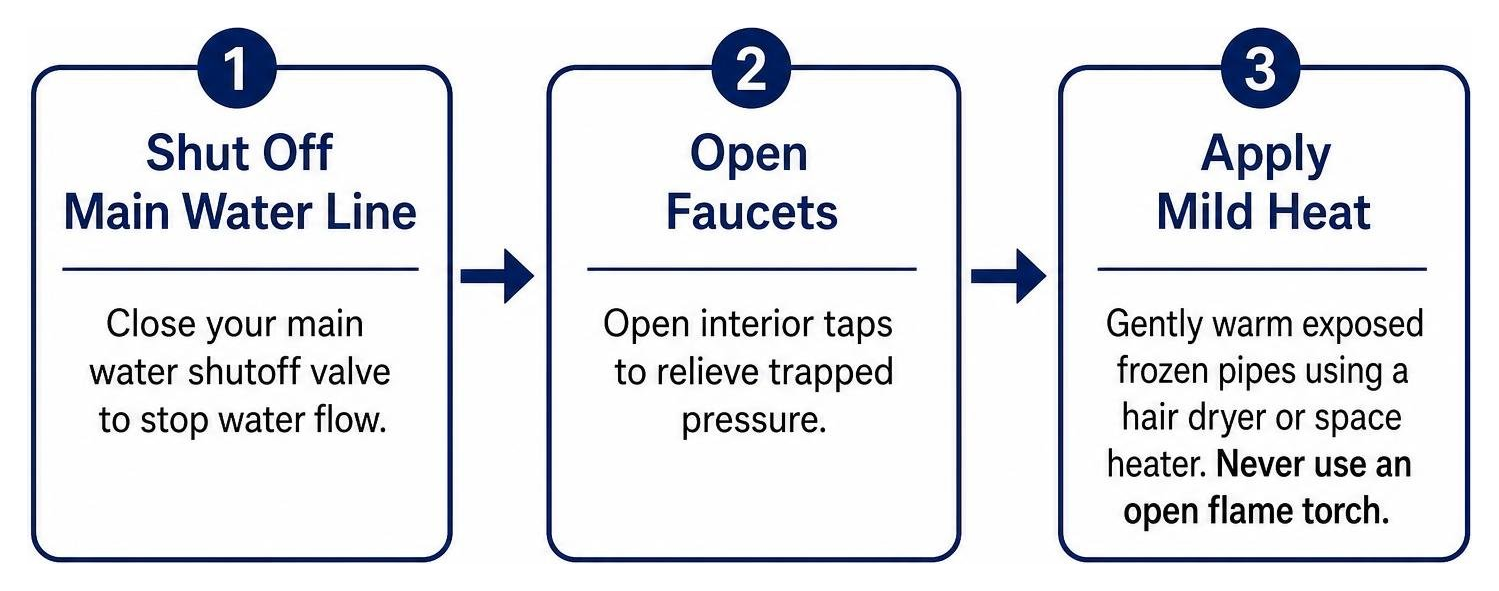
Follow these rapid response steps:
- Shut Off Main Water Line: Instantly close your main water shutoff valve to stop fresh water from feeding through broken lines.
- Open Faucets: Open interior taps to relieve trapped hydraulic pressure throughout the home system.
- Apply Mild Heat: Gently warm exposed frozen pipes using a hair dryer or space heater. Never use an open flame torch, as sudden extreme heat fractures cold metal and creates fire hazards.
- Contact Professional Emergency Help: Reach out directly to a trusted professional Emergency Plumber Albuquerque to locate and repair concealed pipe breaks safely.
Having an established plan minimizes damage when winter temperatures drop suddenly.
Frequently Asked Questions About Winter Pipe Damage
How deep do pipes need to be buried in Albuquerque to avoid freezing?
In the metro region—including Rio Rancho and nearby communities—the official frost line depth ranges between 12 to 18 inches below grade. However, during extended cold spells combined with rapid freeze-thaw soil movement, frost can penetrate deeper, especially beneath uninsulated driveways or shaded areas. We recommend burying primary water service supply lines at least 24 to 30 inches below ground level to ensure complete thermal protection. If you live in nearby Sandoval County, scheduling a dedicated Pipe Leak Repair Rio Rancho inspection can identify buried lines that may be sitting too close to the surface.
Why are hidden leaks more common in high-desert climates during winter?
Hidden leaks are especially common here due to our unique combination of wide diurnal temperature swings and extremely low atmospheric humidity. Rapid temperature swings stretch and relax pipe materials daily, causing micro-fractures rather than clean pipe bursts. Because our regional air is so dry, smaller leaks discharging water onto building frames, slab foundations, or outer dirt evaporate at the surface almost immediately. Moisture evaporates before puddles form, allowing internal structural decay to continue unobserved inside walls or beneath floors for months.
Can plastic PEX pipes withstand Albuquerque freeze-thaw cycles?
PEX (cross-linked polyethylene) is considerably more resistant to freeze damage than rigid copper, steel, or PVC because its material composition allows it to expand slightly when water turns to ice inside the line. However, PEX is not completely immune to Albuquerque’s harsh winter conditions. While the flexible tubing itself may survive, the rigid metal or plastic fittings, directional elbows, and crimp rings used to join PEX sections can easily warp, crack, or dislodge under repeated expansion pressures. Proper insulation around all PEX fittings remains essential.
Conclusion
Understanding how freeze-thaw events in Albuquerque winters cause hidden pipe damage gives you the knowledge needed to safeguard your home against sneaky winter plumbing failures. Our unique high-desert climate demands proactive attention—from insulating vulnerable crawl spaces to monitoring indoor water pressure during extreme diurnal shifts.
At Wolff Heating, Cooling, and Plumbing, we have over 25 years of local experience helping homeowners across Albuquerque, Rio Rancho, Placitas, Corrales, Cedar Crest, Tijeras, and Bernalillo keep their systems in top working order. Our licensed, bonded, and insured team provides top-quality work, honest estimates, and fast response when winter weather threatens your home comfort.
Don’t wait for an invisible leak to become a costly renovation project. Contact our friendly team today through our full Plumbing Services in Albuquerque page to schedule a comprehensive preventative plumbing inspection or winterization checkup!